THE FAIRIES
Who Are The Fairies?
The Irish word for fairy is sidheog, a diminutive of the “shee” in banshee.
There are various ideas as to who they are. Some say they are “Fallen angels
who are not good enough to be saved, nor bad enough to be lost”. The Book of
Armagh says they are “Gods of the Earth”. Others say they are “the Gods of
Pagan Ireland, The Tuatha De Danan, who, when no longer worshipped and
fed dwindled away in the popular imagination, and now are only very small”.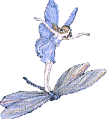
They occupy themselves by eating, fighting and making music and dance. The most
industrious among them is the Leprechaun, who is kept busy making shoes.
The Puca is the November fairy and is the stuff nightmares are made
of. He can come in any shape or size, usually half human, half animal. It was
usual before the coming of Christianity to leave out gifts for him on Novembers
Eve to keep him happy.
The Far Gorta (man of hunger). This is a very thin fairy who goes through
the land begging in famine times and brings good luck to the giver.
The Banshee meaning woman fairy is traditionally known to wail before a
death. Many have reported seeing her as she goes along wailing and clapping her
hands. Usually her wailing will be heard to come from a fairy bush of
which there are many in Ireland.
Tir-na-N-Og: There is a country called Tir-na-n-Og, which means the Country of the Young, for age and death have not found it, nor tears have ever gone near it. According to many stories, it is the favorite dwelling of the fairies. Many have described seeing it in many places; some in the bottoms of lakes and have heard the sound of bells rising from the lakes. More have seen it far off on the horizon, a they peer out from the Western Cliffs. Fishermen speak of islands on the horizon that move or disappear as they are approached.



