MILKING YOUR GOAT
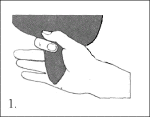
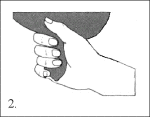
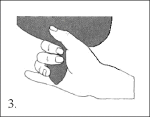
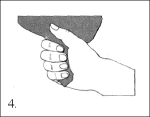
Cleanliness is of the utmost most importance during and after milking. You should arrange the milking away from the goat shed in a separate room or stall, with a further room next to the milking area which will be a dairy. There should be a door separating the two. When milking the goat, it can stand on a platform with the milker standing behind, or a small milking stool can be employed with the goat standing on the ground. Whilst learning to milk it may be a good idea to distract your goat from your 'ham-fisted' efforts by giving it some goat concentrates to eat. Avoid foods such as turnips, swedes, kale and silage during, and for four hours before milking, since this will taint the milk. It is also advisable to restrain the goat with a collar until you can milk expertly. Just before milking, when your goat is tied up and eating, her udder and hind quarters need to be wiped down with a damp cloth soaked in a solution of a suitable udder wash. A small amount of udder cream should be put on the teats and hands. If you have not yet taken possession of your goat, it may be a good idea to practice the milking technique described below, with the finger of an old rubber glove with a pin-hole in the tip. Gently grasp the teat with the hand but never let the tips of the fingers touch the teat. Pressure is applied by the first finger in order to hold the milk in the teat, and then by the second, third and fourth fingers in turn in order to force the milk out. The grip is then relaxed to allow more milk into the teat, then the procedure is repeated. The arms should be kept quite still with the hands doing all the work. The first four jets of milk from each side should be milked into a strip cup. This is a special container, holding about one pint, with a handle and a shelf of black plastic halfway down the inside; with it you can detect flaky or stringy milk which will indicate mastitis and other problems. When the milk stops flowing, gently massage the udder until there is more milk in the teats and then milk out as before. Continue until the udder is empty. Milking is easy once mastered but it important to avoid the bell ringers style, which although is the quickest , is not good for the goat. When milking is completed the churn should be taken to your dairy for making cheese or straining, bottling and cooling until needed in the kitchen.