|
|
 |
Welcome |
|
|
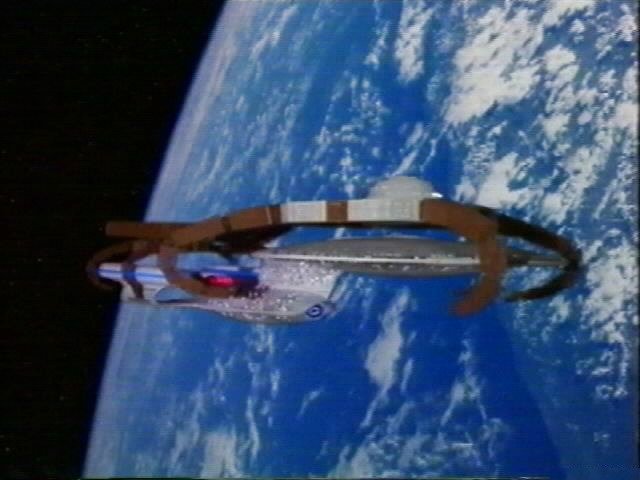
Welcome to the USS Hephestus, a Mobile Engineering Platform. The second moible repairing platform Starfleet has created, the first being the USS Montgomery Scott. The USS Hephestus has 14 decks. Feal free to visit the ship as much as you would like, if you have any questions about our starship don't hesitate to ask the CO. |
|
Deck Layout |
|
|
|
Flight Bridge |
|
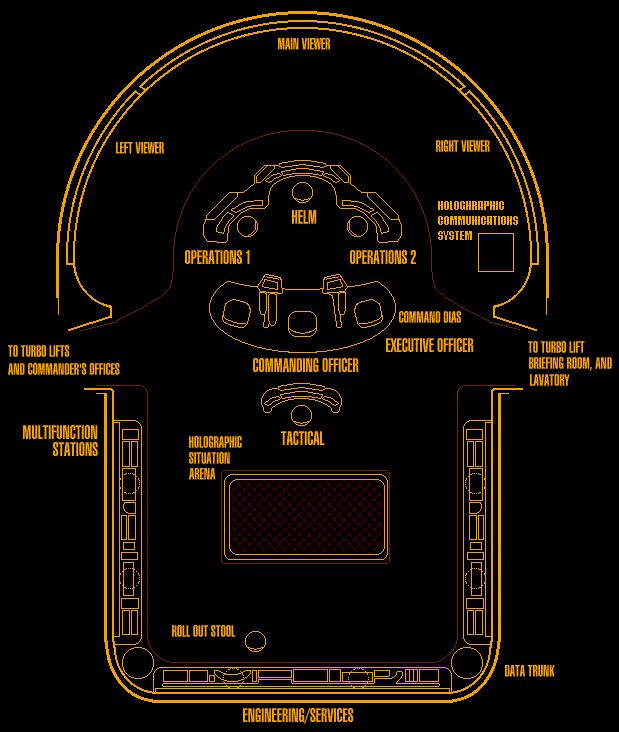
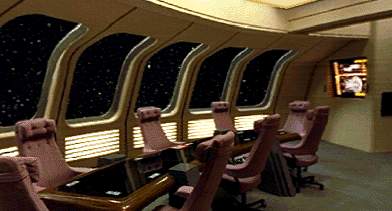
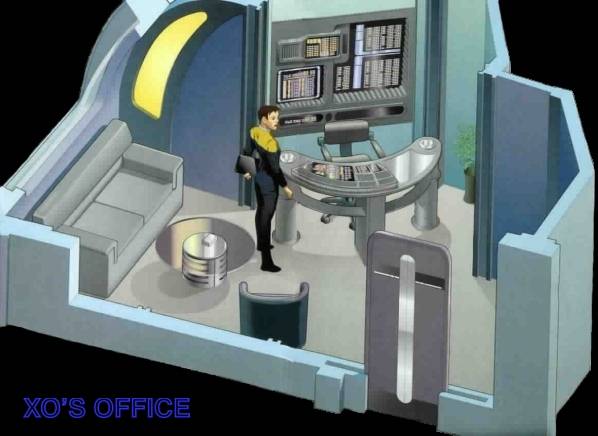
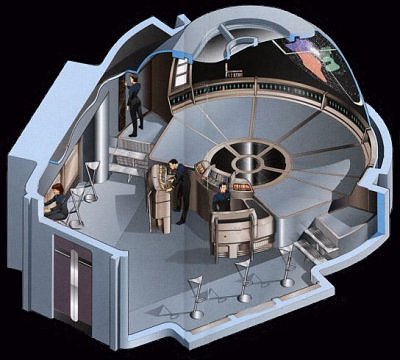
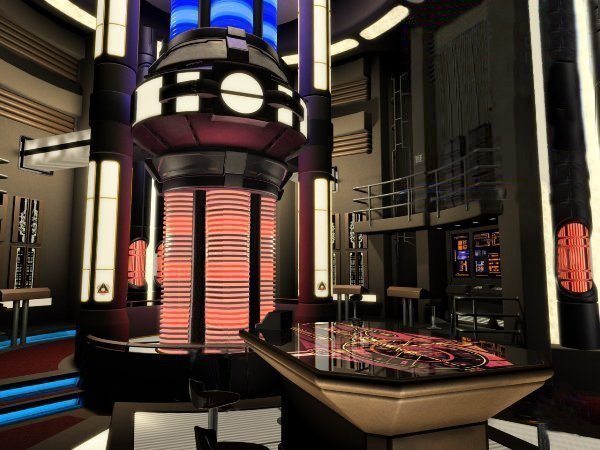
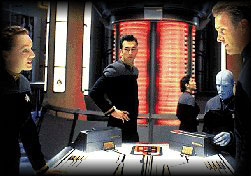
The command dias holds positions for the three commanders of the Mobile Engineering Platform. The third chair from the right is reserved for either VIP's such as Admirals and Ambassadors or for the Chief of the Boat or the Command Master Chief who is incharge of all Enlisted Personel. The middle chair is also known as "The Captain's Chair" but when he is not on duty it is used by whoever is the Bridge Duty Officer. Finally the seat closest to the right is used by the Executive Officer or a VIP. The Holographic Situation Arena (HSA) is controlled at any consol on the bridge except for Helm and the chairs next to the Commanding Officer. The HSA can be used to display ships currently being repaired or towed by the MEP. The tactical officer may use the HSA in combat scenarios. Under optimum performance the HSA generates a real time image of the engagement theater from sensory input from the ships of the Fleet. The aft bridge area is large enough to accomodate the commanders encircling the HSA to direct the battle or the repair without crowding the MFSs. The Multifunction Stations are preprogrammed to provide control of key systems and areas of responsibilty depending on mission profile. On both sides of the Flight Bridge are exits. The each have one primary turbolift and one on standby for emergency situations. When facing the front you have on your left both Offices of the Commanding Officer/Captain and the Executive Officer/First Officer. On your right leads to the lavatory and the Briefing Room. Back to the deck layout. |
|
Briefing Room |
|
|
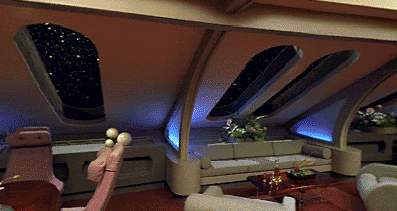
The Briefing Room on the USS Hephestus is much like the one on Galaxy Class Starships. It can comfortably seat up to eight people and has a display consol on the wall. The room is equiped with two Holographic Communications Systems to contact other Starfleet Captains and Admirals. Briefings are called by the Commanding Officer or the Executive Officer. All Senior Staff are expected to arrive promtly so the CO may give his orders. The Senior Staff compromises of all the ship's departement heads, the Commanding Officer, the Executive Officer and any mission related personel. All Starfleet Personel holding a rank of Commander or higher are invited to the meetings even though they might not be a member of the Senior Staff. Back to the deck layout |
|
Captain's Office |
|
Back to the deck layout. |
|
Executive Officer's Office |
|
Back to the deck layout. |
|
Senior Officers' Quarters |
|
|
|
|
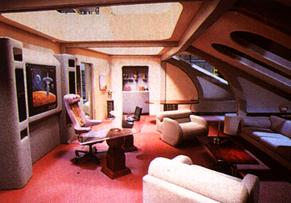
The Senior Staff aboard most Federation Starships enjoy some
extra luxury over their junior counterparts. A large room, situated
on deck 2 allows the Senior Officers to be on the Bridge as soon
as possible if their presence is requested in an emergency and
permits them to be next to their office. The quarters include
a desk, a sitting area, a bedroom or two (depending if family
is with the officer, a bathroom, a dinning area, extra storage
areas and a supplementary room.
|
 |
Back to the deck layout.
|
Astrometics Lab |
|
|
|
Runabout Landing Pad |
|
|
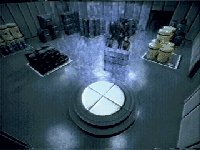
The USS Hephestus has two runabout landing pads. These pads can be lowered into maintenance bays where the storage of two runabouts is possible. The surface liftoff and touchdown pad is the upper assembly of the runabout elevator system. The pad includes all navigational RF and subspace com aids, approach and departure lighting, and auto-capture tractor mooring strips. Once alligned by the approach vector subsystem, the mooring strips provide an EM-based hard docking latch-up to the elevator. With the elevator lowered to its fully retracted position, the overhead
entry door can be sealed. The elevator is a hybrid electrohydraulic and
storedtension mechanism capable of liftin a mass 2.5 times that of the
runabout. In many cases, the prelift sequence involves detuning the local
gravitational mat to reduce the stresses on the elevator system. The runabout
swappable modules are serviced in the space adjacent to the elevator pad.
The two level facility is capable of performing major overhauls to runabouts. Back to the deck layout. |
|
Sickbay |
|
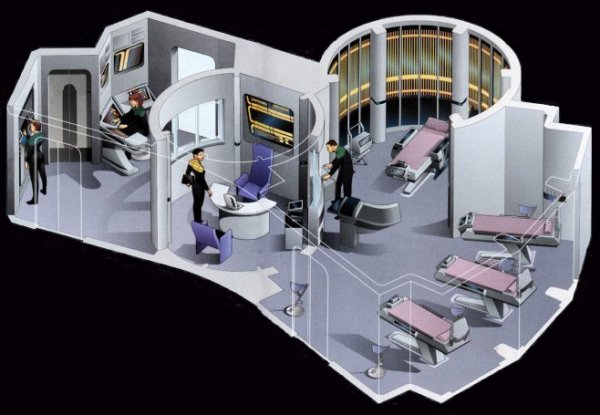
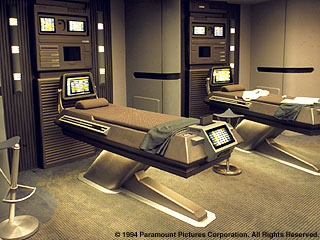
Click on the image above to see it in it's orignal size! |
|
Main Shuttlebay |
|
|
|
|
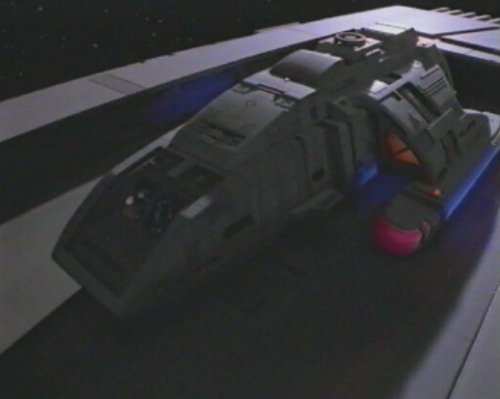
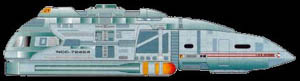
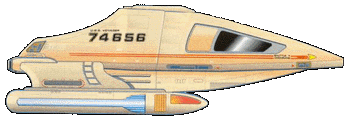
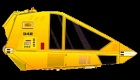
The three types of auxillary craft aboard the USS Hephestus. (Images not to scale.) Back to the deck layout. |
The Main Shuttlebay located on deck 4 is attached to the Upper Shuttlebay that is just one flight up on deck 3. The ship only has one, yet a very large shuttlebay. Holding three different types of shuttles, including the Danube Class Runabout, the Type 9 Shuttlecraft and Work Bees. The ship has 3 runabouts, 5 type nines and 12 workbees. The auxillary craft onboard the ship are used for landing on planets, interplanetary and intersolar journeys, crew transfers, ship to ship transports and more specifically for the work bees, ship contruction. The crafts can also be used when abandonning the ship and other such emergency situations. |
|
Torpedo Launchers |
|
|
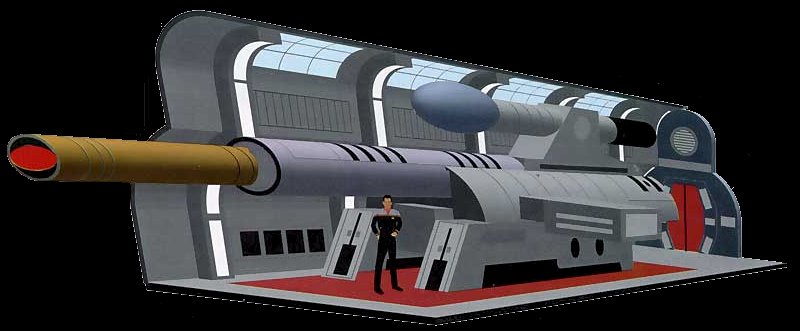
The image above is of the standard probe and torpedo launcher aboard the USS Hephestus. The launchers can send photon torpedoes and quantum torpedoes at warp speed at a target. Since the torpedoes can be launched at warp speed it is necessary for the torpedo launchers to be working at maximum efficientcy. The Hephestus can launch up to 4 torpedoes per tube simultaneously. Each torpedo can be independently targeted. Back to the deck layout. |
|
Transporter Rooms |
|
|
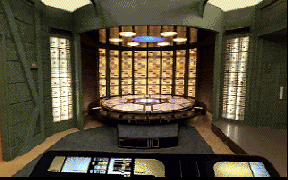
The ship uses three transporter rooms. Transporter are matter-energy conversion device use to provide a convenient means of transportation. The transporter briefly converts an object or person into energy, beams that energy to another location, then reassembles the subject into its original form. Back to the deck layout. |
|
Cargo Bays |
|
|
|
Holodecks |
|
|
Holodecks also known as a Holographic Environment Simulatior, the holdeck permits the simulation of virtually any environment or person with a degree of fidelity virtually indistinguishable from reality. These facilities can be used for a wide range of recreational, sports, and training applications. The computer contains a large library of simulations that are available in the holodecks of the Hephestus. The software allows the programs to be customized according to use preferences. Back to the deck layout. |
|
Main Engineering |
|
|
This is the USS Hephetus' warp core that spans many decks vertically. The matter-antimatter reaction assembly (M/ARA) is embedded within Deck 12 (Main Engineering) with the surrunding systems balcony above, on Deck 11.
|
|
|
| Star Trek, Star Trek: The Next Generation, Star Trek: Deep Space Nine, Star Trek: Voyager, movies, etc. are Copyright Paramount Pictures. This is a purely fan-based web-page and has not been set up for commercial purposes. This webpage is Copyright 2000. This site is contributed by the members of the sim. All crew biographies, crew images, and other original artwork are all copywrite of their individual creators. Use only with permission. |
|
|