
BUREAU OF FIRE PREVENTION
SUMMER FIRE SAFETY TIPS

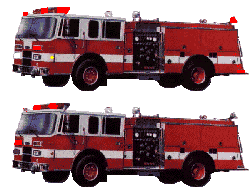
WILL GREATLY REDUCE SEEING ONE OF THESE IN YOUR DRIVEWAY!

Stay with the grill when lighted, keep children and pets well away from the area.
When barbecuing, protect yourself by wearing a heavy apron and an oven mitt that fits high up over your forearm.
If you get burned, run cool water over the burn for 10 to 15 minutes. If you recieve a serious burn,
seek medical attention immediately.
Barbecue grills must never be used inside the home, in addition to the fire hazard or indoor grilling,
the grill can easily cause carbon monxide poisoning. If lightining appears while your'e grilling,
seek shelter and wait for the storm to pass.
For charcoal grills, only use started fluids (NEVER USE GASOLINE) designed for barbecue grills.
Use a limited amount of started fluid before lighting the fire. If the fire is slow, rekindle with dry kindling
and add more charcoal if necessary. Don't add more liquid fluid to re-ignite or build up a fire, as flash
fires can result. Soak the coals with water before you discard them and leave the grill away from the
house until completely cool.
For Gas grills, always store the gas cylinder outside - away from structures and turn off the valves
when not in use. Check frequently for any leaks in connections by using soap and water mix that will
show bubbles if gas escapes.When purchasing a gas grill, select one that bears the mark of an
independent testing laboratory.
Follow manufacturer's instructions and if needed, have it repaired by a trained professional.
Every year fireworks used by amaturs cause thousands of injuries serious enough to require emergency room
treatment. Children between the ages of 10-14 are at greatest risk of injury from fireworks.
In 1995, more than 11,000 people suffered severe fireworks injuries in the U.S. including burns, lacerations, amputations, and blindness.
NFPA recommends that all fireworks be used only by professional Pyrotechnicians.
Use gasoline as a motor fuel only -- never as a stain remover or for other purposes. To transport gasoline in an automobile to and from the filling station, place a sealed, approved container in the trunk with the trunk lid propped open and drive directly to the fueling site. Take a direct route back home and never store gasoline in a vehicle.

chemicals can spontaneously combust if contaminated by organic materials (such as body fluids, acid rain, etc.)
or hydrocarbon liquids such as fuel or motor oil. This type of fire will result in toxic fumes that can be extremely
dangerous and require resident evacuation.
Store and use pool chemicals according to the manufacturer'srecommendations, and always store them outside
the home, away from any heat source or flame. Keep the containers in a dry place, well away from other items.
If the container is punctured or otherwise damaged, properly dispose of the chemicals.
For more information on proper storage of other hazardous chemicals or flammable and combustible products,
contact your local pool supplier or the Stewartsville Fire Co. Station non emergency phone number.
lanternsinside the tent or any other closed space, as opposed to liquid-fueled heaters or lanterns.
In addition to the fire hazard, carbon monoxide poisoning can easily result in un- vented spaces.
Build your campfire downwind, away from your tent, clearing away all dry vegetation and digging a pit
surrounded by rocks. Look for signs that warn of potential fire hazards in national forests and campgrounds,
and always obey park service regulations. Pour water over or cover the fire with dirt before going to sleep
or leaving the campsite.
Store liquid fire starter --NEVER use gasoline-- away from your tent and campfire and
use dry kindling to freshen a campfire not liquid fuel.
BY FOLLOWING THESE FIRE SAFETY TIPS YOU WILL ENJOY A FUN FIRE SAFE SUMMER!