The first trailblazers were the Alaska Natives. By using geography to their advantage and following game trails they blazed a network of trails to Alaska's Interior. In the early 1800's parts of these trails that would become the Iditarod were used by the Russian-American Company trappers and explorers.
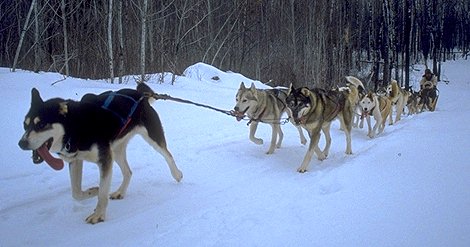
Russian traders actually began the practice of running in-line dog teams to traverse timbered areas as opposed to the Inupiat method of allowing the dogs to fan out in front of the sled.
Early American explorers and prospectors followed many of the same paths. There was a rush of exploration after America purchased Alaska from Russia in 1967 mostly by boats during the Arctic summer. Overland treks were especially difficult because of the vast Interior wetlands. However, in the winter rivers and lakes froze and were covered with snow. This created a frozen pathway and made the Iditarod Trail the favored winter route of those traveling to the Interior.
The Alaska Road Commission surveyed and marked the trail in 1908 starting at Seward. The original Iditarod Trail ran from tideline at Seward north to Crow Pass near Girdwood to Eagle River and then across the Alaska Range to the mining camp of Iditarod. Roadhouses were established about a day's mush apart so that mail and supplies could be transported from the Interior to Seward and back. The trail was much used from Seward for almost a decade before there was a tent in what is now Anchorage.
Iditarod is an Athabascan Indian Village on the Iditarod River where gold was discovered in 1908. Since Seward townsite was established in 1903, it was an obvious starting point for the trail to Iditarod gold fields. As early as 1910 the Iditarod gold rush town was the center of a mining district. The trails orginally used by Ingalik and Tanaina Indians were much improved by the miners.
When the trail was surveryed by the U.S. Army Alaska Road Commission in 1910 it was officially named the Seward to Nome mail route. Dog teams and sleds were commonly used. The number of dogs varied depending on the load but five to 18 was the usual size. The dogs used were a mix of mongrels and huskies, a bred that would become known as the Alaskan Sled dog, now a recognized bred.
Some travelers walked from roadhouse to roadhouse most often using snowshoes. There were sleighs drawn by horses that carried passengers, mining equipment, gold and much else.