| Seth B. Draper
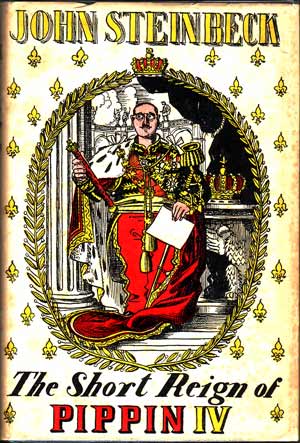
The Short Reign of King Pippin IV John Steinbeck Fiction 1. The main idea presented in this novel is that our current government systems are idiotic, and that they are idiotic because people are idiotic. Steinbeck writes all of this on a very literal level using satire. Sometimes he employs his characters such as Charles Martel, Tod Johnson, or Pippin, and other times Steinbeck just narrates the disgust he feels about government. For him, our government is too caught up in its own silly rules and dis allows itself the ability to actually care about the people. 2. �The thing they are most afraid of is socialism, and at the same time they are socialist states.� �Our basic conviction was put into words by a great and illiterate third baseman. �Everything in life,� he said, �is seven to five against.�� �Gathered in the Elysees Palace were: The radical C onservatisits, the Conservative Radicals, the Royalists, the Right Centrists, the Left Centrists, the Christian A theists, the Christian Christians, the Christian Communists, the Proto-Communists, the Neo Communists, the Socialists, and the Communists.� Steinbeck delivers his tone in very humorous sayings such as the above. It is preceded by a detailed discussion outlining the serious thought and discussion of the subject. I just found it so very funny. This is my forty something book of his and I always enjoy his unique perspective on life. 3. There is Martel, Pippin�s uncle. He is the classic sagacious character who knows everything about anything yet never practices it himself. He gets Pippin out of every bind he gets himself into with the exception of one. That is, where Pippin sought to enrage the country and succeeded in sending it into a revolt. Whereupon he became a normal man, and lost all his noble stature. Pippin is the other main character. He goes through a quite average bildungsroman experience; he starts out almost nonsensical and portrays quite the flibbertigibbet. But when he is made king of all of France, he undergoes a change that compels him to become the ultimate father figure. One who looks out for the greatest good no matter the punishment for him, even if it is the guillotine. 4. The entire book is well written, but the areas that stand out in my mind always are the conversations between Martel and Pippin. They are always quick, witty, and filled with pro foundities. For an example is then Pippin is complaining about having to be king. Martel instead of offering advice told him, you are going to be king and you can be king or slit your wrists. It speaks so much of fatalism, sufferance, and meaning, if any, of life. 5. I love the book because it is a book that says so much with so little. While it�s just a novelette, every other statement in the book is one where you have to stop reading and ponder the true depths of it. It manages to take longer to read then some of his lengthier novels like Grapes of Wrath. Plus, it is a novel where no one is safe from Steinbeck�s pen. Even his protagonist has to endure the scrutiny of Steinbeck and his quips. 6. I don�t know if I really learned anything new in this book because his other book contain so many of the same ideas. Albeit, not all and not so quickly, but having read so many of his other books I didn�t learn anything new this time. But what I have learned from all his books are that people are more often the not, the cause of their own displeasure. While it may not be a conscious effort it is not some higher power or trick of fate. We ourselves make it so. Look at how long it takes to pass a law, even ones that benefit all. Or how many ways people cheat the system. It just all adds up over time in all the little things we do that make us miserable. |
 |
 |