SARS
What we know about SARS
Sars is defined as "SEVERE ACUTE RESPIRATARY SYNDROME" a viral infection ,attacking the human beings, a new mutation of coronavirus affecting all age groups , leading to highest number of deaths among people with pre-existing chronic conditions.Suspected to have originated in Guandong ,China, causes atypical pneumonia in infected patients .
What is Atypical pneumonia?
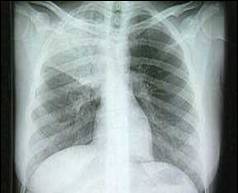
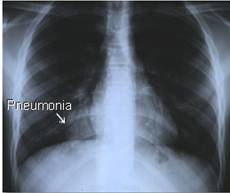
Typical Pneumonia is a lung infection , where the alveoli in the infected area fill up with exudates, blocking the oxygen transfer.Chest x-ray shows a fuzzy shadow without clear boundaries.
Coronavirus family
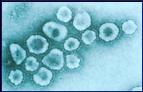
Cause mild to moderate tespiratory illness such as common cold , able to survive in dry air for up to 3 hrs, can be killed by exposur to ultra-violet light , so they will not survive under sunlight , mutate easily and each mutation triggers off an epidemic of respiratory disease . Amew mutation which arose in Guangdong is suspected of causing SARS.The name "coronavirus" refers to the protein molecule surrounding the virus, making it look like a crown (corona=crown.)
Methods of Transmission :-
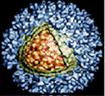
From person to person by droplet transmission, when a sick person coughs or sneezes, the virus carried in saliva droplets to people nearby, infecting them.Corona virus family can survive in dry air /surfaces for up to 3 hrs.and crystallizes to float in the air like dust , causing epidemic outbreaks.
Virulence & Incubation period: -
SARA virus is very virulent. After the virus enters the body it takes 3-10 days incubation period before the disease appears.During this period the person is not infective.
Symptoms: -
Cough, nasal congestion, sneezing,
high fever(39oC or higher),severe muscle and joint pains,
difficulty in breathing (similar to asthma) ,
 continuous
localized pain in the chest- which increases when taking breath.
continuous
localized pain in the chest- which increases when taking breath.
Risk : -
 •Tan
Tock Seng Hospital must be visited only where absolutely necessary, and
specialized safety procedures in place at the hospital must be followed
•Tan
Tock Seng Hospital must be visited only where absolutely necessary, and
specialized safety procedures in place at the hospital must be followed
People suspected of having SARS should be evaluated immediately by a physician and hospitalized under isolation if they meet the definition of a suspected or probable case.
Antibiotics are sometimes given in an attempt to treat bacterial causes of atypical pneumonia. Antiviral medications have also been used. High doses of steroids have been employed to reduce lung inflammation. In some serious cases, serum from people who have already gotten well from SARS (convalescent serum) has been given. Evidence of general benefit of these treatments has been inconclusive.
Other supportive care such as supplemental oxygen, chest physiotherapy, or mechanical ventilation is sometimes needed.
======================================================================================
This site is Prepared / Dr.Seshagirirao,Vandana-MBBS Srikakulam_A.P(India)
Send your Medical Problems for Free Advise & Treatment
=======================================================================================