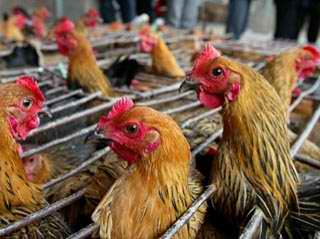
 chikens
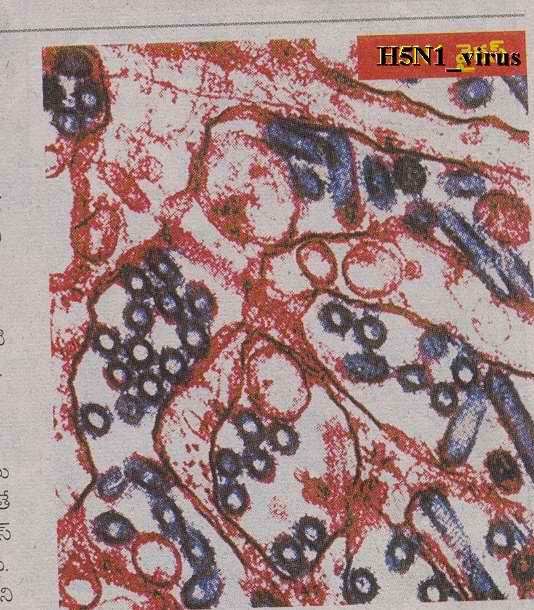 virus
blood picture
virus
blood pictureAvian Influenza (Bird Flu)
What is Birds Flue?
Type A influenza viruses _H5N1,can infect several animal species, including birds, pigs, horses, seals and whales. Influenza viruses that infect birds are called “avian influenza viruses.” Birds are an especially important species because all known subtypes of influenza A viruses circulate among wild birds, which are considered the natural hosts for influenza A viruses. Avian influenza viruses do not usually directly infect humans or circulate among humans.
Influenza A viruses can be divided into subtypes on the basis of their surface proteins — hemagglutinin (HA) and neuraminidase (NA). There are 15 known H subtypes. While all subtypes can be found in birds, only 3 subtypes of HA (H1, H2 and H3) and two subtypes of NA (N1 and N2) are known to have circulated widely in humans.
Avian influenza usually does not make wild birds sick, but can make domesticated birds very sick and kill them. Avian influenza A viruses do not usually infect humans; however, several instances of human infections and outbreaks have been reported since 1997. When such infections occur, public health authorities monitor the situation closely because of concerns about the potential for more widespread infection in the human population.
chikens
virus
blood pictureHow is it Spreading?
Certain water birds act as hosts of influenza viruses by carrying the virus in their intestines and shedding it. Infected birds shed virus in saliva, nasal secretions and feces. Avian influenza viruses spread among susceptible birds when they have contact with contaminated nasal, respiratory and fecal material from infected birds; however, fecal-to-oral transmission is the most common mode of spread.People working in dairy forms and chiken vendors will be effected ,and hence from birds to humans_producing a zoonotic disease -ie,birdsflue in humans.(a disease trannsmited from animal to humans is called "ZOONOTIC DISEASE")
Characteristics of Avian Influenza in Birds
Most influenza viruses cause no symptoms, or only mild ones in wild birds; however, the range of symptoms in birds varies greatly depending on the strain of virus and the type of bird. Infection with certain avian influenza A viruses (for example, some H5 and H7 strains) can cause widespread disease and death among some species of wild and especially domesticated birds such as chickens and turk
The reported symptoms of avian influenza in humans have ranged from typical influenza-like symptoms (e.g., fever, cough, sore throat and muscle aches) to eye infections, pneumonia, acute respiratory distress, viral pneumonia, and other severe and life-threatening complications
Studies to date suggest that the prescription medications approved for human influenza strains would be effective in preventing avian influenza infection in humans, however, sometimes flu strains can become resistant to these drugs and so they may not always be effective.
a.Antiviral agents:- Amantidine , Rimantidine are commonly effective and Tamiflu which is costly is more effective.
b.Symptomatic Treatment : for Fever- PARACETAMOL 500mg 3 times / day for 5 days. for Cold- CETRIZINE 10 mg once daily . Along with an antibiotic CIPROFLOXACIN 500mg twice daily for 5 days. for Cough- Syrup Siricodin or Tossex or Benadryl 2 teaspoons mixed with water 3 times / day for 5 days. for body strength B-COMPLEX 1 cap / day
Can we eat eggs & chicken (meat)?
yes we can eat eggs and chicken provided that both are boiled and cooked properly .Half boiled or half cooked is not safe.
======================================================================================
Send your Medical Problems for Free Advise & Treatment
=======================================================================================