1948 to 1958
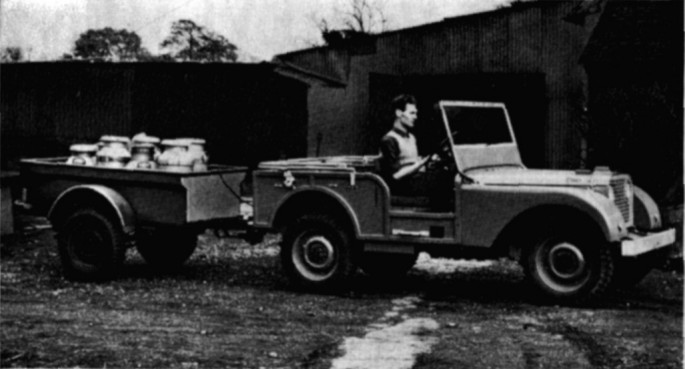
The Rover Company of Solihull purchases two War Surplus Jeeps for Spencer and Maurice Wilks (Managing Director and Head of Design). Following the war there was a shortage of steel for non-essential home market vehicles, but a minimal amount was made available and there was an abundance of aluminium sheet left over from aircraft production.
Rover had buildings and labour but had no products to export.
Maurice Wilks had a farm in Anglesey and needed a replacement for his tired jeep.
The Wilks brothers took the two jeeps to see what could be done; both wanted to build something versatile, with multiple attachments and roles. The Land Rover was to be both vehicle and tractor.
Ralph Nash with 23 years experience with Daimler of Coventry was enlisted to undertake the practical development.
The two jeeps were stripped down; a Rover 10 HP engine and modified Rover car transmission were used with an added transfer box. Early prototypes used a central steering position with sprocket and chain drive to a steering box.
A rear power take off was added to drive agricultural machinery, the design was an instant success.
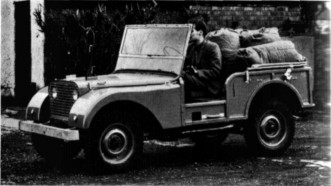
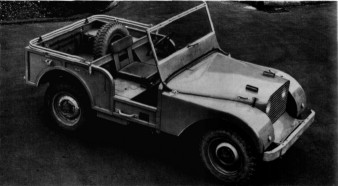
Rover Board was impressed and sanctioned 25 pilot vehicles to be constructed. then increased by 25 more to the planned original 50 prototypes. From 50 sets of parts 48 vehicles were constructed either LHD (L) or RHD (R) 01 to 48.
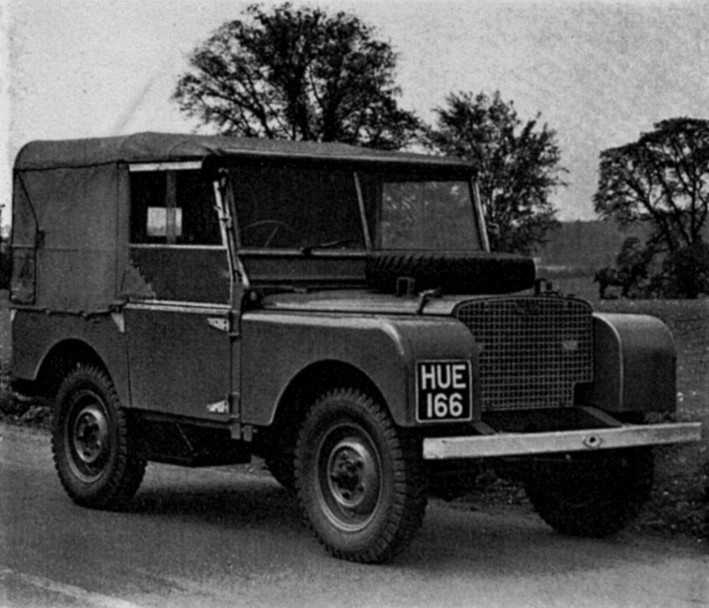
April 30, the Land Rover is launched at the Amsterdam motor show, technical details to British Press:
80" inch wheel base 1595 Rover P3 4 cyl engine. Permanent 4 wheel drive and free wheeling front. �450" (with the very basic equipment).
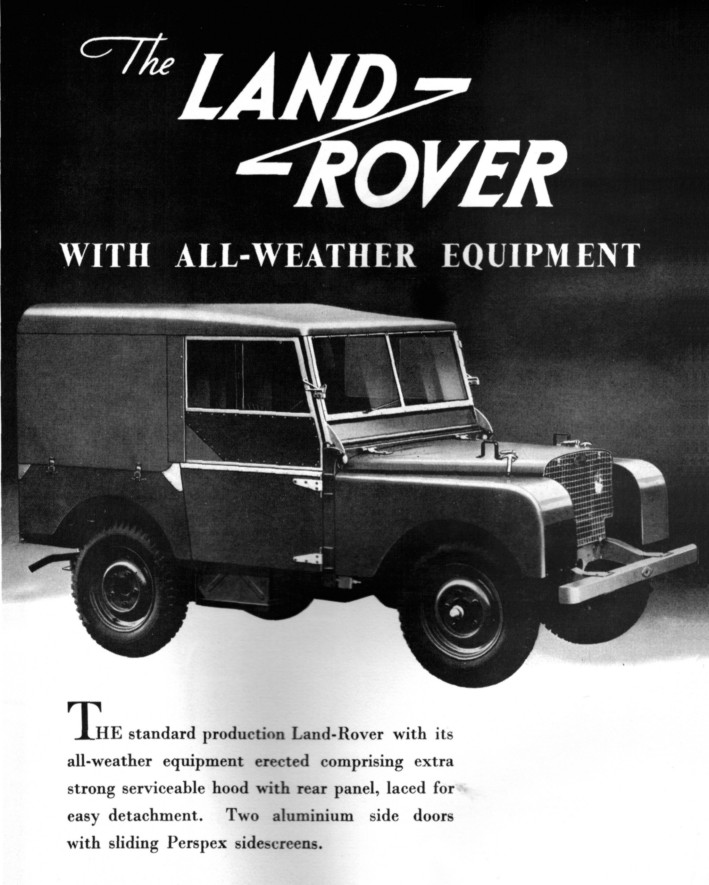
48 prototypes completed and volume production begins, still �450 with improved fittings.
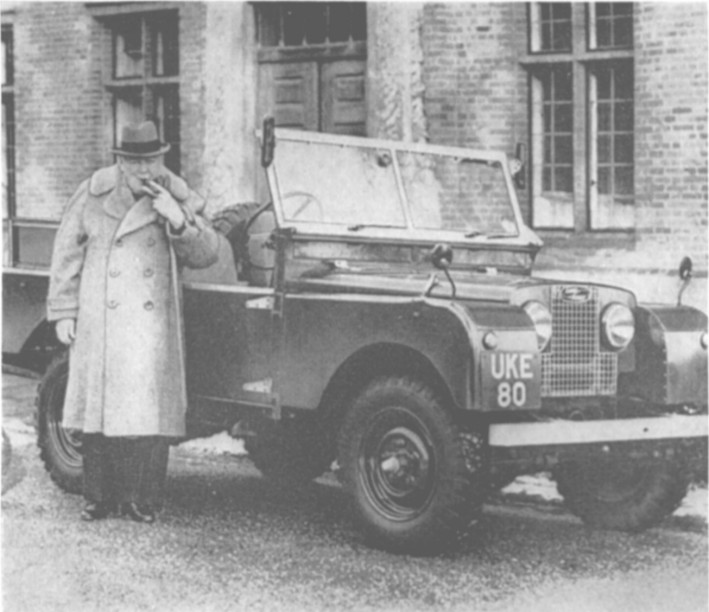
All alloy bodied 80" station wagon, taxable as a car priced at �959 announced to be built in 1951.
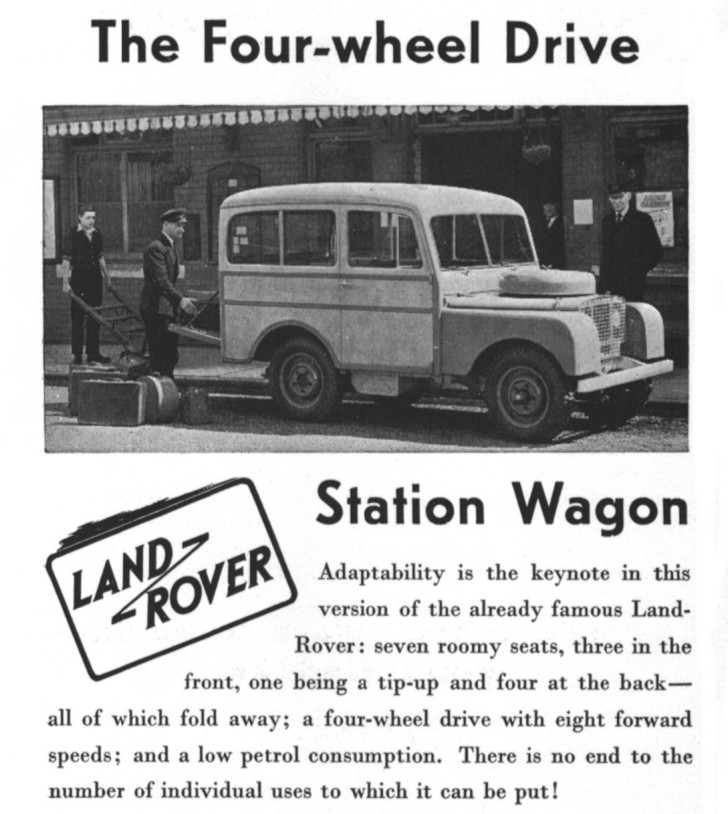
80" hard top now available.
Free wheel discontinued, high, low, 2 and 4 wheel drive as we know it, was introduced.
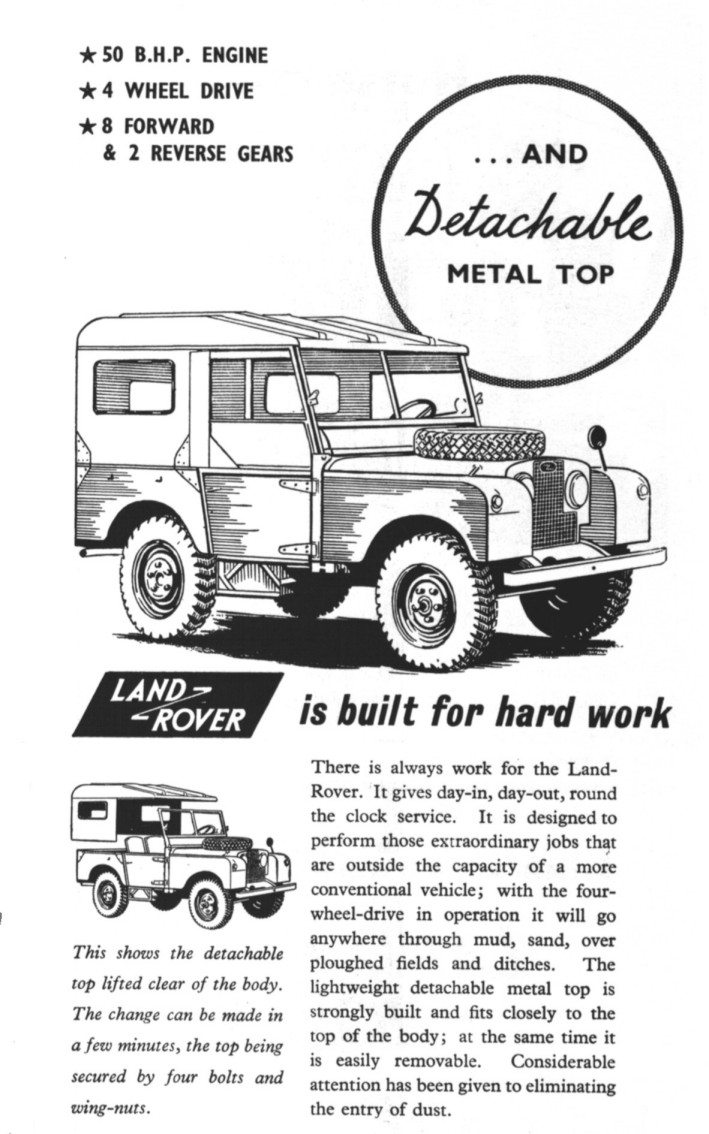
1595 cc engine bored out to 2ltr. The original Butler headlamps behind the grill give way to larger (7") headlamps with holes through the grill.
1952
Exterior door handles fitted and inverted "T" front grill. Fire engine version introduced.

New "spread bore" 2ltr engine designed. Model changed to 86" and 107" - 80" discontinued.
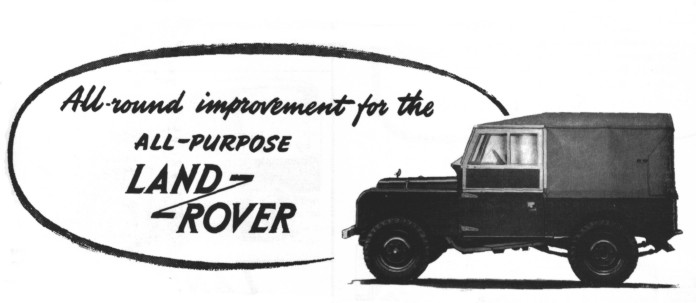
10-seater station wagon introduced.
Land Rover adopted by British Army as a standard 1/4 ton 4 x 4, trials by services to modify the 80" to take Rolls Royce B40 engine (requiring wheelbase increase to 81").
A number of 86" were fitted with beam front axles to be 4 x 2.
October 1956
The engine bays of both 86" and 107" were lengthened by 2" in planning for a new diesel engine. Models changed to 88" and 109"
Introduced in '55 the 107 station wagon now planned to stay until '58 to use up remaining 86 and 107 spares (engine bay panels).
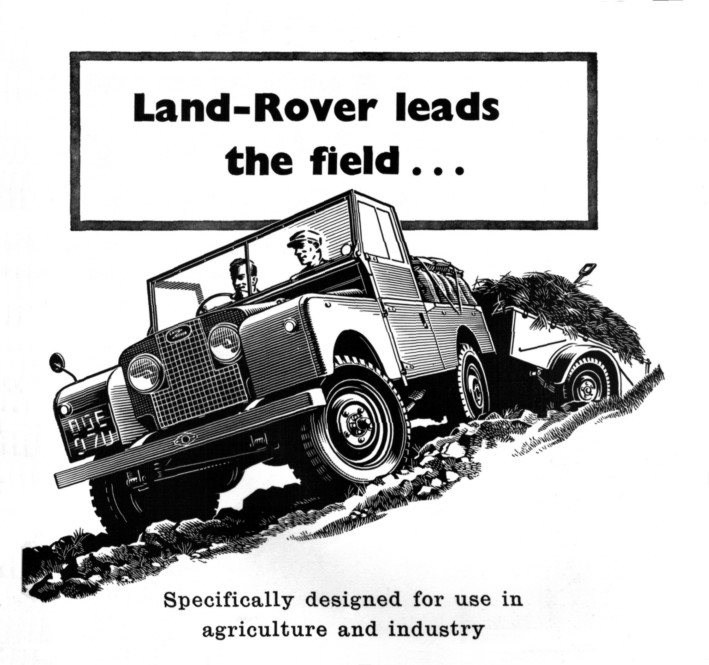
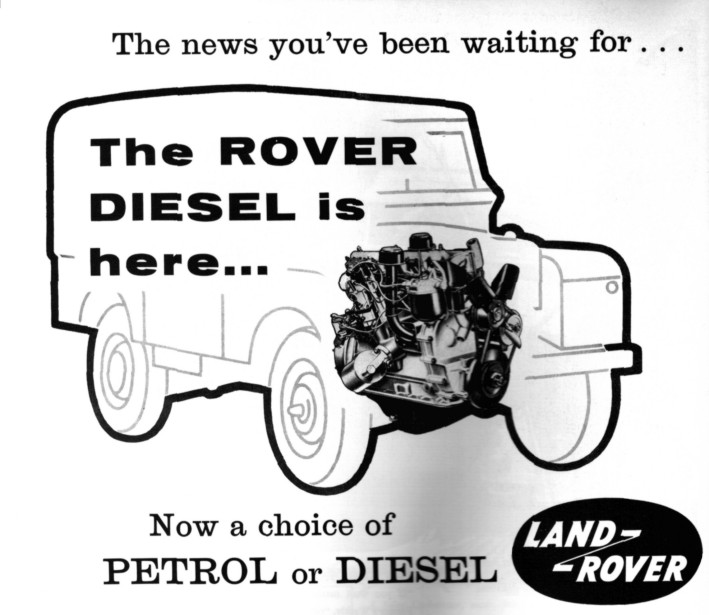
New diesel engine introduced of 2052 cc with over head valves totally new concept.
LAND ROVER OWNERS CLUB FORMED.
Series 11 Land Rover, replaces all Series 1 (except 107 station wagon which continued for some time after). Basic chassis remained virtually the same but the wheel track increased and the lower body widened to cover the increase - the line to follow that of the top of the front wing. The top of the windscreen was decreased in width - no longer a straight slab sided vehicle.
New 2286cc overhead valve petrol engine introduced, using many of the production diesel engine parts.