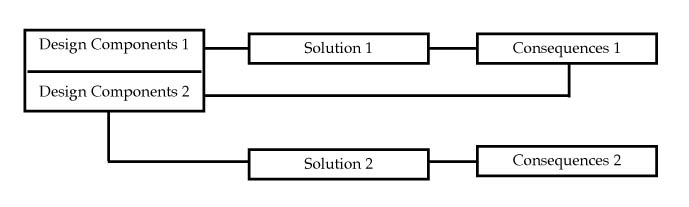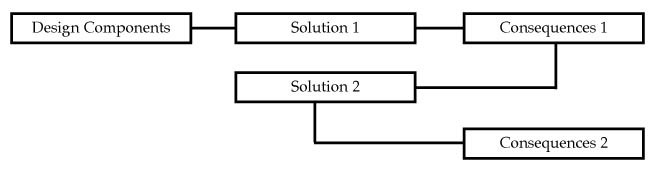
Argyris argues that people hold maps in their heads about how to plan, implement and review their actions. People are unaware that the maps they use to take action are not the theories they explicitly espouse. And even fewer people are aware of the maps or theories they do use.
The world view and values people believe their behaviour is based on
The world view and values implied by their behaviour, or the maps they use to take action
People are unaware that their theories-in-use are often not the same as their espoused theories, and that people are often unaware of their theories-in-use.
Argyris suggests that effectiveness of design process results from developing a balance between Theory-in-use and Espoused theory.
He also developed models which seek to explain the processes which create and maintain people's theory-in-use.
The point in the single loop learning is that a designer is only prepared to change the method of operation, heavily relying on that the design components are defined correctly. He reflects on the process, presuming the fault was only in his individual decisions and seeks to change his methods. The new strategy is used in order to satisfy the existing design components. The change is in the action only, not in the design variables.
To the same situation another possible response would be to examine and change the design components. A designer takes a critical attitude, reflecting and questioning the nature of the brief itself. Looking at the bigger picture, trying to justify the choice of the design components. In this process the designer might realise that the initial design components were misleading and in order to achieve the result one needed to look in a completely different direction. This may lead to discarding these values and substituting a new value such as open inquiry. Therefore in this case both the design variables and the strategy, method to reach the result have changed.