
If the problem is well stated, the solution will come automatically. Therefore the design process in this situation is:
We now see that this process is much more complex and not basic and mechanistic as it was presented in the previous model. New models were considered and design acquired a more theoretical status.
A new logical structure of the design process is:
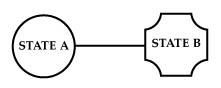
Basically as I understood it, and if we could look at the system abstractly, the idea was to bring as close as possible the idea of design and craft. As it was argued earlier unselfconscious societies which activities and lifestyle are based on craft live the consequences of its creations.
The same happens here: The designer is part of the system. He cannot act upon it, only within it. This way neither state A or state B are stable, both are transitory. The designer and the user are involved in the process they are being transformed too and need to live the consequences of their transformations.
�The future Visual intelligence must be capable of penetrating into the visible world of human consciousness (thoughts, motivations, purpose, fear, needs, aspirations, etc.) and into the intricate ecologies of the outer world.� (p. 11)
Because design process became more complex, a question arises of how it is going to be taught. And the answer demonstrates again the goal, to compare and bring it closer to the craft society�s structure, when it says that a systems is best understood from within, therefore experience is the way to teach design. However, to practice responsible design requires responsible designers and that is why education needs to be directed towards development of individual ethics. I believe that by thinking about and and realisation of our human reality and our �progress and achievements� one could not NOT feel responsible for the consequences of human actions and what became of us = techno-monsters. If we think about our planet and metaphorically compare it with an airplane. We are trying to break the plane we fly in order to make primitive tools from its parts. That is why environmental concern becomes a central issue for future design.
In my opinion the 4 scenarios that were suggested in the following chapter need to be taken not as 4 separate methods but 4 components of one plan of action to achieve the result. I understand that they will need gradual adaptation to our system, but all of them need to be taken into account.