Back
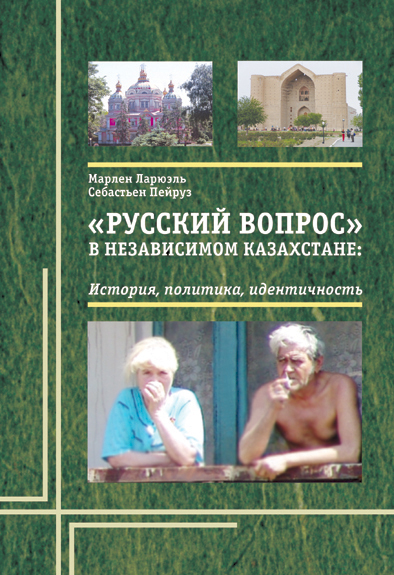
'Русский
вопрос' в
независимом Kахастане:
история,
политика,
идентичность
Translated
from french by Tatiana Grigorieva, edited and prefaced by Natalia Kosmarskaya,
Moscow,
Natalis, 2007, 359 p.
|
This
book is based on materials collected during several long stays in
Kazakhstan
between 1999 and 2005, with the principal field-research conducted in 2000
and 2003 in several cities of the republic. The main sources are local
periodicals and books devoted to the topic under consideration, especially
the newspaper published since 1994 by the Russian minority organization
“Lad,” and interviews with leaders of the Russian movement and with
ordinary Russians living in
Kazakhstan
. The book develops three main points:
the non-homogeneous nature of Russian community in
Kazakhstan
, the development of non-ethnic allegiances that could explain the failure
of local Russian political parties, and the difficulties the leaders face
in choosing between the defense of political rights or cultural rights of
the country’s first minority. While dealing with these points, the
authors focus, first, on the place of nationality question in the
Kazakhstani public debate and the political activities of the Russian
minority; second, on linguistic and ethnic Kazakhisation; third, on the
Russian identity narratives and rewriting of history; fourth, on the
Cossacks’ issues and their secessionist claims; and, finally, on
emigration trends and the narrative of a “return” to Russia.
|
|
In
the aftermath of the collapse of the Soviet Union, former dissident Alexander
Solzhenitsyn denounced both its breakup and the independence of the new states,
such as
Kazakhstan
. In a speech at the Russian State Duma, he denounced the independence of the
Russian Federation
, which would abandon 25 million Russians. Indeed, in December 1991, many
Russians residing in the other fourteen former Soviet republics suddenly found
themselves living “abroad.” The transformation of the internal borders,
until then considered administrative divisions, into internationally recognized
external borders, gave rise to questions and concerns.
This was the case especially among the Russians who became a minority in
a titular state ruled by another nationality. This book aims to highlight the
situation of, and around, the Russian minority in
Kazakhstan
and to reveal the political, social, and identity transformations this country
has experienced since independence. More than fifteen years after the collapse
of the
Soviet Union
, the Russian issue that, according to some analysts, could have destabilized
the area, eventually underwent a more peaceful evolution. This issue seems to
have been gradually solved through a double phenomenon — emigration of
those who wanted to leave the country and de-politicization of those who
preferred to stay or had no choice.
As
in the other Central Asian states, the Russian minority in
Kazakhstan
became further de-politicized in the 2000s. The political movements and
parties, like those of the Cossacks, “Lad,” and “Russkaya obshchina,”
failed to mobilize the millions of Russians living in the republic. Numerous
relevant sociological studies testify that the majority of Russians living in
the Near Abroad have no connections with these associations, which supposedly
represent them. Many Russians have never even heard of them nor feel that they
could defend them. These associations used to disseminate very pessimistic views
on the situation of Russians in the Near Abroad.
They gave a gloomy assessment of their future, either massive
repatriation to
Russia
or complete assimilation into a hostile, culturally alien state. They refused
to admit that a critical segment of Russians prefer the integrationist strategy
and do not view
Russia
as their motherland. Moreover, many Russians in
Kazakhstan
developed their own ways to deal with their new minority status. These include
cultural and linguistic acculturation, passive loyalty to the new state,
formation of a double “Russian-Kazakh” identity, and, above all,
indifference to any nationalist rhetoric, whether Russian or Kazakh.
Since
1991, Kazakhstan, and neighboring post-Soviet Central Asian states in general,
used in their political discourses rhetoric on their fight for independence and
mandate to choose their own political and economic paths. For Kazakhstani
political authorities, massive Russian and European emigration corresponded more
to their dreams than to post-imperial disengagement with
Russia
. Ethnic diversity in
Central Asia
decreases, whereas the mono-ethnic character of the states is increasingly
reality. However, these phenomena allow the political authorities to be held
accountable for their duties. Soon it
will be increasingly difficult to blame the Soviet regime or the Russians for
the lack of democratic, industrial, agricultural, and ecological choices, or to
blame contemporary failures and difficulties on their presence. Building a
nation-state was not easy for
Kazakhstan
. This huge territory has a sparse population.
The titular nationality was, until very recently, a minority in their own
state. The national language
competes with Russian for usage, even among the Kazakh population.
Russians were — and in some areas near the Russian boarders, still
are — a majority. Yet, even with such handicaps,
Kazakhstan
succeeded in preserving its territorial integrity and Kazakh national identity.
The price to pay for this success remains important. The consequences of
political authoritarianism, the exclusion of national minorities from public
life, and cultural impoverishment have not yet been properly assessed.
The
“Russian question” in
Kazakhstan
raises several more general questions. It first invites to question the nature
of “Russian colonialism” in Siberia and
Central Asia
and, in return, to question Russian identity and its paradoxical relationship
to the imperial territory. If Turkistan was a classic “colonial” space, what
about Northern Kazakhstan, Ural, and Altay, where the history of the population
is actually the history of the Russian progression in
Siberia
? Second, the issue of minorities opens the debate on the future of independent
Central Asia
, which must deal simultaneously with its ethnic diversity, its geopolitical and
economic enclosure, and the rise of authoritarianism. Finally, the presence of
Russians in
Kazakhstan
confirms the formation of a pattern common to the whole post-Soviet space,
confronted with processes of identity adjustments between territory, population,
and state and of new relations between center and periphery. Whatever the future
of Russians in the Near Abroad, their return to their homeland that started in
the 1970s is probably a major, long-term component of
Russia
history.
For
the first time in five centuries, the space occupied by Russians is decreasing.
What, then, will stop Russian emigration from the CIS republics in
Russia
? Does the collapse of the Soviet Union suppose a possible implosion of the
Russian Federation
in areas where Russian and autochthonous populations live together? Does the
departure of Russians from
Siberia
to the central regions of the Federation encourage this evolution? Russians do
not view
Kazakhstan
as a part of the empire occupied from the 19th century as Turkistan was, but as
a space conquered during the Russian progress in
Siberia
. Although control over part of present day Kazakhstan was established only in
the 1860's, the regions of Ural, Northern Kazakhstan, and Altay, marked by
Russian old-believers’ presence since the 17th and 18th centuries, are always
cited as the first historic references of the “Russianness” of Kazakhstan.
Renouncing a territory that is such a strong national symbol then raises a
complex problem. To refuse Russians the right to consider themselves as natives
in this area can also be viewed as a challenge to the Russian presence beyond
the Urals. The Caucasus,
Siberia
, and the Volga–Ural area, populated with non-Russian peoples and autonomous
administrative entities, could follow the “Kazakh pattern” in the future.
CОДЕРЖАНИЕ:
Предисловие
научного
редактора
ВВЕДЕНИЕ
РАЗДЕЛ
I.
ПРОСТРАНСТВО
ПОЛИТИКИ.
НАЦИОНАЛЬНЫЙ
ВОПРОС В
КОНТЕКСТЕ «ВИТРИННОЙ»
ДЕМОКРАТИИ
Глава
1.
Политическая
жизнь
Казахстана:
первое
десятилетие
Не
слишком
востребованная
независимость
Установление
сильного
президентского
правления
Поворот
к
авторитарному
режиму (1995 г.)
Устранение
оппозиции
Дальнейшее
наступление
на свободу
слова
Глава
2. Место
национального
вопроса в
общественных
дискуссиях
Отношение
властей к
казахским
националистам:
и противник, и
инструмент
Казахская
нация или
казахстанская
нация?
Ассамблея
народов
Казахстана: «фольклоризация»
национальных
проблем
Русская
специфика
национального
вопроса
Глава
3. Трудности и
результаты
самоорганизации
русских
О
разнообразии
русских
объединений:
недостижимое
согласие
Открыться
или
закрыться?
Отношения с
другими
партиями и
объединениями
К
чему мы
пришли? Еще о
ситуации
внутри и
вокруг
русских
движений
РАЗДЕЛ
II.
СТАВКА
НА «КАЗАХИЗАЦИЮ»
СТРАНЫ.
ДВА
НАРОДА, ДВА
ДИСКУРСА
Глава
1. Проблема
гражданства
и ее
восприятие
русскими
Гражданство
и/или
национальность?
Проблема
двойного
гражданства
Сложности,
возникшие
при замене
паспортов
Глава
2. Статус
языка как
предмет
обсуждения
Русский
и казахские
языки при
советском
строе
Законодательные
инициативы
периода
независимости
Параметры
языковой
казахизации
Аргументация
русских
объединений
Глава
3. Проблемы
школьного
образования
Преподавание
русского и
казахского
языков в
школе
Попытки
казахизации
школьного
обучения и их
последствия
Выход —
движение к «этнической
закрытости»?
Глава
4. К политике «национального
предпочтения»?
Дискриминационные
меры:
официозные
или
официальные?
Казахизация
власти и
управления
Национальный
вопрос и
экономика
РАЗДЕЛ
III.
ИСТОРИЯ
И РЕЛИГИЯ НА
СЛУЖБЕ
САМОУТВЕРЖДЕНИЯ
РУССКИХ
Глава
1.
Переписывание
истории и его
цели
Казахизация
истории и
территории
Разоблачение
русской
колонизации
Советский
период: время
«геноцида»?
Глава
2. Ответ
русской
историографии
Устойчивость
колониального
мышления
Реабилитация
имперского
прошлого
Ностальгия
по
советскому
величию
Глава
3. Битва за
символическое
обладание
Степью
Миф
о
первопроходцах
Чья
это земля?
Самобытность
Алтая —
история и
идентичность
Глава
4.
Православная
церковь и «русский
вопрос»
Попытки
укрепить
связь между
русскостью и
православием
Церковь
и русские
объединения:
идеологические
заимствования
Православная
церковь и
политическая
власть —
общие
интересы?
Глава
5.
Неоднозначное
восприятие
ислама.
Союзник или
враг?
От
веротерпимого
ислама
казахов…
…до
фундаменталистского
«заграничного»
ислама
РАЗДЕЛ
IV.
КАЗАЧЕСТВО
И
ТЕРРИТОРИАЛЬНЫЕ
ИНТРИГИ НА
СЕВЕРЕ
КАЗАХСТАНА
Глава
1. Возрождение
казачества
сквозь
призму
политики и
идентичности
Краткий
очерк
истории
казачества в
Казахстане
Завоевание
особого
правового
статуса.
Пример
России
Проблема
идентичности —
особый народ?
Глава
2. «Фольклорное»
казачество
Казахстана:
внутренние
противоречия
Бурное
начало.
Давление «сверху»
и нагнетание
проблем «изнутри»
Три
общности —
три взгляда
на политику и
национальный
вопрос
Исторические
споры между
казачеством
и казахами
Глава
3.
Территориальный
вопрос:
отделение
или
автономия?
Верность
России или
Казахстану?
Северо-восток
Казахстана:
ирредентизм
в действии
Проблема
культурной
автономии
РАЗДЕЛ
V.
НИ
КАЗАХСТАНЦЫ,
НИ РОССИЯНЕ
Глава
1. Уехать или
остаться?
Массовый
отъезд
населения
Отношение
русских
движений к
эмиграции
Проект
«первого
эшелона» и
его судьба
Глава
2. На пути к
особой
идентичности
Правовые
коллизии и
ловушки
Этнический
национализм
русских
объединений
Можно
ли говорить
об
идентичности
«красноногих»?
Глава
3. «Русский
вопрос» в
Казахстане
как
внутренняя
проблема
России
Лоббирование
из России в
пользу
русских
Терминологические
споры:
соотечественники,
диаспора,
русские
зарубежья?
ПРИЛОЖЕНИЕ
Хронология
основных
событий (1990 —2006 гг.)
Статистика
населения по
данным
различных
переписей
Предметно-именной
указатель
Summary
Back