Description
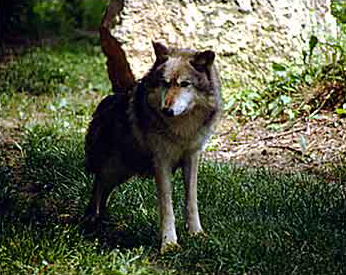
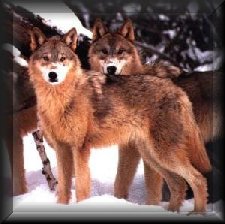
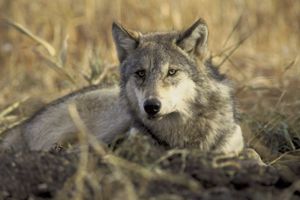
Subspecies of the gray wolf, which is the largest member of the canine family and ancestor of the dog. Color ranges: grizzled gray, black, all-white.
Height: 26 to 32 inches at the shoulder. Weight: 55 to 115 pounds. Females are usually slightly smaller.
|
|
Habitat
Forests, tundra, plains and mountains
Wild: Any meat bearing animal it can catch (typically deer or elk).
Captive: Dry dog food, carnivore diet (commercially prepared raw meat diet).
|
|
Pack Behavior
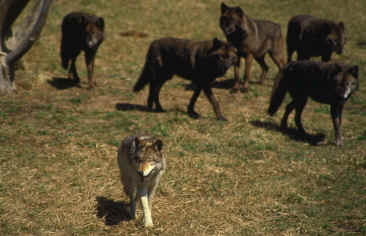
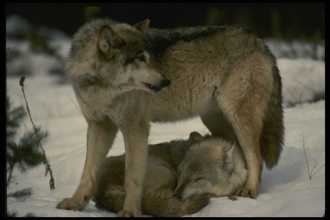
Wolves live in packs, which are complex social structures that include the breeding adult pair (the alpha male and female) and their offspring. Size of the pack varies with the size of available prey. A hierarchy of dominant and subordinate animals within the pack help it to function as a unit. Wolves communicate by scent marking, vocalizations (including howling), facial expressions and body postures.
|
|
History
Throughout history, wolves have been given the reputation of being vicious, blood-thirsty animals, and were hunted vigorously into the early 1900's. With the help of werewolf movies and the like, a fear of wolves has been instilled in children, and the cycle is perpetuated. In truth, wolves typically avoid human contact at all cost, and in North America, no person has ever been killed by a healthy wolf.
|
|
Status
Endangered under Endangered Species Act. Today the eastern timber wolf survives in only three percent of its original home range in the U.S. The largest population exists in northern Minnesota. There are smaller populations in Michigan and Wisconsin. In the northeast U.S., wolves have been extinct for 100 years.
|
|
Resources
Defenders of Wildlife
Wildlife Prairie State Park
Oatland Island
|
|