
SeaNAR '99 Sanctioned Event Results
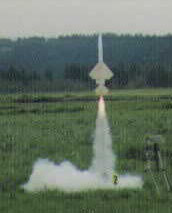
Dan French's Bomark

On Saturday, August 14, 1999 SeaNAR held their second annual Rocket Competition. A local event, it was held in Kent, Washington, at the soon-to-be demolished Boeing Employee's Model Rocket Club launch site. While there was a small turnout, it was alot of fun, with interesting entries.

Location:

  • Kent Space Center (BEMRC launch site). The Boeing Employees Model Rocket Club has graciously agreed to let us share their launch site and date.

    Time: 11 am. Please sign in with the Contest Director when you arrive.

    The sanctioned events are:

    1. 1/2A Rocket Glider Duration
      A Rocket Glider differs from a Boost Glider (or parasite) in that the entire model must remain in a single piece, including the motor. The transition from boost mode to glide is usually effected by moving wing surfaces or changing the center of gravity at apogee. There are a number of proven designs available as kits or plans.

      The rules are

      1. All rockets will be launched using a 1/2-A (1.25 newton-seconds total impulse) contest certified rocket motor.
      2. Nothing is allowed to separate -- the entire model must boost vertically, but must return in a stable glide. No motor ejection allowed.
      3. Gliding surfaces may not be of a flexible material, such as plastic film or cloth.
      4. No streamers or parachutes allowed.
      5. Each contestant may make two flights in this event, with the total seconds aloft being their score.

      Results:
      Don Qualls flew his own design, the SpyGlass I to second place in the 1/2 A Rocket Glider Contest, while Mike Pearson's Jabberwocky had boost problems and he failed to make a qualifying flight. Back to the drawing board with that one. Top spot in this event was captured by an Edmonds "not a competition glider" Ecee, flown by Abigail Chang.

    2. Sport Scale

      Rules:
      1. Entry must be based on an existing or historical guided missile, rocket vehicle or space vehicle.
      2. All models must be submitted with references for the model scaled, showing shape, color and paint pattern. The models will not be measured directly, but judged on outline and appearance.
      3. All entered rockets must complete a safe, stable launch, and recover safely.
      4. There is no restriction on motor or recovery system, except that motors must be certified, and the recovery system "safe."

      Results:
      This event saw two entries: a Black Brant II and a Nike Smoke. Both were built from kits, although the Nike Smoke, originally from Seattle Rocket Works, is no longer available. The Estes Black Brant is also on the endangered list, as it is being discontinued. Dave Davis acted as judge, and gave us a lesson in scoring scale models. It was a fun and informative excercise, with Abby's Black Brant edging out the Mike's Nike by a nosecone. The prizes for this event were a copy of "Scale Bash" by Pete Alway, and detailed plans for a 1:2.978 scale model of a Nike Smoke from by John Cato. Wow.


      Thanks to both Pete and John for donating these fine prizes. Pete also sent a special edition poster for Rockets of the World, which was awarded in the Glider competition.

    3. Anybody who wants to make an attempt at an existing NAR record may do so. Just let the Contest Director know so, and we can get official timing, and submit the results to the National Contest Director. At this time we are not equipped to do altitude tracking.
    In addition to the rules for the specific events, each rocket flown for NAR competition must have the following:
    1. Owner's name or NAR# on the rocket, visible in flight configuration.
    2. Each rocket must be approved by the RSO (Range Safety Officer) prior to launch.
    3. Rocket motors will be inspected prior to launch by the RSO or CJ (contest jury), to verify its certification status. All motors used must be NAR certified for contest use. You can check current certification status on the NAR website. Reloads must be in original packaging and may be impounded by the CJ until loading.
    4. Each event is further divided into three age groups: A (7-13), B (14-18) and C (19 and up), but if there are insufficient entrants, some age divisions may be combined.
    5. All contest flights will be flown between 11 am and 3 pm.

    All NAR samctioned competitions are governed by the NAR Model Rocket Sporting Code (aka. The Pink Book). In the event of a direct conflict with the rules published here and the Pink Book, the official document will prevail. A description of all the different events can be found at the NAR Competition Events site.
    Enough with the rules and regulations! The important thing is to have fun. So come one, come all; the more the merrier, etc, etc.

    For planning purposes, if you think you want to attend, we would appreciate it if you could drop us a line at SeaNAR-568@geocities.com


    You are the to visit this page
    [ SeaNAR home | Directions/Maps ]
    Hosted by www.Geocities.ws

    1