mcgowan camp banner
CAMP OFFICERS:

MARK A. SIMPSON
Commander
[email protected]
H 864-576-4561
W 864-576-1224


LUDIE WATKINS
Lt. Commander
[email protected]
H 864-682-5411
W 864-833-5914


DEVER RAY MARTIN
Adjutant
[email protected]
H 864-677-3135
W 864-223-2311


SCOTT BARKER
Treasurer
[email protected]
H 864-984-2767
W 864-281-3525


SCOTT WATTS
Chaplain
H 864-994-3948


ALLEN YOUNG
Color Sergeant


RANDY SIMPSON
Sergeant at Arms


DRAYTE BURNS
Quartermaster


scv logo
           Brigadier General Samuel McGowan              *           Camp 40               *             Laurens, South Carolina

Sherman's March Through Anderson County

Featuring The Battle of Anderson 1865 - March 21-23, 2003  - Troy Murdock Road, Belton,  SC

Historic note:

This reenactment is inspired by the last War Between the States - Civil War skirmish between the organized forces east of the Mississippi, which took place in Anderson County, between Belton & Williamston. This occurred in May, 1865, between the Citadel Cadets and Stonemans Raiders. It is ironic
that Citadel Cadets helped fire the firstshots of the Civil War in Charleston in 1861 and the  last shots of the war in Anderson County in 1865.

NOTE:  This is a historic reenactment event.  It is not a flag rally nor a political event!


Admission:
$5 (children 6-12: $2;
under 6: free)

Play ticket: $5 (separate from regular admission)
For information, contact:
Allen Ashley (864-934-4075)
Email:
[email protected]


This reenactment is being presented by the Butler Guard and Palmetto Battalion and is sponsored by the John Thomas Ashley Camp #43, Sons of Confederate Veterans, Belton-Honea Path, SC.


Confederate Inspirations                      Thomas J. Jackson

STONEWALL JACKSON'S BOOK of MAXIMS.

Edited by James I. Robertson, Jr

General Thomas J. "Stonewall" Jackson lived his life in a manner that presents itself as a model for men today and of any generation. His Godly character, remarkable achievements, and unquestioned devotion to duty are benchmarks of distinction that men of character will strive to copy.

Throughout his cadet years at West Point Military Academy, Thomas Jackson depended upon several sources for the development of his character. It became widely known of his personal profession of faith in Christ and his love for the Word of God. Next to the Bible, he
trusted the popular writings of Lord Chesterfield, whose published letters on "self-improvement" were celebrated in polite society. These letters became a primary source of instruction for him in his quest to attain the status of a gentleman.


He began collecting and making notes of these maxims in a personal record in the mid-1850s. Unfortunately they disappeared after his death and were not discovered until the 1990s by historian James Robertson.
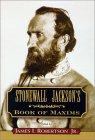
picture of book

In his Section "Guides for Good Behavior", the following excerpt is found stressing the importance of duty:

Through life let your principal object be the discharge of duty; if anything conflicts with it, adhere to the former and sacrifice the latter.

According to his wife, Jackson often said, "My duty is to obey orders!" This dedication became deep-rooted during Jacksons ten years as a professor at VMI.
One of the Institutes trustees considered "the striking characteristic"

 of  Jackson to be "his strict sense of duty. This with an abrupt manner and a crisp but not brusque form of expression did not tend to render him popular."


The Reverend R.L. Dabney asserted that duty was "the ever present and supreme sentiment" in Jacksons makeup. Another clerical friend, Dr. Moses Hoge, wrote a month after Jackson's death: "If he required implicit obedience to his orders, he set the example of prompt and unhesitating compliance with those he received
himself."

General Jackson was never absent from his post of duty. Not once did he take a furlough or brief leave to visit a loved one or attend to a personal errand. Duty came first. Late in 1862, one of his aides lamented that he had not been away from the army for a day since he entered service.


"Very good," Jackson replied. "I hope you will be able to say so after the war is over. "


Reminders:
  • SCV License Plate Applications
  • Palmetto Pathfinders Applications
  • South Carolina Division Life and National Life Applications
  • SC State SCV Sonvention March 14 and 15
  • Visit The Quartermaster Table at McGowan Camp meetings
  • Please remember to make a GENEROUS DONATION for the monthly Camp Meal.
  • February 20th MEETING: 6:30 PM at the Watts House
  • South Carolina State Confederate Memorial Day Service - Columbia, SC Saturday May 3, 2003
  • Laurens County Confederate Memorial Day Service Saturday May 10, 2003


surviving the confederacy

Recommended Reading

A Historical Novel of War, Honor, Courage and SURVIVAL


Membership Renewals

The deadline of January 31st is fast approaching to renew your annual dues for
SCV membership.

If you have not yet paid your Dues, please write your check out today and mail
it to:

SCV Camp 40
P.O. Box 453
Laurens, South Carolina 29360


Unless you have a Life Membership in the South Carolina Division or with
National, renewal fees are:

$20.00 National
$10.00 McGowan Camp
$ 5.00 State Division
$35.00 Total

All in all, the SCV dues are very low compared to many other organ-izations. We
are a nonprofit group and we certainly wish to retain all members.

Dever Ray Martin, Adjutant


South Carolina Division State Convention
Make plans to attend the annual South Carolina State SCV Convention, March 14
and 15, 2003.


Hosted by the Secession Camp # 4, the convention will meet in Charleston, SC aboard the USS Yorktown at Patriots Point. The Friday night social will be on Bug Island, complete with oyster roast and local
brews. Plan to attend the Saturday morning Memorial Service at 8:00 a.m. A tour of the C.S.S. Hunley at the Warren Lasch Observatory will be available on Saturday night.


Lets have a good turnout for this years Convention. If you have not received the newsletter in the mail with the sign up application, let me
know as soon as possible. Deadline for early registration is February 1st.


  •   Early registration is $50.00
  •   Hunley Tour and Pig Roast $25.00.
  •   Ancestor Memorials $10.00.


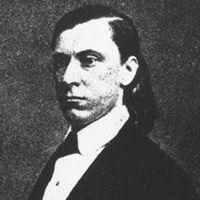
An Inside Story, GENERAL ROGER ATKINSON PRYOR, CSA
roger atkinson pryor

BORN: 1828 in Dinwiddie City, VA.
DIED: 1919 in New York City, NY.

CAMPAIGNS: Williamsburg, Seven Days, Second Bull Run,
Antietam, and Chancellorsville
.

HIGHEST RANK ACHIEVED:
Brigadier General


Roger Atkinson Pryor was born on July 19, 1828, in Dinwiddie County, Virginia. He grew up in Nottoway County, was educated in Virginia, at the Petersburg Classical Academy and at Hampton-Sydney College and graduated from college in 1845 as valedictorian. Pryor studied law at the University of Virginia, and became a lawyer in 1849, while working as editor of "Southside Democrat." In 1853, while maintaining his law practice; Pryor began editing the Richmond "Enquirer." He founded "The South," a sectionalist Washington D.C. newspaper, in 1857, and wrote for a similar Washington paper called "The States." Elected to the US House of Representatives in 1859, he bacame a political theorist
 and fervent secessionist.
After Virginia seceded, Pryor entered the Provisional Confederate Congress, then resigned to become colonel of the 3d Virginia Infantry. He served at the Battle of Williamsburg in May of 1862, and was promoted to brigadier general to date from April 16, 1862. After taking part in the Seven Days' Campaign, Second Bull Run, and the Antietam Campaign; his regiment was dismantled. Unable to set up an independent brigade, he fought in the Battle of Chancellorsville, then went without an assignment. He resigned in 1863, and served the Confederacy in scouting and intelligence work. Captured in November of 1864, he was held prisoner at Fort Lafayette and exchanged in 1865, before the Confederate surrender.


Directly after the war, Pryor moved to New York City and wrote anonymously for the New York "Daily News" until 1866. He practiced law, then was appointed to the New York Court of Common Pleas in 1890. Appointed a justice for the New York State Supreme Court in 1896, he was a referee in the appellate division of the State Supreme Court from 1899 to 1919. Pryor died in New York City, on March 14, 1919.
His wife, Sara, wrote about the couple's war experiences in "Reminiscences of Peace and War" (1904).


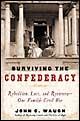
John C. Waugh book, Surviving the Confederacy, is a fascinating and poignant portrait of one of the South's most well-known and admired couples, Roger and
Sara Pryor, their friends, and their society.


They were present at many of the crucial moments before and during the War Between the States, from the first shot fired at Sumter to the fall of Richmond. Living examples of the South's pride and success before the war, they were also victims of the ensuing privation and de-struction.


Superbly written and dramatically told, the author captures a period of Southern American history that you will thoroughly enjoy.


Here is a story that gives you personal insight into one of the Souths finest families whom, after reading about, you will feel that you are very much a part of.


CONFEDERATE ANCESTOR PROFILES:


As requested a couple of months back in the monthly newsletter, I asked for camp members to consider submitting profiles on their Confederate ancestor.


To date, none have been received; therefore I would like to extend another opportunity for each of you to have a part 
in the monthly publication.


The submissions do not have to be lengthy (250 words or less) and everyone is encouraged to consider something. I know everyone is proud to name their grandfathers or (G) uncles and cousins who wore the Gray. We all talk about them in casual conversation with one another. So, why not share it with all.

If you have a picture or just the details of your soldiers unit and regiment and where he is buried, send them in.


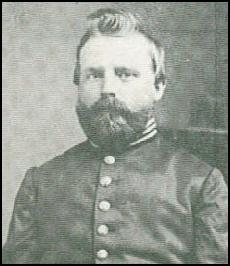
Captain Robert H. Hawthorne
Company F
Orrs Regiment of Rifles
KIA Gaines Mill, Va
June 27, 1862
Age 30


robert h. hawthorne

     Gregg's/McGowan's Brigade Regiments and Flags
       Mark A. Simpson

In the coming months, McGowan Camp mem-bers will begin to see added Flags to our Color Presentation and display at meetings and events.


Since our Camp is named for Brigadier General Samuel McGowan, it is fitting that we display the unit flags of the Regiments that served under him.


Those Regiments are:

  •   1st (Orr's) Regiment of Rifles, SCV
  •   1st (Gregg's) Regiment Infantry, SCV
  •   12th Regiment Infantry, SCV
  •   13th Regiment Infantry, SCV
  •   14th Regiment Infantry, SCV


We know much about the Flags of these regiments since most survived and some are displayed in the South Carolina Relic Room and State Museum.

Much care and respect will be used to reproduce the flags in order to capture their authentic look. They will be, however, void of tears, bullet and fragment
holes, etc in hope that we may display them proudly as they were when first carried.


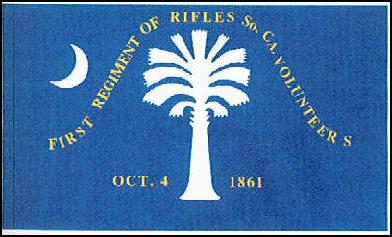
Here is a brief preview of one of those flags.


1st Regiment of Rifles (Orr's)


Orr's flag


In the spring of 1861, James L. Orr of South Carolina was authorized to raise a regiment of infantry for the service of the Confederate States. The regiment of ten companies remained in training at Sandy Springs, Anderson District, SC until it was sent to Sullivans
Island on the coast. Orr's Regiment stayed there until April 1862. Colonel Orr resigned in December 1861 due to his election to the Confederate Senate, and was succeeded by Colonel J. Foster Marshall.


In April 1862, the regiment was ordered to Richmond, where it was assigned to J.R. Andersons Brigade. Later it was attached to Joseph Kershaws Bri-gade and remained there until Lees surrender at Appomattox.


The flag of the 1st (Orr's) Regiment of Rifles is 30" (hoist) x 49.5"  (fly) and has a blue sleeve for mounting. The crescent is 8 point to point and is of white cotton sewn to the blue silk. The Roman uncial letters of the arch are 13/8" high and are painted in gold and are shaded lower and right in red. The letters and numbers in the date on either side of the palmetto
are also Roman uncial, gold painted with red shading lower and right, and are 11/4" high. The total width of the lower lettered phrase is 17".


The stylized palmetto tree reflects a symbolism often apparent on flags of South Carolina. With its eleven fronds, it is a reminder that from the roots of South Carolinas secession came a Con-federation of eleven sovereign states. The tree, white cotton, sewn to the blue silk, is 23 tall and at its widest point is 13 ½". The base is 5 ¼" wide. The reverse is a 1st National flag of standard proportions with a circle of eleven stars.


Source:
South Carolina Relic Room, Columbia, SC


The Flags of Civil War South Carolina by Glenn Dedmondt
Pelican Publishing Company


SCV Camp 40

Published and Edited by
Mark A. Simpson
Commander

Home Phone:
(864) 576-4561

eFax:
(508) 374-5578

E-Mail:
[email protected]

Home Address:
105 Winterberry Court
Spartanburg, SC 29301

We're on the Web!

 McGowan Camp web page


cross


    Camp Announcements - Lt. Commander Ludie Watkins

Monthly Raffle


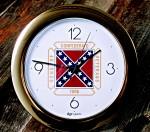
The February Raffle will be an SCV Logo Wall Clock

wall clock


Tickets are $1.00 each and, as usual, all proceeds go to the Camp General Fund. This Clock will proudly grace someone's home or office. But you have to be at the meeting to purchase a ticket. 
Thursday February 20th. Come for hot dogs and chips at 6:30 and enjoy a little fellowship with camp compatriots.


WEB POSTING:


If everything has gone as planned with the newsletter, many of you are reading this online.


Special thanks to Camp Compatriot and Webmaster, Mike Marshall for sharing his professional talent and skills in getting our newsletter uploaded  to the web.

Hopefully this is a beginning to more things to come with our Web promotions.


Monthly Speaker:


South Carolina Division Commander and McGowan Camp member Robert H. Roper, III will be our February speaker. His topic for discussion will be the South Carolina Secession Con-vention. Dont miss this exciting and informative presentation.


            Words of Life and Hope               Scott Watts, Chaplain

    The LORD is my strength and my song; he has become my salvation. He is my God, and
    I will praise him, my father's God, and I will exalt him.
       (Exodus 15:2 NIV)

Why Praise God?

1) It sets the tone for our time with God. Beginning by praising God acknowledges whose attention we've gained and reminds us who we are addressing.

2) Praising God for who He is, reminds us of God's identity and reinforces our
understanding of
who He is.  As we

 praise Him we become more aware of His power in the world and His presence in our lives.

3) Beginning by praising God follows the examples found in the Bible.

4) Perhaps most importantly God is worthy of our praise. . .As our praise focuses on God's works and character, we see
ourselves in stark contrast,

 filled with human failures. Praise and confession become intertwined. The more we praise God for how great He is and see our own sin, we are led into confession of our sins, which in turn leads us back to praising and thanking God for His mercy and grace and forgiveness.


Hosted by www.Geocities.ws

1