E-COMMERCE
FIREWALL
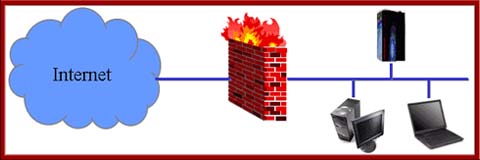
A combination of specialized hardware and software set up to monitor traffic between an internal network (LAN) and an external network (ie the Internet). Its primary purpose if for security and is designed to keep unauthorized outsiders from tampering with or accessing information on a networked computer system.
Protect your computer in 4 steps (Microsoft)
Firewall Q&A (Vicomsoft)
Computer Network Security (Netcommunications)
How to write proposals and reports that get results
PROJECT RESEARCH
www.sportsbikeshop
FREQUENTLY ASKED QUESTIONS (FAQS)
The following notes were taken from www.w3schools.com
What is an HTML File?
- HTML stands for Hyper Text Markup Language
- An HTML file is a text file containing small markup tags
- The markup tags tell the Web browser how to display the page
- An HTML file must have an htm or html file extension
- An HTML file can be created using a simple text editor
What is XML?
- XML stands for EXtensible Markup Language
- XML is a markup language much like HTML
- XML was designed to describe data
- XML tags are not predefined. You must define your own tags
- XML uses a Document Type Definition (DTD) or an XML Schema to describe the data
- XML is a W3C Recommendation
What is JavaScript?
- JavaScript is the scripting language of the Web!
- JavaScript is used in millions of Web pages to improve the design, validate forms, detect browsers, create cookies, and much more.
- JavaScript is the most popular scripting language on the internet.
What is XHTML?
- XHTML stands for EXtensible HyperText Markup Language
- XHTML is aimed to replace HTML
- XHTML is almost identical to HTML 4.01
- XHTML is a stricter and cleaner version of HTML
- XHTML is HTML defined as an XML application
- XHTML is a W3C Recommendation
- XHTML is compatible with HTML 4.01.
- All new browsers have support for XHTML.
What is TCP/IP?
- TCP/IP is the communication protocol for communication between computers connected to the Internet.
- TCP/IP stands for Transmission Control Protocol / Internet Protocol.
- The standard defines how electronic devices (like computers) should be connected to the Internet, and how data should be transmitted between them.
HTTP - Hyper Text Transfer Protocol
HTTP takes care of the communication between a web server and a web browser.
HTTP is used for sending requests from a web client (a browser) to a web server, returning web content (web pages) from the server back to the client.
HTTPS - Secure HTTP
HTTPS takes care of secure communication between a web server and a web browser.
HTTPS typically handles credit card transactions and other sensitive data.
SSL - Secure Sockets Layer
The SSL protocol is used for encryption of data for secure data transmission.
SMTP - Simple Mail Transfer Protocol
SMTP is used for transmission of e-mails.
MIME - Multi-purpose Internet Mail Extensions
The MIME protocol lets SMTP transmit multimedia files including voice, audio, and binary data across TCP/IP networks.
IMAP - Internet Message Access Protocol
IMAP is used for storing and retrieving e-mails.
POP - Post Office Protocol
POP is used for downloading e-mails from an e-mail server to a personal computer.
FTP - File Transfer Protocol
FTP takes care of transmission of files between computers.
PPTP - Point to Point Tunneling Protocol
PPTP is used for setting up a connection (tunnel) between private networks.
WAP - Wireless Application Protocol
The wireless industry came up with the idea of WAP. The point of this standard was to show internet contents on wireless clients, like mobile phones. WAP is published by the WAP Forum, founded in 1997 by Ericsson, Motorola, Nokia, and Unwired Planet.
WAP stands for Wireless Application Protocol
WAP is an application communication protocol
WAP is used to access services and information
WAP is for handheld devices such as mobile phones
WAP is a protocol designed for micro browsers
WAP enables the creating of web applications for mobile devices.
WAP uses the mark-up language WML (not HTML)
WML stands for Wireless Markup Language
PROPOSAL FOR DOMAIN NAME OF NEW E-COMMERCE SITE
Introduction
Synopsis. A short description.
Purpose of the proposal, clearly stated goals and objectives,
Why this project is necessary
Proposed domain name
Choice of domain name that should be used by the new e-commerce site.
Include the full address of the domain name. A more detailed description of domain name.
Benefits of domain name to the company.
Outline advantages
List FOUR reasons why a domain name is important to the ongoing success of an e-commerce site.
i.
ii.
iii.
iv.
Costs of domain name.
Registration fee, Annual fee, Where to register, Use table to show clearly
Conclusion
Summary and your recommendation.
PROJECT RESEARCH
e-Commerce security: Attacks and preventive strategies
http://www.yourwindow.to/information-security/gl_ecommerce.htm
You are visitor number:
