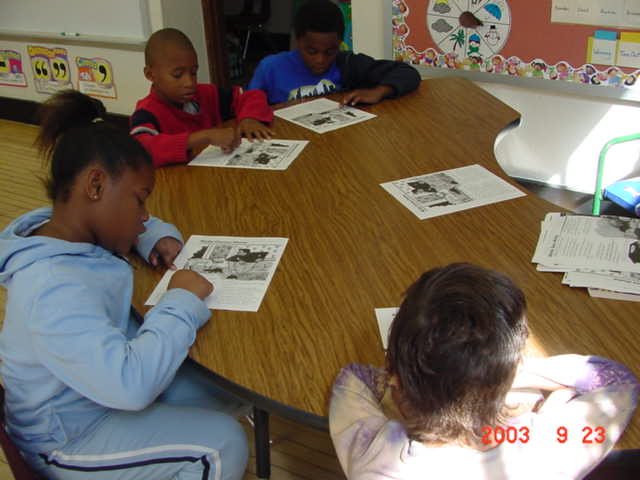
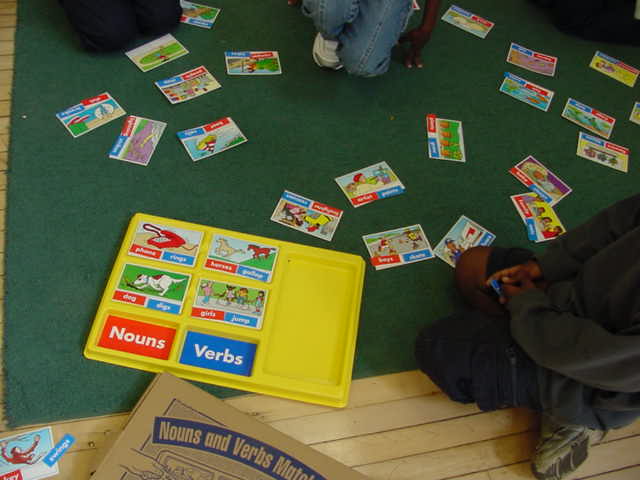
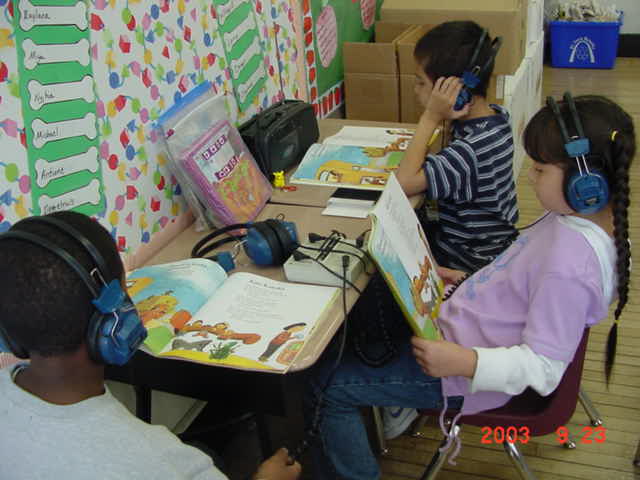
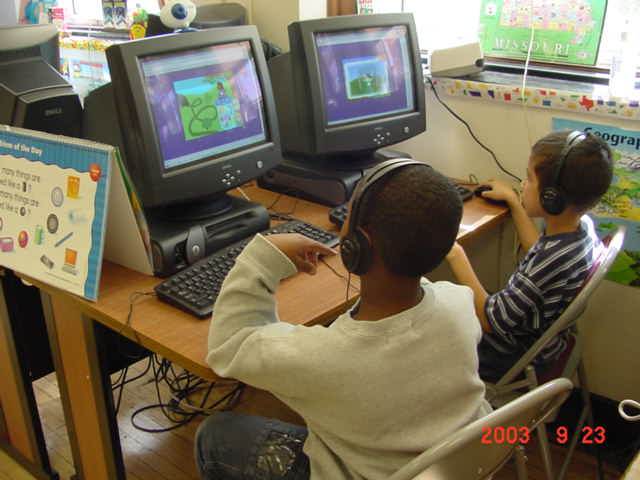
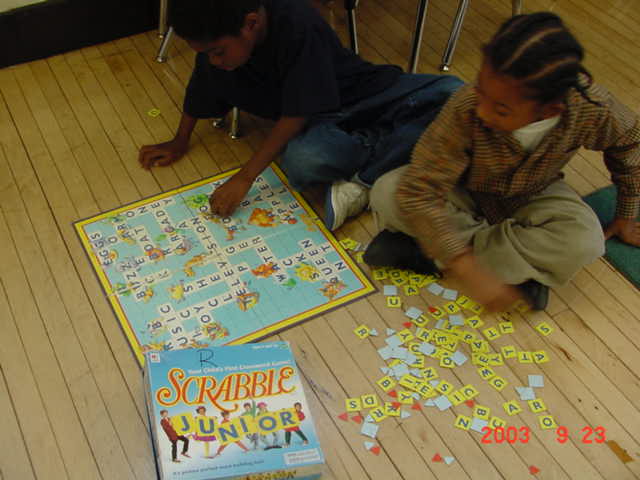
I can honestly not imagine teaching with out two things: Centers and Computers. I like to use centers in the morning focused on all Communication Arts Skills. I work with a small reading group on the weeks story, phonics, story details, comprehension, inference, writing skills, and the like. Many people ask me how I get centers to work and how to manage student behavior while working with a small group. Everyday in a classroom is different, and teachers have to be on their toes, but the following steps are things I personally have found successful in this area.
1. Practice, Practice, Practice. The first of the year (or whenever you begin centers) explain that groups of students will be moving from one station to another. Demonstrate by literally moving through these stations as you are addressing the class. Then for the entire first week, center time is simply practicing moving to the stations, sitting the way that is expected at that station (in a group, on the floor, in a chair, on a mat) and quietly moving to the next station when directed. This first week I do not have students complete any activities at the centers. It is important to get the expectations down about how to transition quietly to centers and how to move from center to center. Some students will have a hard time walking to stations rather than running. This is stressed the first week during practice. If you set up specific rules for how to move amongst centers it cuts down on confusion. I personally also always have students move clockwise around the room. This may seem tedious ; however, it is worth the time. Your class will have memorized this system and can function autonomously in your classroom as you conduct a small group.
2. Time Frame. During the second week of centers I keep that activities short and sweet (around 10 minutes per center). Each week center time becomes a little longer and activities get a bit harder. Eventually students spend 30-340 minutes a day at each center. I always have materials clearly labeled for centers so students can set up right away.
3. Monitoring Students. I sit at a small kidney table with the reading group I am working with. This table is in a position it allows me to keep an eye on every corner of the room without having to turn around. I use a lot of nonverbal communication with students at other centers if I see something unacceptable going on. If a student is totally out of control they have to go to their desk and go on a word hunt in their library book.
4. Reading Group Rules. I tell my students we are all learning so there is no reason anyone should ever laugh at another student. I also say the only person that can help (sound out words) is me. This cuts down on students speaking out and students have more time to sound words out. There should be no noise when students are moving between centers. I also show student the correct way to ask for my help while I am working with a small group. I also explain the difference between working noise and excessive noise. |