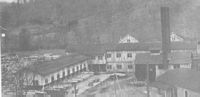
As far back as the 1880's Eastern Capitalists were interested in the forests surrounding Lenox. Isolation and rugged terrain postponed development until some years later.Finally a lumber company was started in the vicinity of Lenox.
The Lenox Sawmill Company brought big scale operations to the region and to Lenox. During the years 1916-1917 the sawmill expanded, houses and stores sprung up and a hotel was built.
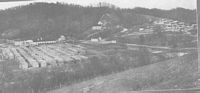
Most of the employees in the vicinity, took up residence in the city situated on the side of a hill, that looked like a huge sugarbowl with houses on the sides that looked down on a broad platform. Neat frame dwellings in rows in the residential section were completely modern, all had electricity and most had the awsome feature of indoor plumbing.
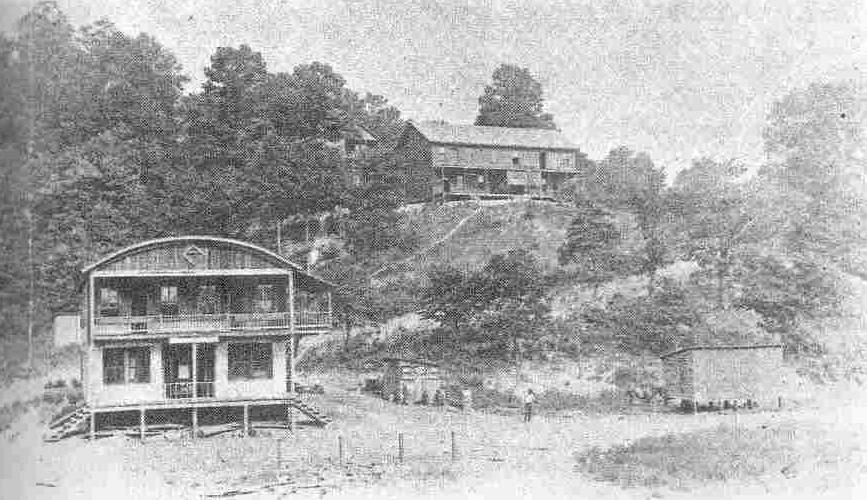
Lenox hotel located on the shoulder of the hill commanded an impressive view of the business district.
Fame of the lumber and coal brought many visitors and sightseers to the hotel, where they enjoyed the pure moutain air and lured by the business and scenery, came for a visit and stayed to become and integral part of the lumbar town.
While most communities in 1919 were dependent on a bucket brigade in case of fire, the town of Lenox had it's own water tank. A 100,000 reservior located at the top of the hill near the hotel.
The town boasted a huge department store, comparable to those in large cities, which offered a complete shopping service, stocking everything from imported feminine luxuries to farm implements.
Timber was the main force behind this booming business, the sawmill built 1917 was driven electric motors with a power plant that was used to llight the city.
Many people going to Lenox today would never believe that a railraod once wound itls way through the hills, that there were stations named: MCclain; Fannin Crossing; Bituminous Mine; Redwin; and Rush Branch with headquarters at Lenox.