
The small village of Roslin lies a few miles to the South of Edinburgh. It is a quiet little backwater of a place, but this was not always the case.
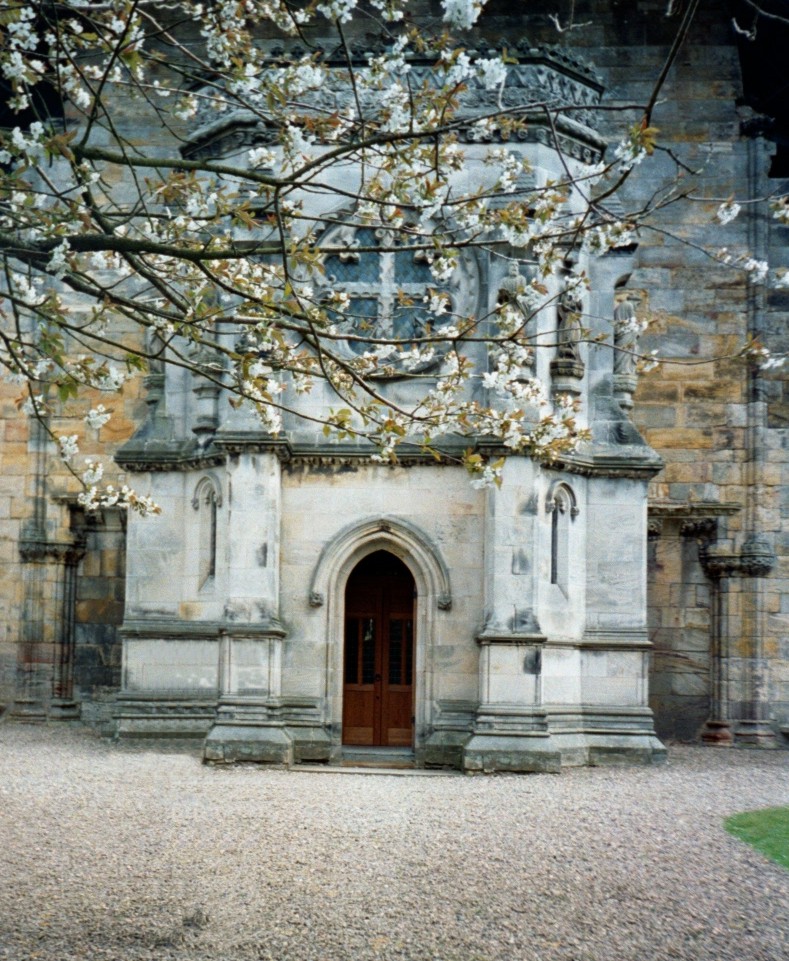
This was one of the strongholds of the powerful St.Clair family and was one of the last bastions of the Knights Templar. The St. Clairs lived in Rosslyn Castle and William St.Clair the 3rd Prince of Orkney built Rosslyn Chapel as the family place of worship. Rumour has it that the Holy Grail is secreted within the crypt walls.
.
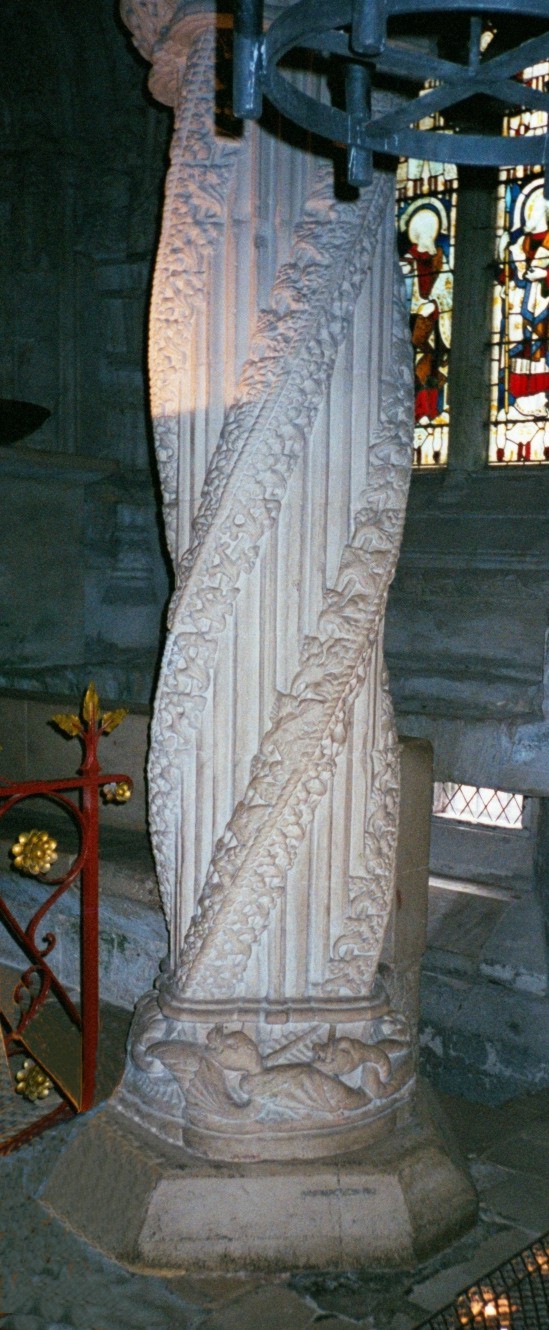
The Chapel is famed for its medieval stone carvings. One of the best of these is the famous �Apprentice Pillar.� There is a story behind this, that the Master Mason was abroad for a considerable period of time. When he returned, he found that his apprentice had carved a pillar, which was far more intricate than anything he could produce. In a fit of jealousy he slew the unwitting apprentice.
Other stone carvings in the chapel portray crops indigenous to America and were carved long before Christopher Columbus made his epic voyage. The tradition is that Henry St.Clair sailed a fleet across the Atlantic following up stories told by Norsemen who were shipwrecked in Orkney when he ruled there.
As the power of the Knights Templar was being weakened due to political and papal interference, it soon evolved into the Order of Freemasons. The St.Clairs had been well placed in Templar circles so they soon became Grand Masters of the Order. This family position has carried on until recent times.
The Battle of Rosslyn
The castle is situated above Roslin Glen, the site of one of the most important battles between the Scots and the English during the wars of independence.
The battle took place in 1303 eleven years before the battle of Bannockburn. The English army invaded Scotland under the command of Sir John Seagrave. As they crossed the border they separated to attack three separate targets. One of the targets was Rosslyn Castle.
When the Scots heard about this, they hastily gathered an army of around nine thousand men and made their way to Rosslyn. Sir William Wallace was reluctant to take command, so the main Scottish army was commanded by Sir Symon Fraser.
The English force camped for the night in the glen with no special knowledge of the terrain. On the other hand, the Scots had local geographical knowledge and used this to their advantage. They attacked the English camp in the early hours of the morning and the invaders suffered a rout.
Spurred on by their success, the Scots lay in ambush for the other two English armies. On two more occasions that day, they defeated the English by attacking from the high ground and driving them over the gorge into the glen below. The Scottish army suffered very few casualties. On the other hand the English army had only about four thousand men left from a force of over thirty thousand.
In many ways this battle equalled the battle of Bannockburn tactically, but for some obscure reason has never become so well known.
![[History]](http://us.yimg.com/i/ligans/cb/smtdih.gif)

