HERE IS THE MOST ADVANCED UPCOMING 5TH
GENERATION WAR AIRCRAFT
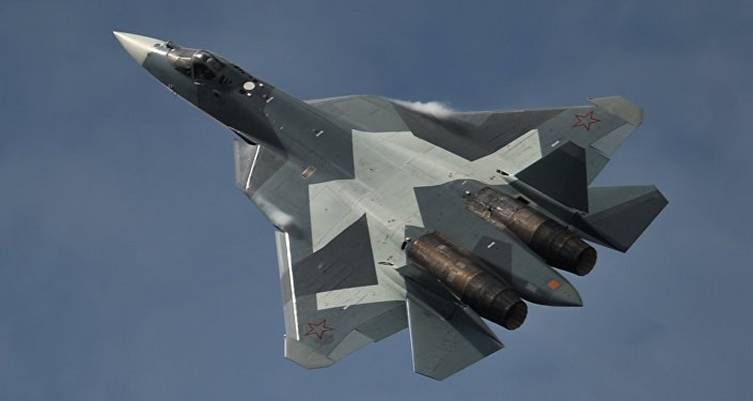 NAME: SUKHOI PAK FA T50
The Sukhoi
PAK FA (Russian: Сухой ПАК ФА, Russian: Перспективный авиационный комплекс фронтовой авиации, Perspektivny Aviatsionny Kompleks
Frontovoy Aviatsii, literally "Prospective Airborne Complex of Frontline Aviation") is a fifth-generation
fighter aircraft programme of the Russian Air Force. T-50 is the name of the
prototype aircraft designed by Sukhoi for the PAK FA programme. The aircraft is
a stealthy, single-seat, twin-engine jet fighter, and will be the first
operational aircraft in Russian service to use stealth technology. It is a
multirole fighter designed for air superiority and attack roles. The fighter is
planned to have supercruise, stealth, supermaneuverability, and advanced
avionics to overcome the prior generation of fighter aircraft as well as ground
and maritime defences.
The PAK FA
is intended to be the successor to the MiG-29 and Su-27 in the Russian Air
Force and serve as the basis for the Fifth Generation Fighter Aircraft (FGFA)
being co-developed by Sukhoi and Hindustan Aeronautics Limited (HAL) for the
Indian Air Force.[14][15] The T-50 prototype first flew on 29 January 2010 and
deliveries of production aircraft to the Russian Air Force are to begin in
2018.[16] The prototypes and initial production batch will be delivered with a
highly upgraded variant of the AL-31F used by the Su-27 family as interim
engines while a new clean-sheet design powerplant is currently under
development. The aircraft is expected to have a service life of up to 35 years
The PAK FA
is a fifth generation multirole fighter aircraft and will be the first
operational stealth aircraft for the Russian Air Force. Although most
information is classified, sources within the Sukhoi company and Defense
Ministry have openly stated that the aircraft is to be stealthy,
supermaneuverable, have supercruise capability, incorporate substantial amounts
of composite materials, and possess advanced avionics such as active phased
array radar and sensor fusion.[13][23][71]
The T-50 has
a blended wing body fuselage and incorporates all-moving horizontal and
vertical stabilizers; the vertical stabilizers toe inwards to serve as the
aircraft's airbrake. The aircraft incorporates thrust vectoring and has
adjustable leading edge vortex controllers (LEVCONs) designed to control
vortices generated by the leading edge root extensions, and can provide trim
and improve high angle of attack behaviour, including a quick stall recovery if
the thrust vectoring system fails.[72] The advanced flight control system and
thrust vectoring nozzles make the aircraft departure resistant and highly
maneuverable in both pitch and yaw, enabling the aircraft to perform very high
angles of attack maneuvers such as the Pugachev's Cobra and the Bell maneuver,
along with doing flat rotations with little altitude loss.[73] The aircraft's
high cruising speed and normal operating altitude is also expected to give it a
significant kinematic advantage over prior generations of aircraft.[74]
The T-50
makes extensive use of composites, comprising 25% of the structural weight and
almost 70% of the outer surface.[53] Weapons are housed in two tandem main
weapons bays between the engine nacelles and smaller bulged, triangular-section
bays near the wing root.[75] Internal weapons carriage eliminates drag from
external stores and enables higher performance compared to external carriage.
Advanced engines and aerodynamics enable the T-50 to supercruise, sustained
supersonic flight without using afterburners. Combined with a high fuel load,
the T-50 has a supersonic range of over 1,500 km, more than twice that of the
Su-27.[74][73][76] In the T-50's design, Sukhoi addressed what it considered to
be the F-22's limitations, such as its inability to use thrust vectoring to
induce roll and yaw moments and a lack of space for weapons bays between the
engines, and complications for stall recovery if thrust vectoring fails. The
T-50 will be the first operational aircraft in Russian Air Force service to use
stealth technology. Similar to other stealth fighters such as the F-22, the
airframe incorporates planform edge alignment to reduce its radar cross-section
(RCS); the leading and trailing edges of the wings and control surfaces and the
serrated edges of skin panels are carefully aligned at several specific angles
in order to reduce the number of directions the radar waves can be
reflected.[78] Weapons are carried internally in weapons bays within the
airframe, and antennas are recessed from the surface of the skin to preserve
the aircraft's stealthy shape. The IRST housing is turned backwards when not in
use, and its rear is treated with radar-absorbent material (RAM) to reduce its
radar return. To mask the significant RCS contribution of the engine face, the
partial serpentine inlet obscures most, but not all, of the engine's fan and
inlet guide-vanes (IGV). The production aircraft incorporates radar blockers
similar in principle to those used on the F/A-18E/F in front of the engine fan
to hide it from all angles. The aircraft uses RAM to absorb radar emissions and
reduce their reflection back to the source, and the canopy is treated with a
coating to minimize the radar return of the cockpit and pilot.[79][80]
The T-50's
design emphasizes frontal stealth, with RCS-reducing features most apparent in
the forward hemisphere; the shaping of the aft fuselage is much less optimized
for radar stealth compared to the F-22.[74] The combined effect of airframe
shape and RAM of the production aircraft is estimated to have reduced the
aircraft's RCS to a value thirty times smaller than that of the Su-27.[81]
Sukhoi's patent of the T-50's stealth features cites an average RCS of the
aircraft of approximately 0.1-1 square meters.[79] However, like other stealth
fighters, the T-50's low observability measures are chiefly effective against
high frequency (between 3 and 30 GHz) radars, usually found on other aircraft.
The effects of Rayleigh scattering and resonance mean that low-frequency
radars, employed by weather radars and early-warning radars are more likely to
detect the T-50 due to its physical size. However, such radars are also large,
susceptible to clutter, and are less precise.
For video click here