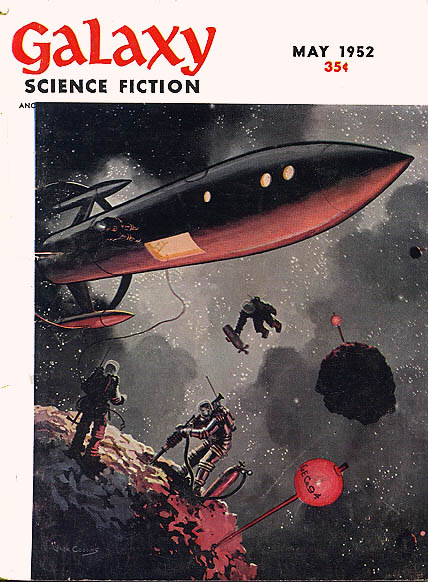
After WWII, a mass transformation
amounting to a quantum leap occurred in the way people started to view the
moon and planets of our solar system. No longer merely decorative celestial
props, these familiar heavenly bodies became objects for scientific study and
industrial exploitation.
 June,
1953
June,
1953
The moon, our nearest neighbor in space,
promised many exciting discoveries. In this
painting by artist Mel Hunter, an astronaut
with his suit illumined by an eerie radioactive glow stumbles upon an immense
uranium deposit in a lunar
cave. Once merely a subject of romantic ballads and songs, the "silvery
moon" began to look like an attainable horn of plenty for science and
technology at the dawn of the space age.
Visit the
Lunar Prospector website