| The Extramusical World of Robert Schumann |
 |
| Many creative people have immortalized Robert Schumann in extramusical forms, that is, in novels, films, poetry and plays. The following are a list of some of these creative endeavours. If you know of any other extramusical homages to Schumann, please contact the webmaster. |
| NOVELS |
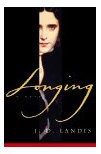
| Landis, J.D. "Longing", New York: Ballantine, 2001. Landis tells the love story of Robert and Clara in chronological order. It features convincing appearances by Liszt, Chopin and Brahms. |
| White, Hilda. "Song Without End: The Love Story of Clara and Robert Schumann", New York: E.P. Dutton, 1959. (Currently out of print but still available at various libraries across North America; the title was purchased by a filmmaker in Hollywood for his film about Liszt.) |
 |
 |
| CINEMATOGRAPHY |
 |
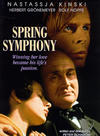
| Spring Symphony (1983) Director: Peter Schamoni Plot Summary: This film concerns the tumultuous love affair of Clara and Robert and the lawsuit filed by her father, Wieck, against Robert. |
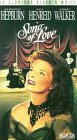
| Song of Love (1947) Director: Clarence Brown Plot Summary: Composer Robert Schumann struggles to compose his symphonies while his loving wife Clara offers her support. Also helping the Schumanns is their lifelong friend Johannes Brahms. (From www.imdb.com) |
 |
 |
| PLAYS |
| Tony Hunt, Mr. Schumann's Caravan, 2004 Plot Summary: Rob comes to terms with the problems of his life by immersing himself in the music of his hero, Robert Schumann. Currently stressed by the behaviour of his wife, Mel, who has entered into the role of being a student with too much enthusiasm, Rob confronts her with her unacceptable behaviour, including her infidelity, and after a fight, throws her out of their home. She explores the value of her relationship with her young lover, Samuel, but his youthful pragmatism -- and the fact that he has another girl in tow -- forces Mel to come to the realization that she has made a huge mistake. Her eventual return to her damaged partner, Rob, is only possible through ingenious use of the fantasy figures (Schumann's alter egos) that Rob has sought out for comfort, and the very edgy reconciliation of Rob and Mel ends the play. Features Schumann's music prominently throughout the play. This play is seeking a producer! Anyone interested should contact Mr. Hunt at [email protected] |
 |
| POETRY |
| Lee Passarella Prospero's Farewell: Homage to Schumann Sometimes a thousand twangling instruments Will hum about mine ears, and sometimes voices That if I then had waked after long sleep Will make me sleep again ... -- The Tempest, 3.2.132-135 His creative life spanned some twenty years. Not a lot of time to write a hundred fifty opus numbers. Early on, before they married, he bragged to Clara, "I'm happy in this new art of mine." When the scenes and the portraits flowed freely as the wine he always loved too much: Kinderscenen, Novelletten. Butterflies and flower-pieces. Estrella, Chiarina, the wild-man Kreisler and his violin. Those days, Florestan held high carnival. By the end, the winepress dry, it was Eusebius -- the brooding Caliban - half of that musical split personality -- who carried on as best he could, writing down again the old, worn tunes the angels brought him. Then, he'd sometimes speak of "happier times," and you can hear, in the music, where he recalled them. How the deadpan little Winterzeit from Opus 68, written for his daughter Marie, warms at last to remembered strains of the Grossvatertanz. The midnight clock that tolled out his Opus 2 still echoing, through halls as empty now as Prospero's bare island once the magic ceased. |
|
| Galloway, Janice. "Clara: A Novel," New York: Simon and Schuster, 2003. A novel version of the biography of Clara Wieck Schumann. Thank you to Lydia Norvell. |
 |