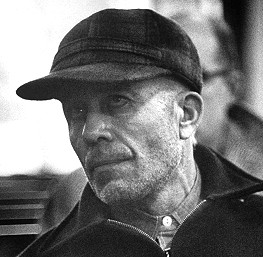
Gein was raised by a fanatical, domineering mother who ranted incessantly about the sinful nature of her own sex. When she died in 1945, her son was a 39 year old bachelor, still emotionally enslaved to the woman who had tyrannized his life. Boarding up her room, he preserved it as though it were a shrine. The rest of the house, however, soon degenerated into a madman's shambles.
When Gein wasn't earning his meager living doing odd jobs for neighbors, he passed his lonely hours poring over lurid magazine pieces about sex-change operations, South Sea headhunters, and Nazi atrocities. His own atrocities began a few years after his mother's death. Driven by his desperate loneliness--and burgeoning psychosis--he started making nocturnal raids on local graveyards, digging up the bodies of middle-aged women and bringing them back to his remote farmhouse. In 1954, he augmented his necrophiliac activities with murder, shooting a local tavernkeeper named Mary Hogan and absconding with her 200 pound corpse. Three years later--on the first day of hunting season, 1957--he killed another local woman, a 58 year old grandmother who owned the village hardware store.
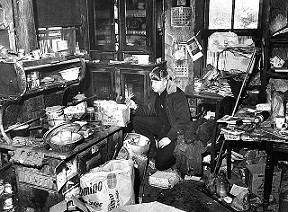
The discovery of these Gothic horrors sent shock waves throughout Eisenhower-era America. In Wisconsin itself, Gein quickly entered local folklore. Within weeks of his arrest, macabre jokes called "Geiners" became a statewide craze. The country as a whole learned about Gein in December 1957, when both Life and Time magazines ran features on his "house of horrors."
After 10 years in a mental hospital, Gein was judged competent to stand trial. He was found guilty but insane and institutionalized for the rest of his life, dying of cancer in 1984.
By then, however, Gein had already achieved pop immortality, thanks to horror writer Robert Bloch, who had the inspired idea of creating a fictional character based on Gein--a deranged mama's boy named Norman Bates. In 1960, Alfred Hitchcock transformed Bloch's pulp chiller, Psycho, into a cinematic masterpiece. Insofar as Psycho initiated the craze for "slasher" movies, Gein is revered by horror buffs as the "Grand-father of Gore," the prototype of ever knife-, axe-, and cleaver-wielding manaic who has stalked America's movie screens for the past thirty years.
There was recently a video released at Blockbuster (from the makers of the Dahmer film) called "Ed Gein." It really sucked, but had a really factual account of the realtionship that existed between he and his domineering mother. Not gorey enough--but its worth watching once.