
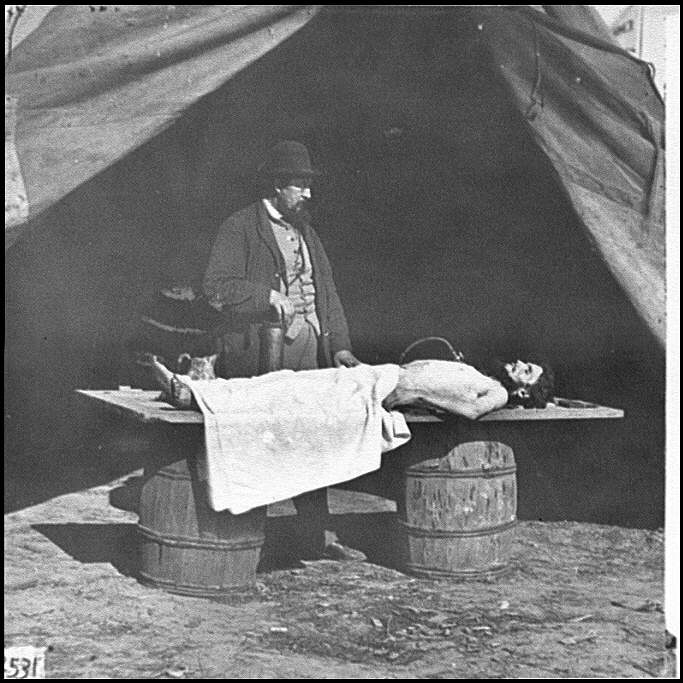
Autopsies cannot be done without the permission of the nearest relative of the deceased person, except in criminal cases or suspicious deaths, when they can be ordered by a coroner or medical examiner to gather detailed medical evidence that can be combined with police evidence in establishing the cause and circumstances of a death. Autopsies include detailed examination of both the exterior and interior of the body.
Process:
The body is opened by making a deep, Y-shaped incision that extends from each armpit to the middle of the chest and continues down. The ribcage is opened by cutting the ribs and sternum to expose the chest cavity. The abdominal cavity is exposed by pulling the edges of the incision aside. Organs are removed and dissected for examination of their internal structure, and small pieces of tissue and samples of body fluids may be saved for later chemical and microscopic analysis.
The brain is removed through a round hole sawed in the skull in an area usually not visible to viewers at a funeral. After the autopsy is completed, bones are put back in place and all incisions sutured.
The importance of examining people in whom the cause of death appears to be obvious is several fold. In the case of shootings or other fatal assaults the forensic pathologist, during the course of the examination, may recover bullets or other important trace evidence. In the case of motor vehicle occupants, it is important to determine who was driving and to assess driver factors, vehicle factors or environmental factors that might have caused or contributed to the crash. Forensic autopsies may identify inherited diseases that constitute a risk for the next of kin. Examples include certain types of heart disease (premature atherosclerosis, hypertrophic cardiomyopathy) and certain kinds of kidney disease (adult polycystic kidney disease.) Notifying the family would be an important service to the living. In individuals who have undergone medical treatment after collapse or injury it is important to share the findings with the treating physicians for educational purposes.
Autopsy Tools:
** Enterotome: Large scissors used for opening the intestines. The bulb-ended blade is inserted into the lumen (the hollow inside) of the gut and the instrument is smoothly stripped down the length of the intestine. The blunt bulb keeps the internal blade from perforating the gut from the inside.
**Skull Chisel: After scoring the cranium (the vault-like part of the skull that holds the brain) with the vibrating saw or hand saw, the chisel is used to gently finish the separation of the top of the cranium from the lower skull, thus exposing the brain and its covering (meninges.)
**Hagedorn Needle: Also called the "sailmaker's needle," this is a large needle with an eye for sewing up the body after the autopsy is finished. The stitching is similar to that used on the outer covering of baseballs. Heavy twine, which is much coarser than suture, is used for the procedure.
**Rib Cutters: These look like smaller pruning shears that are used to cut through the ribs prior to lifting off the chest plate. Some prosectors actually use pruning shears from a hardware store, which are much less expensive.
**Scalpel: This differs from the surgeon's scalpel in having a longer handle for reaching deeper into body cavities. The disposable blade is usually a #22 size, which is the largest commonly available.
**Toothed Forceps: The teeth on these "pickups" lend strength in gripping heavy organs for removal. In surgical pathology, teeth are a liability in that they increase the risk of cross contamination between specimens, so untoothed forceps are used there.
**Scissors: Scissors used for opening hollow organs (such as the gallbladder) and trimming off tissues. They can also be used for blunt dissection by means of an "opening" motion, rather than the more familiar "closing" motion used in cutting.
**Bone Saw: This hand saw is rarely used today, most often by pathologists who fear infection from aerosols thrown up by the much more vigorous vibrating saw. The hand saw can be used to saw through the skull, but its very slow-going compared to the vibrating saw.
**Hammer With Hook: The hammer is used with the chisel to separate the cranium from the lower skull. The hook is handy to pull the cranium away.
**Breadknife: Also referred to simply as the "long knife," this is used to smoothly cut solid organs into slices for examination, display, and photography of the organs cut surfaces. Particularly facile prosectors pride themselves on being able to do almost all of the soft tissue dissections (including the stripping the gut from the mesentery and opening the heart chambers) with this huge, unlikely looking blade.
**Vibrating Saw: Also referred to eponymously as the "stryker saw," is the instrument of choice for most prosectors faced with removing the brain. The blade reciprocates rapidly with a small amplitude. This action prevents the saw from cutting soft tissues, notably the prosector's hand. The disadvantage of vibrating saws is that they throw up more potentially infectious aerosols than do hand saws.