Family:
Growth Form: Large tree up to 150 feet tall; trunk diameter upt o 5 feet; crown broadly rounded; trunk straight, columnar, not buttressed at the base.
Stems: Stout, greenish or orange-brown, hairy, smooth and gray; pith brown, divided by partitions; leaf scars alternate, shield-shaped, elevated with 3 bundle traces.
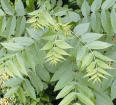
Leaves: Alternate, pinnately compound, with 15-23 leaflets; leaflets up to 3 1/2 inches long and 1 1/2 inches wide, broadly lance-shaped, pointed at the tip, rounded at the asymmetrical base, toothed along the edges, yellow-green and smooth on the upper surface, paler and hairy on the lower surface, truning yellow in the autumn.
Flower Arrangement:
Flowers: Borne separately but on the same tree, appearing when the leaves are partly grown, the staminate several in thick, yellow-green, hairy catkins, the pistillate much fewer in small spikes, neither of them with petals.
Petals: None
Stamens:
Pistil:
Fruits: In groups of 1 or 2, spherical, up to 2 inches in diameter, green or yellow-green, slightly roughened, the husk thick, the nut very hard, oval, dark brown, deeply ridged, the seed sweet.
Habitat: Rich woodlands.
Range: Massachusetts across to Minnesota, south to Texas, east to Florida.
N 38 degrees 34.755 minutes
W 89 degrees 04.146 minutes
Elevation 475 feet