Family:
Growth Form: Large tree with open crown and clumps of brown spines on trunk.
Stems:
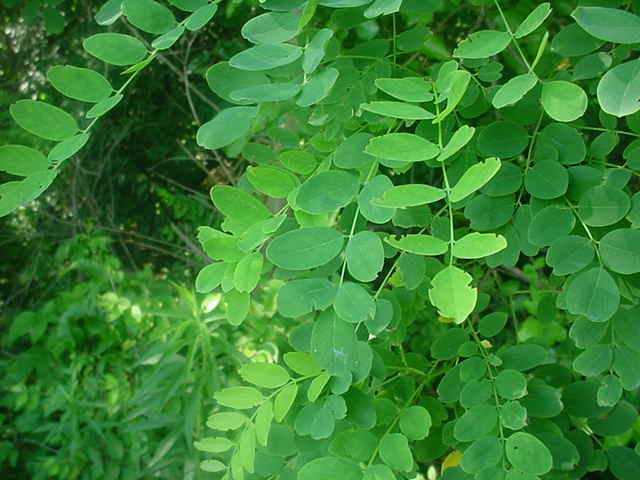
Leaves: Shiny dark green above, paler and smooth below; pinnately compound, 4-8 inches long; with many wavy-edged leaflets; turning yellow in fall.
Flower Arrangement:
Flowers: Yellow-green, 3/8-inch long, bell-shaped, hairy, male and female flowers often on different trees; appearing in clusters in late spring.
Petals: 5
Stamens: .
Pistil:
Fruits: Flat, dark brown pod, 6-16 inches long and 1 1/4 inches wide, containing many beanlike seeds.
Habitat: Floodplains and areas with moist soils in mixed forests; sometimes in drier areas upland.
Range: South Dakota to Pennsylvania, south through most of Mississippi Valley and in Appalachians.
N 38 degrees 34.755 minutes
W 89 degrees 04.146 minutes
Elevation 475 feet