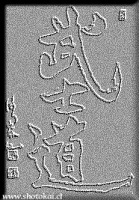
This strict code of honour, affecting matters of life and death, demanded conscious choice and so fostered individual initiative while yet reasserting the obligations of loyalty and filial piety. Obedience to authority was stressed, but duty came first even if it entailed violation of statue law. In such an instance, the true samurai would prove his sincerity and expiate his crime against the government by subsequently taking his own life.
The fundamental principles of Bushido are:
Chuugi (Loyalty)- Loyalty towards one's master/lord and country.- Respect towards family members. - Assiduousness, steadiness. |
Reigi (Respect)- Respect and love.- Modesty and correct etiquette. |
Katsuryoku (Virility)- Valour, courage and bravery.- Coolness under pressure. - Self control. - Patience and endurance. - Vigilance. |
Makoto (Truth)- Sincerity.- Honour. - Justice. |
Mujaki (Simplicity)- Simplicity.- Purity. |
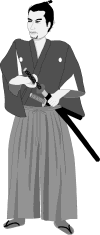 |
If a Samurai were to ever fail in upholding his duties or otherwise
become disgraced, he would commit seppuku, a form of ritual suicide
by self-disembowelment. Before the Samurai could commit seppuku, he had
to repay any debts due. This prevented the Samurai from using seppuku in
a cowardly manner. After any debts were repaid and other matters settled,
the Samurai would then plunge his sword or knife (tanto) into the side
of his stomach, lift it up to his solar plexus (just below the lungs) and
cut horizontally across, allowing the entire belly to fall open and his
guts to spill forth. Often, the next in rank would then behead him.
By doing so, the Samurai would maintain his honour as well upholding the Bushido notion of "death before dishonour." The Samurai was always ready to live or die. |