
|
|
MINDANAO This is the southern most region of The Philippines. Being the second largest island in the Philippines, its Culture consists of mostly Muslium or " Moro " people, also composed of other ethnic groups such as the Maranao, Tausug, Banguingui, and indigenous tribes know as Lumad. You will see alot of Arabian, and Middle Eastern influence in thier costumes and dances
|
||
 |
Singkil
|
Sinkil dance takes its name from the bells worn on the ankles of the Muslim princess. Perhaps one of the oldest of truly Filipino dances, the Singkil recounts the epic legend of the "Darangan" of the Maranao people of Mindanao. This epic, written sometime in the 14th century, tells the fateful story of Princess Gandingan, who was caught in the middle of a forest during an earthquake caused by the diwatas, or fairies or nymph of the forest. The rhythmic clapping of criss-crossed bamboo poles represent the trees that were falling, which she gracefully avoids. Her slave loyally accompanies her throughout her ordeal. Finally, she is saved by the prince. Dancers wearing solemn faces and maintaining a dignified pose being dancing at a slow pace which soon progresses to a faster tempo skillfully manipulate apir, or fans which represent the winds that prove to be auspicious. The dancers weave expertly through criss-crossed bamboos. |
 |
Kini Kini |
Kini means the Royal Walk. Maranao women performed this dance with scarves. The beauty of the scarve and the talent and grace in which it is displayed. Shows their elite social upbringing. |
 |
Asik |
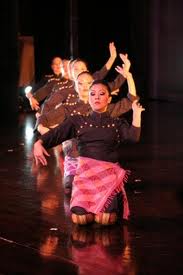
This is performed by a solo madien, adorned with fine beads and make up, long head scarf. She would dance to win the favor of her Sultan master. Many time the girls would dance to win the hearts of her master or to make up for a wrong she had done. She would give her whole heart and soul into this performance to soften the heart of her master to accept her... |
 |
Itik-itik |
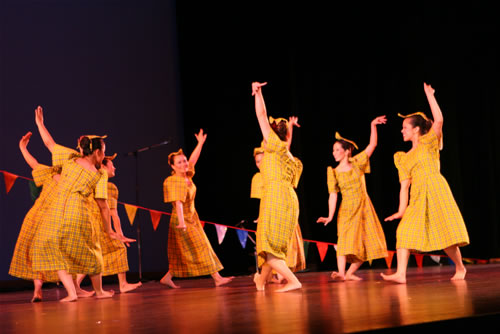
This dance started when a young woman named Kanang (short for Cayetana), who happened to be the best performer in the province of Surigao del Norte, began to imitate the movements of an "itik" or a duck. |
 |
Pangalay |
A pangalay native to the Badjao, sometimes known as the "Sea Gypsies." Pangalay is a dance that emphasizes the agility of the upper body. The rhythmic bounce of the shoulder with simultaneous alternating waving of arms are the basic movement of this dance. The pangalay is commonly performed at weddings and other social gatherings. You will also see some parts of the Sinkgil in this dance also. Another part of this dance is also called the Muslium four Bamboos. |