Popular Culture


 The
name "Easter" is taken from Eastre' or 'Eostre' the
goddess of
spring and dawn. There may also be a connection to the word East where the sun
rises. The festival of Eostre was celebrated on the day of the Vernal Equinox or
spring. People in ancient times held festivals of
The
name "Easter" is taken from Eastre' or 'Eostre' the
goddess of
spring and dawn. There may also be a connection to the word East where the sun
rises. The festival of Eostre was celebrated on the day of the Vernal Equinox or
spring. People in ancient times held festivals of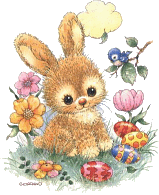 new life and revival in the
spring. There were also religious and magical ceremonies to make crops grow and
prosper. The festival of Eostre was a celebration of the renewal of life in the
spring. People from many cultures in the past worshipped the Spring goddess. The
Scandinavians called her Ostra, the Anglo-Saxons Eostre, and those who lived in
Germany knew her as Eastre.
new life and revival in the
spring. There were also religious and magical ceremonies to make crops grow and
prosper. The festival of Eostre was a celebration of the renewal of life in the
spring. People from many cultures in the past worshipped the Spring goddess. The
Scandinavians called her Ostra, the Anglo-Saxons Eostre, and those who lived in
Germany knew her as Eastre.

 The
cute little bunny carrying a basket of brightly painted eggs that we know and
love today is not a new creation. The hare was actually the symbol of the
goddess Eostre. The hare was associated with fertility rites and festivals
during the spring equinox and were
The
cute little bunny carrying a basket of brightly painted eggs that we know and
love today is not a new creation. The hare was actually the symbol of the
goddess Eostre. The hare was associated with fertility rites and festivals
during the spring equinox and were sacrificed to the goddess in ancient times.
It is said that Eostre once saved a bird by tuning it into a hare. The change
wasn't complete and the hare retained the ability to lay eggs.
sacrificed to the goddess in ancient times.
It is said that Eostre once saved a bird by tuning it into a hare. The change
wasn't complete and the hare retained the ability to lay eggs.

 The
egg is one of the most noted fertility symbols and spring is the season when
animals mate and flowers and trees pollinate and reproduce. The tradition of
coloring eggs has very pagan roots.
Dyed eggs were hung in Egyptian temples and were regarded
as symbols of regenerative life. Dyed eggs also were part of the rituals of
ancient Babylonian religion. Ancient people
also believed that eggs held magical powers. Pregnant young Roman women carried
an egg with them tell the sex of their unborn children; French brides stepped
upon an egg before crossing the threshold of their new homes for luck. In Polish
legends and folklore, one story tells of a time when Mary gave eggs to the
soldiers at the cross. She implored them to be merciful and while weeping, her
tears fell upon the eggs
The
egg is one of the most noted fertility symbols and spring is the season when
animals mate and flowers and trees pollinate and reproduce. The tradition of
coloring eggs has very pagan roots.
Dyed eggs were hung in Egyptian temples and were regarded
as symbols of regenerative life. Dyed eggs also were part of the rituals of
ancient Babylonian religion. Ancient people
also believed that eggs held magical powers. Pregnant young Roman women carried
an egg with them tell the sex of their unborn children; French brides stepped
upon an egg before crossing the threshold of their new homes for luck. In Polish
legends and folklore, one story tells of a time when Mary gave eggs to the
soldiers at the cross. She implored them to be merciful and while weeping, her
tears fell upon the eggs spotting them with dots of brilliant color. Another
tale tells of Mary Magdalene going to the sepulcher to anoint the body of Jesus.
She had a basket of eggs with her and upon uncovering the eggs, when found that
the white shells had become a rainbow of bright colors.
spotting them with dots of brilliant color. Another
tale tells of Mary Magdalene going to the sepulcher to anoint the body of Jesus.
She had a basket of eggs with her and upon uncovering the eggs, when found that
the white shells had become a rainbow of bright colors.
 On
the day of the Spring Equinox, just a few moments before the exact moment of the
equinox, go outside with a raw egg. Find a level place on the sidewalk or
driveway. For a few moments just before and just after the equinox, you can
balance
On
the day of the Spring Equinox, just a few moments before the exact moment of the
equinox, go outside with a raw egg. Find a level place on the sidewalk or
driveway. For a few moments just before and just after the equinox, you can
balance the egg upright (wider end down) by simply setting it down on the
ground. This amazes and delights both kids and adults.
the egg upright (wider end down) by simply setting it down on the
ground. This amazes and delights both kids and adults.
The
custom of eating hot cross buns on Good Friday was pagan in origin. Pagans would
consume cakes during the festivals to welcome spring. the Church of Rome could
not break the ancient people of the habit so they blessed the cakes by drawing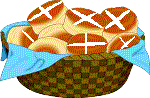 crosses on them. It was thought that bread and buns baked on Good Friday
would never mold and that keeping a hot cross bun to the next Good Friday would
protect ones house from fire.
crosses on them. It was thought that bread and buns baked on Good Friday
would never mold and that keeping a hot cross bun to the next Good Friday would
protect ones house from fire.
 The
lily, for many, symbolizes the spirituality of Easter. Its beautiful trumpet
shaped white flowers symbolize purity, virtue, innocence, hope, and life. The
lily is mentioned numerous times in the Bible. One of the most famous references
is in the Sermon on the Mount, when Christ told his listeners: "Consider
the lilies of the field, how they grow: they toil not, neither do they spin; and
yet..... Solomon in all his glory was not arrayed like one of these." Lilies
were found growing in the Garden of Gethsemane after Christ's agony. Stories are
told that the beautiful white lilies sprung up where drops of
The
lily, for many, symbolizes the spirituality of Easter. Its beautiful trumpet
shaped white flowers symbolize purity, virtue, innocence, hope, and life. The
lily is mentioned numerous times in the Bible. One of the most famous references
is in the Sermon on the Mount, when Christ told his listeners: "Consider
the lilies of the field, how they grow: they toil not, neither do they spin; and
yet..... Solomon in all his glory was not arrayed like one of these." Lilies
were found growing in the Garden of Gethsemane after Christ's agony. Stories are
told that the beautiful white lilies sprung up where drops of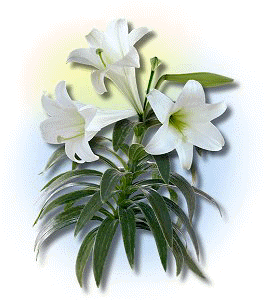 Christ's sweat
fell to the ground in his final hours of sorrow and deep distress. In early
paintings, the Angel Gabriel is pictured giving the Virgin Mary a branch of
white lilies while announcing the she is to be the mother of Christ. A legend is
told that when the Virgin Mary's tomb was visited three days after her burial,
it was found empty except for bunches of the majestic white lilies.
Christ's sweat
fell to the ground in his final hours of sorrow and deep distress. In early
paintings, the Angel Gabriel is pictured giving the Virgin Mary a branch of
white lilies while announcing the she is to be the mother of Christ. A legend is
told that when the Virgin Mary's tomb was visited three days after her burial,
it was found empty except for bunches of the majestic white lilies.
Easter Home Religious Significance Links
