
 The
Christmas Tree
The
Christmas Tree

A
story that was told long ago by Semiramis, the widow of  Nimrod, was that of a
mighty warrior and leader of the people who was killed. His body was
carved into 12 pieces and sent to various nations around the world. One of the
pieces was placed in the ground under the snow. Overnight a tree sprung up out
of the ground and with it the son of Nimrod was born. The son of Semiramis was
thought to be Nimrod reborn. The story Semiramis made up about a tree springing
up out of the ground started the first tree worship. It started as palm tree
worship and eventually in other counties became fur tree worship and evergreen
tree worship. It is still with us today. People once believed the sun was
a god. They believed winter came because the sun god was sick and weak. They
would go through rituals to
Nimrod, was that of a
mighty warrior and leader of the people who was killed. His body was
carved into 12 pieces and sent to various nations around the world. One of the
pieces was placed in the ground under the snow. Overnight a tree sprung up out
of the ground and with it the son of Nimrod was born. The son of Semiramis was
thought to be Nimrod reborn. The story Semiramis made up about a tree springing
up out of the ground started the first tree worship. It started as palm tree
worship and eventually in other counties became fur tree worship and evergreen
tree worship. It is still with us today. People once believed the sun was
a god. They believed winter came because the sun god was sick and weak. They
would go through rituals to help the sun god get well. Evergreen branches were
brought into their homes to help the sun god recover from his sickness. They
decorated their houses and temples with evergreen branches and trees. Today, our
Christmas tree is a tradition passed down from the story that Semiramis told the
people long ago.
help the sun god get well. Evergreen branches were
brought into their homes to help the sun god recover from his sickness. They
decorated their houses and temples with evergreen branches and trees. Today, our
Christmas tree is a tradition passed down from the story that Semiramis told the
people long ago.


The
son of Nimrod (son of the sun god), was associated with  the god Saturn. Saturn
was the god of growing seeds. Christmas could have been adapted from the Roman
celebration, the Saturnalia. This was the time when Saturn was worshipped during
the Winter
the god Saturn. Saturn
was the god of growing seeds. Christmas could have been adapted from the Roman
celebration, the Saturnalia. This was the time when Saturn was worshipped during
the Winter Solstice. The Greeks would begin the Saturnalia with the sacrifice of
a young pig. The people celebrated with feasting, drunkenness and the exchange
of gifts among friends. The Romans would put an offering or gift under a pine or
evergreen tree.
Solstice. The Greeks would begin the Saturnalia with the sacrifice of
a young pig. The people celebrated with feasting, drunkenness and the exchange
of gifts among friends. The Romans would put an offering or gift under a pine or
evergreen tree.
 Sun
worship was popular in Scandinavia. In the winter after 35 days of darkness,
scouts would be sent to the mountain tops to search for the sun. When the sun
first appeared, the scouts would then return with the good news. A yuletide
party would take place with the burning of a Yule
Sun
worship was popular in Scandinavia. In the winter after 35 days of darkness,
scouts would be sent to the mountain tops to search for the sun. When the sun
first appeared, the scouts would then return with the good news. A yuletide
party would take place with the burning of a Yule log. The fire was lit to
celebrate the return of the sun. The Yule log was a huge log they would burn in
honor of their god, Thor. In some areas people would tie apples to the
branches of trees in anticipation of Spring.
log. The fire was lit to
celebrate the return of the sun. The Yule log was a huge log they would burn in
honor of their god, Thor. In some areas people would tie apples to the
branches of trees in anticipation of Spring.
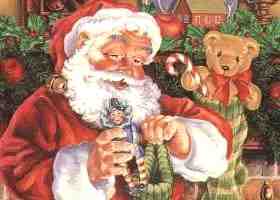
Other names include: Father Christmas, Kris Kringle, Saint Nicholas, St. Nick, and Pere Noel to name a few.
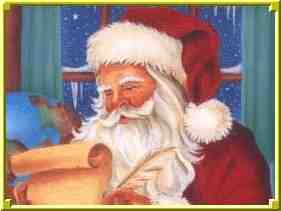
Santa Claus is one of the best known and most loved Christmas symbols and traditions. The image of the jolly old elf flying in a sleigh pulled by reindeers and leaving toys and gifts for every child is know worldwide by many cultures.
That shook when he laughed, like a bowl full of jelly,
He was chubby and plump, a right jolly old elf,
And I laughed when I saw him, in spite of myself"
Clement Moore, "A Visit from St. Nicholas"

Today, Santa is a folk figure with multicultural roots. He has characteristics similar to Saturn, the ancient agricultural god of Rome; Cronos, the Greek god known as Father Time; the Holly King, the Celtic god of the dying year; Father Ice/Grandfather Frost, the Russian winter god; Thor, the Norse sky god who rides the sky in a chariot drawn by goats; Odin, the Scandinavian god who rides the sky on an eight-legged horse; Frey, the Norse fertility god; and the Tomte, a Norse land spirit known for giving gifts to children. Santa's reindeer can be viewed as forms of Herne the Celtic horned god.

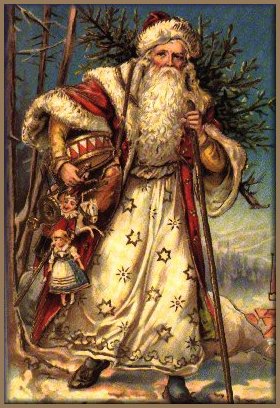 The
Santa Claus tradition began with a man called Saint Nicholas who was the Bishop of
Myra in Asia Minor, in what is now Turkey. Saint Nicholas was known for his
charity and wisdom. Legends say that he came from a wealthy family but that he
gave all his money to the poor. It was also
The
Santa Claus tradition began with a man called Saint Nicholas who was the Bishop of
Myra in Asia Minor, in what is now Turkey. Saint Nicholas was known for his
charity and wisdom. Legends say that he came from a wealthy family but that he
gave all his money to the poor. It was also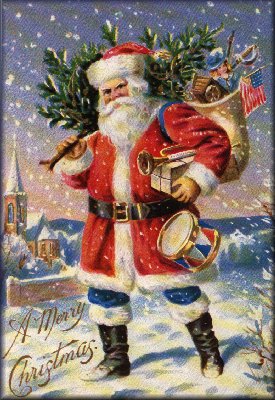 thought that he possessed magical powers. He died in
340 AD and was buried in Myra. Old World pictures of Saint Nicholas portray him
with a white beard and red robes. Throughout the centuries, the portrait has
changed into one of a fat, and jolly man dressed in a red snow suit and red cap.
Clement Clarke Moore wrote a famous poem depicting St. Nick. Click the link to
read-
thought that he possessed magical powers. He died in
340 AD and was buried in Myra. Old World pictures of Saint Nicholas portray him
with a white beard and red robes. Throughout the centuries, the portrait has
changed into one of a fat, and jolly man dressed in a red snow suit and red cap.
Clement Clarke Moore wrote a famous poem depicting St. Nick. Click the link to
read-
Twas the Night Before Christmas
 A
famous story about Saint Nicholas, the Bishop of Myra, tells of a family in the
famous Bishops parish. Three young women from a noble but poor family were about
to be sold into slavery to alleviate the family from their impoverished
condition. Saint Nicholas provided a gift of gold insuring their freedom. Some
versions of this
A
famous story about Saint Nicholas, the Bishop of Myra, tells of a family in the
famous Bishops parish. Three young women from a noble but poor family were about
to be sold into slavery to alleviate the family from their impoverished
condition. Saint Nicholas provided a gift of gold insuring their freedom. Some
versions of this story say that Saint Nicholas threw the gold down the chimney where it landed in
the stockings that had been hung by the young women on the fireplace to dry .
Since that time, we have continued the tradition of hanging stockings on the
fireplace in the hope that they will be filled with gifts at Christmas.
story say that Saint Nicholas threw the gold down the chimney where it landed in
the stockings that had been hung by the young women on the fireplace to dry .
Since that time, we have continued the tradition of hanging stockings on the
fireplace in the hope that they will be filled with gifts at Christmas.

Holly is
significant at Christmas because its blood-red berries and spiked leaves are reminiscent of
Christ's crucifixion and crown of thorns. It is also likely that Holly was used
as a house decoration in 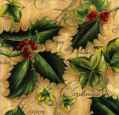 pre-Christian times
as a decoration during the festivals for the winter solstice.
pre-Christian times
as a decoration during the festivals for the winter solstice.
Ivy was thought to have magical powers and at Christmas
would keep houses safe from demons.
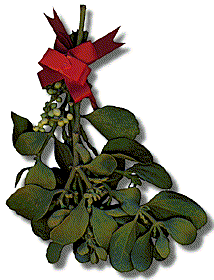 The custom of kissing under
the mistletoe has ancient origins. Oak trees with mistletoe growing on it were
considered sacred by Druids and they would ritually cut it with a golden knife.
The custom of kissing under the mistletoe reaches back to ancient fertility
rites and may also be connected to an ancient custom of hanging the mistletoe
over a doorway as a symbol of peace.
The custom of kissing under
the mistletoe has ancient origins. Oak trees with mistletoe growing on it were
considered sacred by Druids and they would ritually cut it with a golden knife.
The custom of kissing under the mistletoe reaches back to ancient fertility
rites and may also be connected to an ancient custom of hanging the mistletoe
over a doorway as a symbol of peace.
T he
twelve days of Christmas was a tradition celebrated by the early Mesopotamians.
The Mesopotamians worshipped a warrior god named Marduk who was also known as
Nimrod. It was believed that every year as winter approached, Marduk would
battle the evil monsters of the god Chaos.
The battle would last twelve days during which time a festival was held to
assist Marduk against the monsters. The Mesopotamian king would go to the temple
of Marduk to swear his faithfulness and join in the battle against Chaos.
Apparently, Chaos always won because the king of Mesopotamia was killed at the
end of the twelve days and a new king had to be chosen. After several years of
he
twelve days of Christmas was a tradition celebrated by the early Mesopotamians.
The Mesopotamians worshipped a warrior god named Marduk who was also known as
Nimrod. It was believed that every year as winter approached, Marduk would
battle the evil monsters of the god Chaos.
The battle would last twelve days during which time a festival was held to
assist Marduk against the monsters. The Mesopotamian king would go to the temple
of Marduk to swear his faithfulness and join in the battle against Chaos.
Apparently, Chaos always won because the king of Mesopotamia was killed at the
end of the twelve days and a new king had to be chosen. After several years of this tradition, it began to be difficult to find someone who was willing to
become king knowing they would be killed the following year. Eventually the
tradition was changed. A criminal was chosen to be "king" for the 12
days of the festival. At the end of the 12 days the criminal "king"
was stripped of his royal garments and killed.
this tradition, it began to be difficult to find someone who was willing to
become king knowing they would be killed the following year. Eventually the
tradition was changed. A criminal was chosen to be "king" for the 12
days of the festival. At the end of the 12 days the criminal "king"
was stripped of his royal garments and killed.
During a time when Catholics in England could not openly practice their faith, the song "The Twelve Days of Christmas" became a popular song with hidden symbolic meaning.
"On the twelfth day of Christmas, my true love gave to me, a partridge in a pear tree".

The "true love" refers to God and the partridge is represented as a mother partridge who is protecting her young.
Two turtle doves-the Old and New Testaments

Three French hens- faith, hope and charity

Four calling birds-the four Gospels

Five gold rings-the first five books of the Old Testament, which give the history of man's fall from grace

Six geese a laying-the six days of creation

Seven swans a-swimming-the seven gifts of the Holy Spirit

Eight maids a-milking-the eight Beatitudes

Nine ladies dancing-the nine fruits of the Holy Spirit

Ten lords a-leaping-the Ten Commandments

Eleven pipers piping-the eleven faithful disciples

Twelve drummers drumming-the twelve points of belief in the Apostles' Creed.

Christmas Home History Religious Significance Links

