Chinchilla Health
Food
 Chinchillas are from the Andes mountains so they have a very different diet than other household rodents like rabbits.
In their natural environment they eat roots, bark, seeds, and vegetation. It is important that they get lots of vitamins and minerals
that regular processed pellets don't provide. You can get them regular pellets and then other supplements. My brand of choice is Kaytee
because I find it is a quality food. I give my chinchilla Kaytee Forti-diet
(pictured lower right) in his bowl, refilling it when it
Chinchillas are from the Andes mountains so they have a very different diet than other household rodents like rabbits.
In their natural environment they eat roots, bark, seeds, and vegetation. It is important that they get lots of vitamins and minerals
that regular processed pellets don't provide. You can get them regular pellets and then other supplements. My brand of choice is Kaytee
because I find it is a quality food. I give my chinchilla Kaytee Forti-diet
(pictured lower right) in his bowl, refilling it when it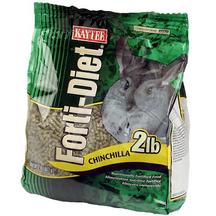 runs low and in the evening I give him a small scoop of Kaytee
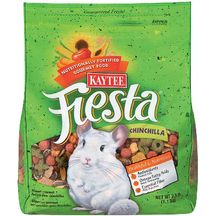
Fiesta (pictured at left).
Also fresh hay is very good for your Chinchilla, it gives him necessary
vitamins. Timothy Hay is my choice brand as I find
it to be fresher than other brands. Chinchillas are not like other animals, they
only eat what they feel like, there isn't the food drive. This means that it is
fine for you to just put in food whenever
it looks like they are running low. Chinchillas favorite treat seems to be
runs low and in the evening I give him a small scoop of Kaytee
Fiesta (pictured at left).
Also fresh hay is very good for your Chinchilla, it gives him necessary
vitamins. Timothy Hay is my choice brand as I find
it to be fresher than other brands. Chinchillas are not like other animals, they
only eat what they feel like, there isn't the food drive. This means that it is
fine for you to just put in food whenever
it looks like they are running low. Chinchillas favorite treat seems to be
 raisins.
But you have to be careful because if you give them more than about 4 or 5 raisins they will get diarrhea.
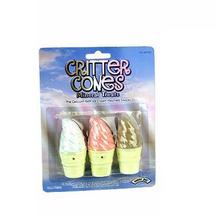
Also for their calcium I give my chinchilla the Critter Cone Mineral Treats by
Super Pet. You can get these and the Kaytee food at any Petsmart or Petco. The
other thing my chinchilla loves are sunflower seeds. I got a pack of them
(non-salted) at the grocery store and I put about 2-3 in his bowl everyday.
raisins.
But you have to be careful because if you give them more than about 4 or 5 raisins they will get diarrhea.
Also for their calcium I give my chinchilla the Critter Cone Mineral Treats by
Super Pet. You can get these and the Kaytee food at any Petsmart or Petco. The
other thing my chinchilla loves are sunflower seeds. I got a pack of them
(non-salted) at the grocery store and I put about 2-3 in his bowl everyday.
Pictures courtesy of
Petsmart.com.
Chewing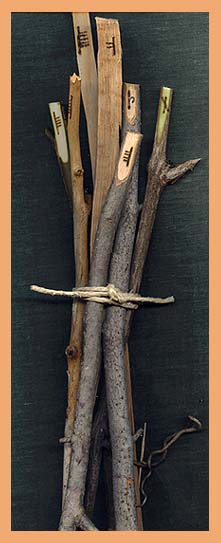
Chinchilla constantly chew in the wild so it is very important you always have
something to chew on so that their teeth get the "exercise" they need. The ideal
thing for chinchillas to chew on is
wood. But you need to be very careful because certain kinds of wood are
poisonous to chinchillas. The woods that are truly poisonous are redwood and
black locust, almond wood is also pretty bad. You should avoid Citrus fruit tree
wood and wood from the fruit genus Prunus (cherry, apricot, peach, almond, and
plum, etc.),
Tallow,
Mahogany, Cypress, Elderberry, Eucalyptus, Ebony, Fir, Greenheart, Ginko,
Hemlock, hydrangea, Iroko, Ironwood Blackwood, Boxwood, Box Elder, Beech,
Cashew, Cedar,
Chestnut, Chinese Snake Tree,
 Katon,
Laurel, Maple, Myrtle, Obeche, Oak, Ramin, Satinwood, Sandalwood, Spruce,
Sneezewood, Teak, Wenge,
Walnut, and Yew.
The woods that are okay for your pets to eat are mulberry,
apple, pear, loquat, grape, medlar, quince, strawberry, hawthorn, rowanberry,
rose hip, and blackberry wood and vines.
Sub-tropical woods such as mango and lychee can be given in
small amount but I would say it's best to just
stay away from them. Tropical fruit wood, like star and kiwi, are okay for your
chinchilla to eat. Also let me say that it is very important that the
wood is organic and has not been around chemicals.
Chinchillas have a very low body mass and even a small amount of these chemicals
is a big amount for a chinchilla. It should be organic, I get bundles
Katon,
Laurel, Maple, Myrtle, Obeche, Oak, Ramin, Satinwood, Sandalwood, Spruce,
Sneezewood, Teak, Wenge,
Walnut, and Yew.
The woods that are okay for your pets to eat are mulberry,
apple, pear, loquat, grape, medlar, quince, strawberry, hawthorn, rowanberry,
rose hip, and blackberry wood and vines.
Sub-tropical woods such as mango and lychee can be given in
small amount but I would say it's best to just
stay away from them. Tropical fruit wood, like star and kiwi, are okay for your
chinchilla to eat. Also let me say that it is very important that the
wood is organic and has not been around chemicals.
Chinchillas have a very low body mass and even a small amount of these chemicals
is a big amount for a chinchilla. It should be organic, I get bundles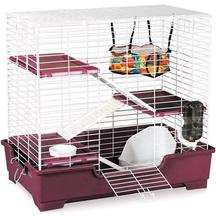 of apple wood (pictured upper right) from the farmers market near my house, from
a certified organic grower. I cages like
maniacs they have something to keep them busy, at least for a little while. My
would also suggest giving the wood to the chinchillas at night so instead of
jumping around their chinchilla also loves
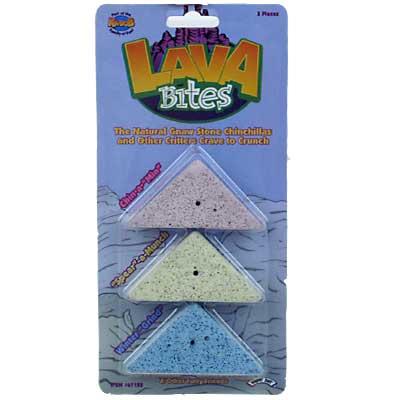
Super Pet Lava Bites For Chinchillas (pictured above left). That said
chinchillas will chew on just about anything. Mine has chewed my windowsill and
my wall. You need to keep the amount of
plastic in a chinchillas cage to a minimum and never buy a cage that is plastic,
even partially (like the cage at the right). They can do unrepairable damage in
minutes so never leave them in a room or area outside of their cage
unsupervised. Please be a responsible owner and take care of your house as well
as your pet.
of apple wood (pictured upper right) from the farmers market near my house, from
a certified organic grower. I cages like
maniacs they have something to keep them busy, at least for a little while. My
would also suggest giving the wood to the chinchillas at night so instead of
jumping around their chinchilla also loves
Super Pet Lava Bites For Chinchillas (pictured above left). That said
chinchillas will chew on just about anything. Mine has chewed my windowsill and
my wall. You need to keep the amount of
plastic in a chinchillas cage to a minimum and never buy a cage that is plastic,
even partially (like the cage at the right). They can do unrepairable damage in
minutes so never leave them in a room or area outside of their cage
unsupervised. Please be a responsible owner and take care of your house as well
as your pet.
Fur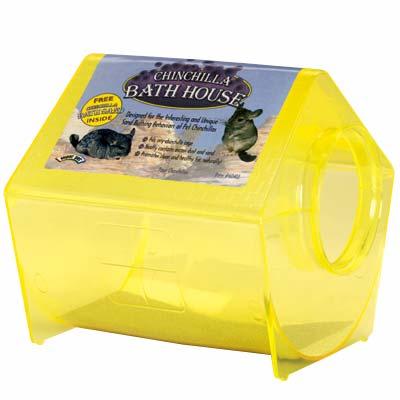
Chinchillas are said to have the
softest and densest fur in the world.
I'm not sure about whether
they have the softest (a matter of opinion) but they do have the densest
according to the San Diego Zoo ( a
very prestigious zoo).
Considering how beautiful their fur is its pretty low
maintenance. They do shed every three months and during this time its
 best
to take a small comb and just gently
help free the dead hair from their coat. Chinchillas coats should, never, under
any circumstances, get wet. Instead of water baths chinchillas get dust
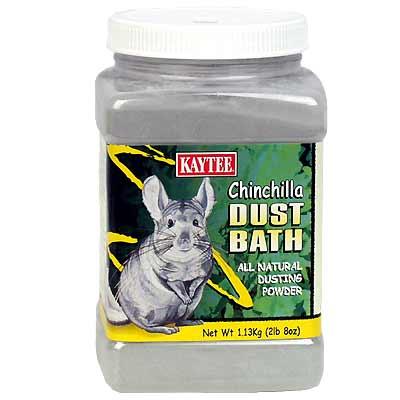
baths in little bath houses. The brand of
dust I use is also Kaytee (pictured at left), and the bath houses are also
Kaytee (pictured at right). In my personal experience its best for the
chinchillas to have a dust bath every 1-2 weeks .
best
to take a small comb and just gently
help free the dead hair from their coat. Chinchillas coats should, never, under
any circumstances, get wet. Instead of water baths chinchillas get dust
baths in little bath houses. The brand of
dust I use is also Kaytee (pictured at left), and the bath houses are also
Kaytee (pictured at right). In my personal experience its best for the
chinchillas to have a dust bath every 1-2 weeks .
Spaying and
Neutering
I would suggest, unless its
needed, to not spay or neuter your chinchillas. I am all for keeping the
number of unwanted pets down and volunteer at my local SPCA but in this case the
risk is greater than the benefit. First, chinchillas don't reproduce so fast.
Second, the surgery is very dangerous. Third, the surgeries are very expensive
because they are complex. Chinchillas have a very small body weight so even
going under anesthesia is dangerous. The surgeries are more complex because
chinchillas are so small and because the males balls are not outside of their
body. But if it is necessary then I would say go ahead. I have heard of
complications and if its a companion you are looking for I would say get a
chinchilla of the same sex.
Chinchilla Housing
Chinchillas need lots of room
because of their boundless energy. I recommend having a wheel in
their cage and as a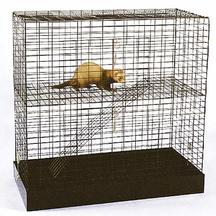 general rule at least 2 levels because in the wild they live in trees. Make sure
that there are areas of the cage that aren't mesh because it isn't good for
their feet to be on wire constantly. Here is a list of what you want in your
cage:
general rule at least 2 levels because in the wild they live in trees. Make sure
that there are areas of the cage that aren't mesh because it isn't good for
their feet to be on wire constantly. Here is a list of what you want in your
cage:
-
An area off the ground where they
can feel like they are safe. I like the leap-n-ledges because they can stand on
them but they also provide something for him to chew on which is very good.
-
a hiding place, that they can not
be "seen" in.
-
a wheel so that they can get
exercise while in their cage.
-
a area that they can stand on that
isn't wire.
-
a area with that can serve as a
litter box for them.
-
a water bottle.
-
a food bowl.
Above right is the 2 story cage
that I have for my chinchilla. In my chinchillas cage I have the following
items, all of which he uses: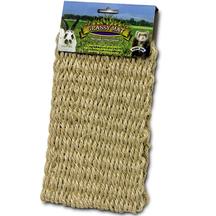
-
a hammock
-
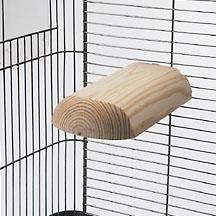
2 leap-n-ledges, on small and
one big (small one shown at left).
-
a wheel
-
a bowl
-
a bath house (which also serves
as his hiding place)
-
a grass mat for him,
which he destroys in about two days.
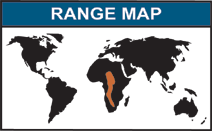 below right). They have been hunted for
hundreds of years for their fur, Almost to the point of
extinction. There fur is the densest in the
world, with as many as 60 hairs per hair
follicle, it also happens to be extremely soft. Only in the last hundred
years, though, have they been brought out of the mountains and domesticated. In
1918 a mining
glimpse of a chinchilla. A native of Chile
had captured one of the rodents and taken it into Chapman's camp to sell.
Chapman purchased
the rodent and developed a big interest in
it. Chapman sought out permission from the Chilean
below right). They have been hunted for
hundreds of years for their fur, Almost to the point of
extinction. There fur is the densest in the
world, with as many as 60 hairs per hair
follicle, it also happens to be extremely soft. Only in the last hundred
years, though, have they been brought out of the mountains and domesticated. In
1918 a mining
glimpse of a chinchilla. A native of Chile
had captured one of the rodents and taken it into Chapman's camp to sell.
Chapman purchased
the rodent and developed a big interest in
it. Chapman sought out permission from the Chilean
 government
to
capture chinchillas. The task was not an
easy one; he first had to get permission from the Chilean
government to venture into the Andes to
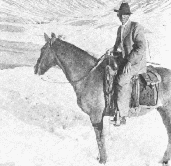
capture chinchillas. Chapman (pictured at left in 1920 in the Andes) finally
acquired permission to export and capture chinchillas in 1923. Chapman put
together a party of 23 men for the journey into the mountains to capture
chinchillas. With the chinchilla population being so scarce, it took these men
11 years to catch only 11 chins that would be suitable for breeding purposes.
Out of the 11 chins only 3 were female.
Chapman spent the next 12 months slowly moving down the mountain with the chins.
The trip was long because
government
to
capture chinchillas. The task was not an
easy one; he first had to get permission from the Chilean
government to venture into the Andes to
capture chinchillas. Chapman (pictured at left in 1920 in the Andes) finally
acquired permission to export and capture chinchillas in 1923. Chapman put
together a party of 23 men for the journey into the mountains to capture
chinchillas. With the chinchilla population being so scarce, it took these men
11 years to catch only 11 chins that would be suitable for breeding purposes.
Out of the 11 chins only 3 were female.
Chapman spent the next 12 months slowly moving down the mountain with the chins.
The trip was long because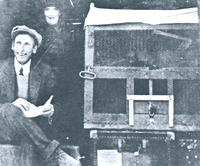 the chins had to adapt to the climate and
surroundings. Other people hadn't given the chins enough time to adjust to lower
elevation and temperatures, which resulted in the deaths of those chins. Chapman
used blocks of ice and avoided sunlight as he made his way down the mountain
with the chins, all 11 chins survived. The chins traveled by boat to California
with Chapman (at right with one of the original cages). While on board the ship
they still received constant care. Supplies of ice were used to keep them cool,
and wet towels were placed on their cages. On the trip home one chin died and
one was born, they arrived in Los Angeles on February 21, 1923.
the chins had to adapt to the climate and
surroundings. Other people hadn't given the chins enough time to adjust to lower
elevation and temperatures, which resulted in the deaths of those chins. Chapman
used blocks of ice and avoided sunlight as he made his way down the mountain
with the chins, all 11 chins survived. The chins traveled by boat to California
with Chapman (at right with one of the original cages). While on board the ship
they still received constant care. Supplies of ice were used to keep them cool,
and wet towels were placed on their cages. On the trip home one chin died and
one was born, they arrived in Los Angeles on February 21, 1923.
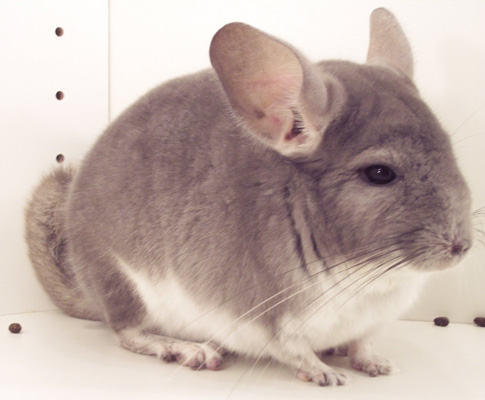
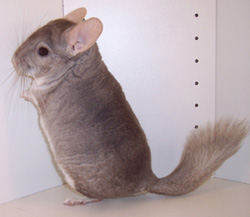
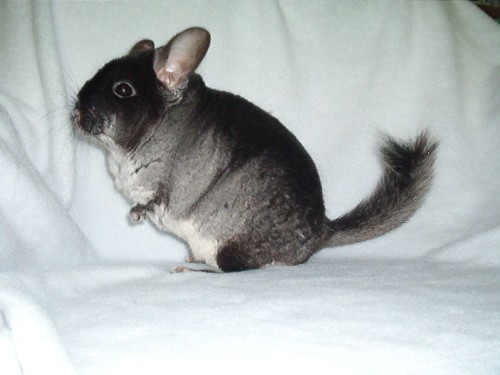
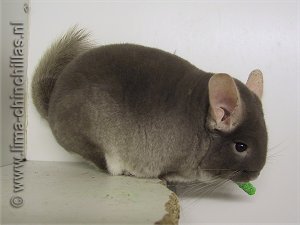
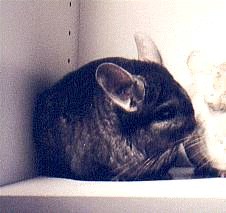
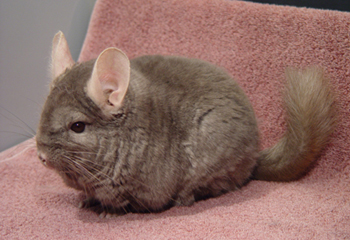
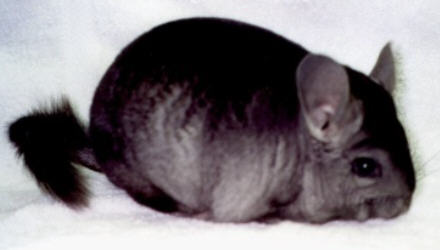
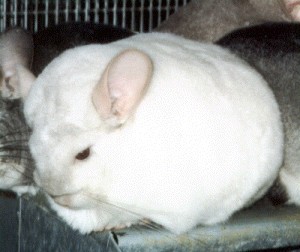 adults they are beige in color. Light pastel chinchillas are generally the first
generation offspring of ebony and beige chinchillas.
adults they are beige in color. Light pastel chinchillas are generally the first
generation offspring of ebony and beige chinchillas.