
RICKY PONTING
INTRODUCTION:
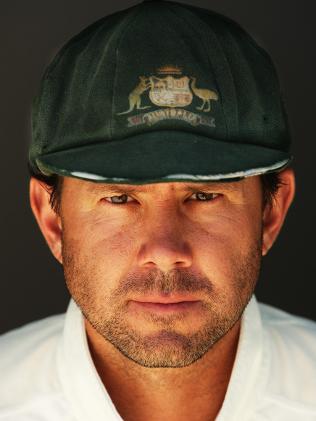 Ricky Thomas Ponting (born 19 December 1974), nicknamed Punter, is an Australian cricketer, a former captain of the Australian cricket team between 2004 and 2011 in Test cricket and 2002 and 2011 in One Day International cricket. He is a specialist right-handed batsman, slips and close catching fielder, as well as a very occasional bowler. He represents the Tasmanian Tigers in Australian domestic cricket, the Hobart Hurricanes in the Big Bash League, and played in the Indian Premier League with the Kolkata Knight Riders in 2008.
Ponting made his first-class debut for Tasmania in November 1992, when just 17 years and 337 days old, becoming the youngest Tasmanian to play in a Sheffield Shield match. However, he had to wait until 1995 before making his One Day International (ODI) debut, during a quadrangular tournament in New Zealand in a match against South Africa. His Test debut followed shortly after, when selected for the first Test of the 1995 home series against Sri Lanka in Perth, in which he scored 96. He lost his place in the national team several times in the period before early-1999, due to lack of form and discipline, before becoming One Day International captain in early-2002 and Test captain in early-2004.
After being involved in over 160 Tests and 370 ODIs, Ponting is Australia's leading run-scorer in Test and ODI cricket. He is one of only three players in history to have scored 13,000 Test runs. Statistically, he is the most successful captain of all time, with 48 victories in 77 Tests between 2004 and 31 December 2010, while as a player he is also the only cricketer in history to be involved in 100 Test victories.
Ricky Thomas Ponting (born 19 December 1974), nicknamed Punter, is an Australian cricketer, a former captain of the Australian cricket team between 2004 and 2011 in Test cricket and 2002 and 2011 in One Day International cricket. He is a specialist right-handed batsman, slips and close catching fielder, as well as a very occasional bowler. He represents the Tasmanian Tigers in Australian domestic cricket, the Hobart Hurricanes in the Big Bash League, and played in the Indian Premier League with the Kolkata Knight Riders in 2008.
Ponting made his first-class debut for Tasmania in November 1992, when just 17 years and 337 days old, becoming the youngest Tasmanian to play in a Sheffield Shield match. However, he had to wait until 1995 before making his One Day International (ODI) debut, during a quadrangular tournament in New Zealand in a match against South Africa. His Test debut followed shortly after, when selected for the first Test of the 1995 home series against Sri Lanka in Perth, in which he scored 96. He lost his place in the national team several times in the period before early-1999, due to lack of form and discipline, before becoming One Day International captain in early-2002 and Test captain in early-2004.
After being involved in over 160 Tests and 370 ODIs, Ponting is Australia's leading run-scorer in Test and ODI cricket. He is one of only three players in history to have scored 13,000 Test runs. Statistically, he is the most successful captain of all time, with 48 victories in 77 Tests between 2004 and 31 December 2010, while as a player he is also the only cricketer in history to be involved in 100 Test victories.
AUSTRALIAN DEBUT:
Ponting's domestic performances were rewarded when he was selected for the Australian ODI team to play in all the matches in the 1995 quadrangular tournament in New Zealand, that also included South Africa and India. Ponting made his debut against South Africa at number six in the batting order. He scored one from six balls, as Australia successfully chased South Africa's target on a difficult batting track. Australia secured another victory in their next match, this time against New Zealand in Auckland, where Ponting scored 10 not out, after coming to wicket late in the innings. His highest series score came in the third International where Australia lost to India in Dunedin. Ponting was promoted to number three in the batting order and responded by scoring 62 from 92 balls. The innings was scored without a boundary and was based on "deft placement and judicious running."The loss failed to stop Australia from appearing in the final against New Zealand in Auckland. Ponting returned to number six and was seven not out when the winning runs were scored.He finished the series with 80 runs at 40 and strike rate of 71.42 runs per hundred balls.
Greg Shipperd publicly suggested that Ponting could be selected as a reserve wicket-keeper for the upcoming West Indies tour, despite not doing so for Tasmania. However, he had kept wicket in pre-season matches and during centre wicket practice. Shipperd need not worry, as Ponting was selected as a specialist batsman anyhow. " ... It was like all my birthdays had come at once. I had some reservations about making my Test debut against arguably the best fast bowling attack in the world," Ponting later said.The West Indies had been crickets powerhouse for close to two decades and teams included many feared fast bowlers. Before the tour, Australian captain Mark Taylor thought the last Test batting vacancy was possibly between Ponting and Justin Langer. "Ricky Ponting is more the stroke player while Justin is the tough man. It depends on what we need at the time but you can probably say Ricky has his neck in front because he's been on this tour [of New Zealand]," Taylor said. Rod Marsh believed Ponting's attitude and no fear approach could tear the West Indies apart. Nevertheless, Ponting did not expect to be selected. "I have got no expectations really, it's probably going to be more an experience thing rather than anything else," he said."It would be great to get a Test match here or there if things go well. But if not, I'm sure I'm still going to learn a hell of a lot from being there and just being around the other 14 guys ... I won't be changing my game at all. I have got to back my ability and I'll be out there and playing as I usually do." Steve Waugh also noted that Ponting would "not be intimidated by the West Indians' inevitable waist-to-chin length."During the series, Ponting said the current crop of bowlers were not "of the same high class" that opposition teams had come to expect from the West Indies.
Ponting was selected for the third ODI on 12 March 1995 at Queen's Park Oval, when Mark Waugh missed through injury. Ponting�batting at three�was involved in a 59-run partnership with Steve Waugh; however, he was dismissed for 43 when he lifted an attempted pull shot. Mark Waugh returned for the next match and Ponting was subsequently dropped until he replaced an out-of-form David Boon in the fifth and final match, where Ponting got second-ball duck. In a three-day warm-up match ahead of the Tests, Ponting scored 19, with Greg Blewett scoring a century and Langer compiling a half-century.The performance was not enough for Ponting to force his way into the Test side; though, Australia did regain the Frank Worrell Trophy for the first time in 20 years, winning the series 2�1.When Ponting returned to Launceston in June 1995, Tasmania's TAB (now Tabcorp Holdings) announced him as their part-time ambassador. He then undertook a tour to England with the Young Australians; a team that included fellow Tasmanian Shaun Young. It also included five future Test batsmen: Matthew Hayden, Matthew Elliot, Martin Love, Justin Langer and Stuart Law.Despite not batting as well as he "would have liked", Ponting returned to Australia with the fourth highest batting average�48.73.
Tasmania toured Zimbabwe for five games ahead of the 1995/96 Sheffield Shield season. Though, Ponting struggled, aggregating 99 runs at a modest 24.75. By the end of October, he had signed an Australian Cricket Board contract, along with 22 other Australian cricketers. Ponting was still hopeful of a Test berth, but recognised that he needed to continue scoring runs.He opened the batting with Boon in Tasmania's first match of the Sheffield Shield season, scoring 20 and 43. Ahead of the following match against Queensland in Hobart, Ponting set himself a goal of scoring a century in each innings; a feat he achieved in a high-scoring draw. His form continued against the touring Sri Lankans in a one-day game in Devonport, scoring 99. He scored another century against the same opposition in Launceston. During the match, the public address system at the NTCA Ground announced that Ponting was making his Test debut against Sri Lanka in Perth on 8 December. The following morning saw local newspaper The Examiner headline: He's Ricky Ponting, he's ours ... and he's made it! Tassie's batting star will play in his first Test." Marsh continued his praise of Ponting, who replaced a dropped Blewett. "I have no doubt Ricky will be trying to get 100 in his first Test game. And I hope he does." You'd back him to. If Ricky carries with him the same attitude that he has seen him succeed at First-class cricket to the next level there is no reason why he will not continue to score."
Sri Lanka batted first and scored 251, before Ponting�batting at number five due to Steve Waugh's absence through injury�arrived at the crease with Australia at a comfortable 3/422. He started nervously, edging his first ball past first slip for a boundary from off-spinner Muttiah Muralitharan. When Ponting reached 96, Chaminda Vaas hit Ponting high on his thigh and was given out leg before wicket.Many members of the crowd and media argued it was an incorrect decision due to excessive height. He combined with Stuart Law, also playing on debut, for a partnership of 121. This was only the ninth ever century partnership by debutants in Test cricket."I've got mixed emotions about my knock at the moment. 96 is a good score but it would have been nice to get a 100," Ponting said after the innings. "Once I struck a few in the middle of the bat, and I spent some time in the middle I tried to relax and enjoy it, just savour the moment." Australia won the match by an innings.In the second Test in Melbourne on Boxing Day, he scored a "compact" 71 in his only innings, combining for a century stand with Steve Waugh. He also took the wicket of Asanka Gurusinha in Sri Lanka's first innings amidst four economical overs.However, Ponting's performance was overshadowed by Australian umpire Darrell Hair no-balling Muralitharan for throwing on seven occasions, increasing tensions between the two teams.Ponting's fellow Tasmanian hero retired after the Third Test, and Ponting's performances were not as strong at number six in the batting order, managing six and 20. Australia won yet again, sweeping the series 3�0, and Ponting was in full praise of Boon. "I would have hated to be the first person to come through from Launceston and make it but he has proved it can be done," Ponting said a year before his Test debut. Ponting ended his debut Test series with 193 runs at 48.25.
Ponting's appearances for Tasmania continued to be limited; however, he was still able to top the 1995/96 season averages with 59.50.In the World Series ODI Cup played between Australia, Sri Lanka and the West Indies after the Test series, Ponting played in all ten games.He started the series at number four but moved up a position midway through the season, after opener Michael Slater was dropped. He broke through for his maiden ODI century in his 12th match, scoring 123 from 138 balls against Sri Lanka at the MCG. However, the effort was not enough to prevent Sri Lanka from victory.Tensions between Australia and Sri Lanka continued to flare, and in one such encounter, the Sri Lankans accused the Australians of cheating.Matters continued to get worse when the teams refused to shake hands at the end of the second final of the triangular series which Australia won 2�0.The match had included physical jostling between McGrath and Sanath Jayasuriya mid pitch, with the latter accusing McGrath of making racist attacks.Later in the match, stump microphones showed Australian wicketkeeper Ian Healy alleging that portly Sri Lankan captain Arjuna Ranatunga was feigning injury and calling for a runner because of his lack of physical fitness.Ponting ended his first home ODI tournament with 341 runs at 34.10, including one century and three fifties, as Australia ended as series champions.
1996 WORLD CUP:
After the spiteful summer, a Tamil Tiger bombing in Colombo coupled with death threats to some members of the team forced Australia to forfeit their scheduled 1996 Cricket World Cup match against Sri Lanka in Colombo.Ponting batted in the number three position for the entire tournament, and scored six in Australia's opening match victory over Kenya. He continued to be inconsistent with scores of 12 and 33 against India and Zimbabwe, before becoming the youngest batsman to score a World Cup century, when he scored 102 runs from 112 balls against the West Indies in Jaipur.Ponting's psychology was to show the West Indians that he had no fear when he chose to wear a cap instead of a helmet. Though, the effort was not enough, as Australia lost by four wickets.Australia finished second in their group and faced New Zealand in the quarter-finals. He scored 41 followed by a 15 ball duck in a semi-final victory against the West Indies, as Australia staggered to 8/207. Australia appeared to be heading out of the tournament when the Caribbean team reached 2/165, but a sudden collapse saw Australia win by six runs in the last over.Ponting scored 45 from 73 balls in the final at the Gaddafi Stadium in Lahore, which Australia lost to Sri Lanka. In another spiteful encounter, some players refused to shake hands after the match.[58] Ponting ended his first World Cup campaign with 229 runs at 32.71.
In August, Australia played in the Singer Cup in Sri Lanka, after enduring a five month break since the World Cup. Despite the political environment being more assured than during the World Cup, Australia still struggled to defeat the Sri Lankans, now full of confidence. Australia were too strong for Zimbabwe, before going down the home side. They regrouped and defeated India; however, Sri Lanka defeated Australia once again, this time in the final. Ponting scored: 53, 46 not out, 0 and 17 for the series.With the retirement of Boon, Ponting was elevated to the No. 3 position in the Test team, and his first assignment in his new role came in a one-off Test against India at the Feroz Shah Kotla in Delhi. Ponting made 13 and 14 in a seven-wicket defeat. It was a portent of Ponting's future Test struggles in India.His failed to regain his lost form in the following Titan Cup involving India, South Africa and Australia. After a "scratchy" game against South Africa, Ponting was rested for the next match against India. Nevertheless, he was recalled for the return match against South Africa, making 17. The series ending poorly for Ponting, being bowled for a duck, as South Africa won the final by eight wickets.The pair of ODI tournaments on the subcontinent yielded Ponting only 168 runs at 28.00 from seven matches.
Ponting continued in the role for the series against the West Indies in 1996�97 in Australia. After two Test matches and three scores under 10, he was replaced by Justin Langer, despite scoring 88 in the First Test.He was out of the team for six months, and missed the remaining three Tests against the West Indies, the three Tests on the tour to South Africa, both series victories to Australia. Many "experts" thought the decision was unjustifiable. Former Australian coach, Bob Simpson, said: "I really feel that Ricky could have been persevered with. He's a fine young cricketer and he'll now have to prove that he's got the tenacity and temperament to go with it."Ponting's axing meant he had time to regain his form in the Sheffield Shield. Despite struggling at first, he scored twin centuries against South Australia in Hobart, and proceeded to score another ton against Queensland.
He was selected for the 1997 Ashes tour of England, but failed to play in any of the three initial ODI's. Ponting was not selected for Australia's defeat in the First Test. In a tour match against Leicester, he scored 64, not enough to force his way into the Australian line-up for a drawn Second Test. Australia won the next Test, though, Ponting was given three one-dayers and First-class match against Glamorgan to try and push his case for a Test inclusion. He scored a century in the latter, but managed just five against Middlesex in the last match before the Fourth Test. Michael Bevan was eventually dropped for Ponting, due to poor form and troubles against the short ball.In his first Ashes Test, Ponting score his first Test century (127, batting at No. 6).He played the last three Tests and ended the series with 241 runs at 48.20.At the time Australia had a policy of the selecting the same team for ODIs, so Ponting only played in three ODIs in early stages of the 1996�97 season in Australia, scoring 68 runs at 22.66 in December 1996 before being dropped.
Ponting scored 119 runs at 39.66 in the three-Test home series against New Zealand in 1997�98, including a breezy 73 not out from 85 balls in the second innings of the First Test in Brisbane to help Australia set a winning target. He then made his first Test century on Australian soil, scoring 105 in the First Test against South Africa at the MCG. He added a fifty in the next match and ended the series with 248 runs at 49.60.Ponting has his most successful ODI season to date, scoring 462 runs at 57.75 in the annual tri-series, including a 100 against New Zealand and three fifties. The 100 was Ponting's third ODI century, but Australia had lost all three matches. He scored 76 in the third and deciding final against South Africa, which Australia won.
CAPTAINCY:
Ponting has often been criticised for his lack of imagination in his captaincy, though many players who played under him say he is a good leader. According to former Australian opening batsman Justin Langer, "He is quite inspirational as a leader and I just never get all the detractors he has. Whether it's in the fielding practice, the nets, the way he holds himself off the field�every time he speaks, these young guys just listen, they hang on every word he says.
BATTING:
Ponting is an aggressive right-handed batsman known for playing a wide repertoire of shots with confidence. However, he is sometimes technically questioned for shuffling across his stumps and being trapped leg before wicket, and thrusting his bat away from his body�especially early in his innings. Despite being widely renowned as the best player of the hook and pull shots in the world, Ponting is equally adept on both the front and back foot. Nevertheless, during the latter stages of his career, the hook and pull shots have often been the cause of his dismissal; though, he has vowed to continue to play them.
He has been perceived to have trouble against quality spin, especially against Indian off spinner Harbhajan Singh, who has dismissed Ponting on 13 occasions in International cricket, as of August 2010. Ponting has a tendency to rock onto the front foot and thrust his wrists at spinning deliveries, resulting in many catches close to the wicket. Ponting rarely employs the sweep shot against spin, something considered unusual for a top-order batsman. Instead, he looks to use his feet to come down the wicket, or play off the back foot through the off-side.
Former West Indian captain, Viv Richards, who was rated as the third best Test cricketer in a 2002 poll by Wisden, said Ponting was his favourite current-day player to watch, slightly ahead of Sachin Tendulkar.
APPROACH TO CRICKET:
Ponting is an aggressive competitor, as manifested in his on-field conduct. According to former Australian captain Allan Border, what you see with Ponting is what you get, and "he wears his heart on his sleeve". Border also noted that Ponting has an abundance of determination, courage and skill.
However, his competitive attitudes can be overly aggressive, pushing the boundaries of cricket etiquette.In early 2006, in the Chappell-Hadlee Trophy, Ponting had an on-field argument with umpire Billy Bowden over signalling a no-ball because not enough players were within the inner circle.In mid 2006, during a tour of Bangladesh, Ponting was accused of "badgering the umpires until he got what he wanted".
During the 4th Test of the 2010/11 Ashes series, Ponting was once more involved in an on-field argument with umpires. The altercation had begun after Aleem Dar had turned down an appeal for caught-behind. After consulting wicket-keeper Brad Haddin who had initially gone up for the appeal, Ponting opted to have the not-out decision reviewed. Replays showed the batsman, Kevin Pietersen, was indeed not-out and the original decision was upheld by third-umpire Marais Erasmus. Following the upholding of the decision, a number of Australian players, led by Ponting argued with Dar for over a minute, before continuing the confrontation with Pietersen and the other on-field umpire Tony Hill.Following the end of the days play, Ponting was summoned by match referee Ranjan Madugalle regarding the incident. During the hearing, Ponting pleaded guilty to a Level 1 offence under article 2.1.3 (h) of the ICC Cricket Code of Conduct, which relates to "arguing or entering into a prolonged discussion with the umpire about his decision". As a result, Ponting was fined 40% of his match fee, which accounted to around $5,400.
Ricky Ponting is widely regarded as one of the greatest competitors the game has ever seen and this was testified by the South African captain, Graeme Smith, describing Ricky Ponting as the toughest competitor he had ever played against.
SYDNEY TEST CONTROVERSY:
The 2007�08 started a new era for Australia, as McGrath and Warne had both retired at the end of the previous Ashes series. The pair had taken more than 1250 Test wickets between them, and the only three Test defeats that Australia had suffered under Ponting, once against India in Mumbai in 2004 and the two against England in 2005, had all occurred when one of the two were injured. Now that both had gone, critics wondered whether Australia and Ponting could maintain their success with their two main strike weapons absent. Australia had not played a Test since the Ashes, while being involved in 32 ODIs and eight Twenty20 Internationals.The period started well for Australia; winning the first Test against Sri Lanka in Brisbane by an innings and 40 runs. Ponting struck 56 from 84 balls (seven fours) in Australia's total of 551. The Second Test in Hobart, saw Ponting score 31 (66 balls) and 53 not out (2 fours and a six) in front of his come crowd, as Australia wrapped up the series 2�0. Ponting scored 140 runs at 70 and took three catches.
Ponting at the toss for a ODI against India at the Melbourne Cricket Ground.
However, the series against India was much harder-fought. Australia won the First Test easily, by 337 runs, but the matches thereafter were more difficult. The Second Test was closely fought and ended in Australian victory minutes before the end of play. This saw Australia equal the world record of 16 consecutive Test wins; Ponting, was part of Steve Waugh side that set the previous record in 1999�2001. However, the cricket was overshadowed by player conduct issues.
After the match ended the stadium erupted in cheering as the Indians walked off the field, and the Australians celebrated their record-equalling win. The Australians revelled in their victory, praising Michael Clarke. In an interview live at the ground, Ponting also asked Clarke to tell the commentator Tony Greig that the declaration was timed exactly right. Adam Gilchrist was also reported as asking the question, "How about that declaration, Tony Greig".The Australian Team did not shake hands with Indian Players on the field, especially Kumble who was waiting there after the fall of the final wicket.Though the Australian and Indian teams shook hands before heading into the dressing rooms later, but Kumble, who was batting at the end of the match, showed his displeasure by not shaking hands with the umpires. India expressed their resentment by boycotting the Post-Match presentation ceremony. In the post-match press conference, Anil Kumble summed up his view of the game by stating, "Only one team is playing in the spirit of the game" � a statement that alluded to Australian captain Bill Woodfull's leaked private admonishment of English manager Sir Pelham Warner during the 1932/33 Bodyline series. Chetan Chauhan, India's team manager said his players were "agitated and upset by... the incompetent umpires here... [and hoped] that they will not officiate again in the series". Ponting was questioned over the wrong decision, the racism row, and especially the wicket of Ganguly during which he held his finger up to indicate to Mark Benson that Ganguly has been caught. Ponting was aggressive towards the Indian journalists, lashing out at them for "questioning my [Ponting's] integrity". The Australian players faced much questioning as a result of the fallout of the incident. The Australian team maintained that they play hard but fair. Pace bowler Brett Lee outlined the competitive spirit in the team while Ponting insisted that the only player to have been outside the spirit of the game was on the Indian side. In regards to the racism issue, Ponting denied he did anything wrong by singularly reporting Harbhajan Singh for being abusive. Ponting stated that he was obligated to refer any incidents of racism to officials as it is widely agreed that racism is unacceptable anywhere in the world. "When I heard what had taken place with Andrew [Symonds] I immediately informed the umpires and then left the field at the end of the over to inform our team manager, which is what we are instructed to do," Ponting said. He clarified his point further, "making this report is not something I wanted to do but something I had to do. I had nothing to gain personally from taking this action. I was doing the right thing by the game.After criticism of the Australian team in multiple media continued, a shocked Ponting promised to ensure that his World champion side�s conduct is not seen to be arrogant in future matches.
The Indian players released few statements about the issue. Anil Kumble wrote in his column in the Hindustan Times that Ponting was not willing to listen to his pleas that the issue should remain on the field. Kumble claimed that he knew through experience that such an allegation would have major ramifications both on and off the field.Both teams have expressed hope that this issue would not overshadow the cricket. The English Australian journalist and former captain of Somerset County Cricket Club, Peter Roebuck, a columnist in the The Sydney Morning Herald, branded Ponting as "arrogant" and insisted that be stripped of the captaincy.
In the early part of the Test series against India, Ponting continued to struggle against Harbhajan, falling to him three consecutive times in the first two Tests. On the third occasion, Ponting was again caught at bat pad, from the first ball that Harbhajan bowled to him, prompting the bowler to celebrate raucously. Harbhajan missed the Third Test and upon his return in the fourth Test, Ponting broke through for his first Test century against India in matches involving Harbhajan, scoring 140. However, the second half of the series was less successful for Australia as a team; India won the Third Test, ending the Australian streak and denying Ponting a world record 17th successive win, and the Fourth Test was a high-scoring draw. The Adelaide Test aside, Ponting had an otherwise unproductive season, scoring 268 runs at 38.28.
In the Commonwealth Bank series, Ponting struggled until Australia's last round robin match against India where he and another poor performing Australian batsmen, Andrew Symonds put on a 100 run partnership with Ponting making a hundred and Symonds making 50. Australia won two of their three round robin matches against the Indians, but the tables were turned in the finals, which the tourists won 2�0.
APPOINTMENT AS TEST CAPTAIN:
Ricky Ponting was destined to lead his country � I couldn't have handed Australian cricket's ultimate individual honour to a more capable and deserving man. A leader must earn respect and lead from the front, and on both of these counts Punter has undoubtedly excelled. When the one-day leadership duties were passed over to Ricky in South Africa, my main piece of advice to him was, 'Make sure you take care of your own game and maintain your form, because everything else will follow from that.' Since assuming the mantle, Punter has shown himself to be among the top three batsmen in the world in both forms of the game, and has elevated his hunger and desire for runs to a level most can only aspire to.
�Steve Waugh writing about Ponting replacing him as Australian captain.
After Steve Waugh's (pictured) retirement at the beginning of 2004 following the drawn home series against India, Ponting assumed the Test captaincy.
Ponting started with a 3�0 clean sweep of the Test series in Sri Lanka. Ponting brought Symonds into the Test team on the back of strong ODI form, rather than first-class cricket, replacing Simon Katich, who had scored a century and unbeaten fifty in the last Test. However, this backfired and Symonds was dropped after two Tests. Nevertheless, it was a far cry from Australia's last two Test campaigns in Sri Lanka, which had resulted in a 1�0 and 0�1 results respectively. Individually though, Ponting struggled, especially in comparison to his efforts in 1999. He scored 198 runs at 33.00, his only effort beyond 30 being 92 in the first innings of the Third Test at the Sinhalese Sports Club ground in Colombo.
Australia hosted Sri Lanka for two Tests during the winter, in the tropical north. Ponting missed the victory in the First Test in Darwin due to a family bereavement, and scored 22 and 45 as the Second Test in Cairns was drawn.
Despite their success at World Cups, Australia continued their failure to win the ICC Champions Trophy. They were knocked out by hosts England in the semifinals in 2004.
After missing most of the tour of India due to injury, Ponting returned for the Fourth Test. By this time, Australia had taken an unassailable 2�0 series lead, his deputy Gilchrist leading the tourists to their first Test series win in India since 1969�70. Leading spinner Shane Warne injured himself on the eve of the match, which was played on a very dry pitch at the Wankhede Stadium in Mumbai.Off spinner Nathan Hauritz and leg spinner Cameron White, who were not regular wicket-takers in domestic cricket, were surpri?se selections ahead of Stuart MacGill for the tour. The reasoning given by the selectors was that as they intended to play only one spinner�Warne�MacGill was unlikely to play so they would not lose anything by taking some young spinners instead, in order to gain experience. However, it was too late for MacGill to be flown in, and Hauritz played and took 5/103, while India's. Ponting made 11 and 12 and Australia lost a low-scoring match in less than two days' equivalent playing time. Ponting was very vocal in criticising the playing surface after the match.
Ponting signing autographs in Sydney, 2005, before he scored his fourth career double century.
Ponting oversaw a successful campaign in the 2004�05 Australian season. They won all five Tests, defeating New Zealand 2�0 and Pakistan 3�0. Ponting scored 145 runs at 72.50 against New Zealand in a winning start to his Test captaincy on home soil.
Up to this point, Ponting's prolific form with the bat in 2003 had tapered away following his ascension to the captaincy and he had not made a century in eight Tests, a long period by his standards. In the First Test against Pakistan in Perth, Ponting made 98 in the second innings. Australia went on to crush the visitors by over 400 runs. Ponting struck 62 not out in the second innings as Australia won by nine wickets in the Second Test in Melbourne, and then brought up his maiden century as captain, scoring 207 in the New Year's Test in Sydney, which ended in another convincing nine-wicket triumph. He ended the series with 403 runs at 100.75.
Australia then won a three-Test tour against New Zealand away 2�0. Ponting ended the series in style, scoring 105 and 86 not out in the Third Test win in New Zealand. In his first Test series in the country, he scored 293 runs at 97.66.
2011 WORLD CUP AND RESIGNATION:
Ponting retained the captaincy of Australia for the 2011 World Cup in India, Sri Lanka and Bangladesh. Australia had won the previous three World Cups and entered the tournament as the world's top-ranked ODI nation. Australia qualified for the quarter-finals, although Ponting failed to find form, scoring 102 runs in five innings during the group stage phase of the tournament.Australia met India in the quarter-finals and were defeated by five wickets. Ponting scored 104 not out, his first century in international cricket in over a year.After being knocked out of the tournament, Ponting resigned his position as captain at both Test and ODI levels, endorsed Michael Clarke as his successor, and indicated his intention to continue playing.