mines of the deepmineYourOwnBuszzinesss.
mines of the deepmineYourOwnBuszzinesss.

homecee
 www.galleries.com
ROCK PHOTOS

charcole mfctbehive shape.
http://www.agsco.com/images/linecard.pdf FOR CASTING DATA.

Reflection Nebula M78
Credit: Sloan Digital Sky Survey Collaboration
Explanation: An eerie blue glow and ominous columns of dark dust highlight M78, a bright reflection nebula in the constellation of Orion. The dust not only absorbs light, but also reflects the light of several bright blue stars that formed recently in the nebula. The same type of scattering that colors the daytime sky further enhances the blue color. M78 is about five light-years across and visible through a small telescope. M78 appears above only as it was 1600 years ago, however, because that is how long it takes light to go from there to here. M78 belongs to the larger Orion Molecular Cloud Complex that contains the Great Nebula in Orion and the Horsehead Nebula.
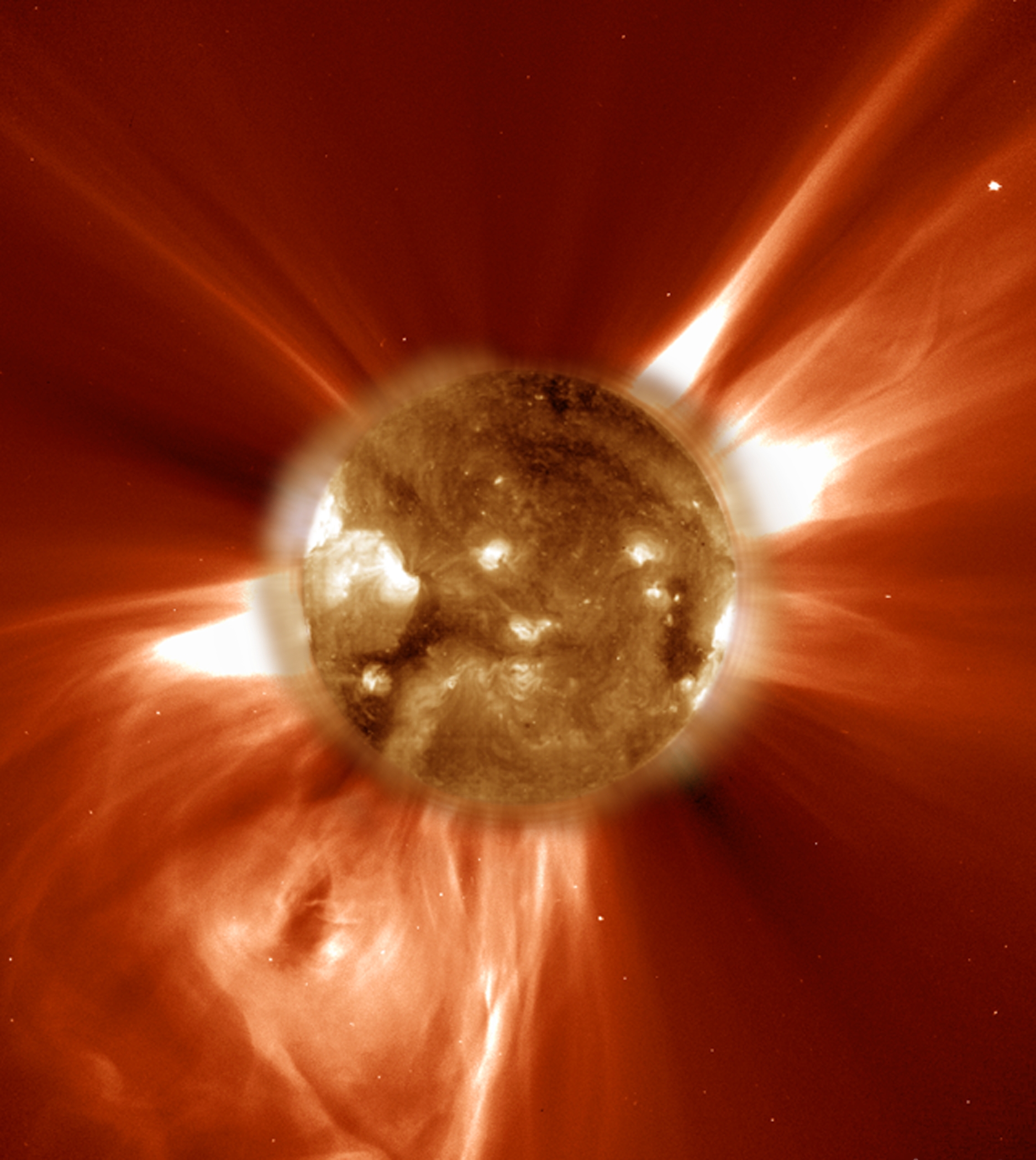
 Sun Storm: A Coronal Mass Ejection
Credit: SOHO Consortium, ESA, NASA
Explanation: What's happening to our Sun? Another Coronal Mass Ejection (CME)! The Sun-orbiting SOHO spacecraft has imaged many erupting filaments lifting off the active solar surface and blasting enormous bubbles of magnetic plasma into space. Direct light from the sun is blocked in the inner part of the above image, taken in 2002, and replaced by a simultaneous image of the Sun in ultraviolet light.
Sun Storm: A Coronal Mass Ejection
Credit: SOHO Consortium, ESA, NASA
Explanation: What's happening to our Sun? Another Coronal Mass Ejection (CME)! The Sun-orbiting SOHO spacecraft has imaged many erupting filaments lifting off the active solar surface and blasting enormous bubbles of magnetic plasma into space. Direct light from the sun is blocked in the inner part of the above image, taken in 2002, and replaced by a simultaneous image of the Sun in ultraviolet light.
The field of view extends over two million kilometers from the solar surface.
While hints of these explosive events, called coronal mass ejections or CMEs, were discovered by spacecraft in the early 70s, this dramatic image is part of a detailed record of this CME's development from the presently operating SOHO spacecraft. Near the minimum of the solar activity cycle CMEs occur about once a week, but near solar maximum rates of two or more per day are typical. Strong CMEs may profoundly influence space weather. Those directed toward our planet can have serious effects.
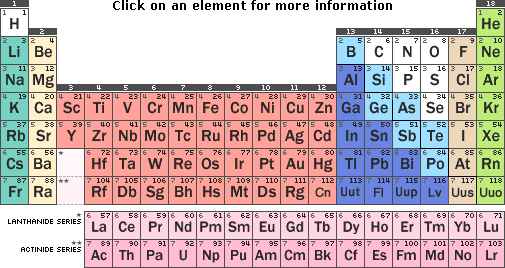 NEWER PERIODIC TABLE!
UNIVERSAL ATOMS DEPICTED HERE IN MEANINGFULL CRITERIA!
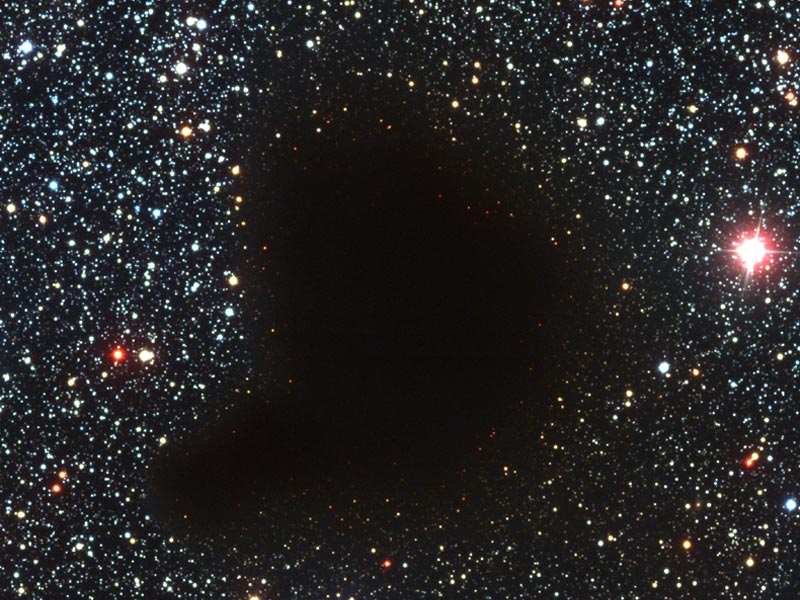 A DARK MOLECULAR CLOUD PHENOMENA
2006 April 9 - Molecular Cloud Barnard 68
Explanation: Where did all the stars go? What used to be considered a hole in the sky is now known to astronomers as a dark molecular cloud. Here, a high concentration of dust and molecular gas absorb practically all the visible light emitted from background stars. The eerily dark surroundings help make the interiors of molecular clouds some of the coldest and most isolated places in the universe. One of the most notable of these dark absorption nebulae is a cloud toward the constellation Ophiuchus known as Barnard 68, pictured above. That no stars are visible in the center indicates that Barnard 68 is relatively nearby, with measurements placing it about 500 light-years away and half a light-year across. It is not known exactly how molecular clouds like Barnard 68 form, but it is known that these clouds are themselves likely places for new stars to form. It is possible to look right through the cloud in infrared light.