| Self Advocacy: |
| What it is and how to make it work for you |
| Self Advocacy is knowing: what you want what you do well what you have difficulty doing your rights and needs and being able to express that information to the appropriate person. |
| For those in transition, self advocating is one of the toughest things in the world. In many domestic violence cases it is critical to move the victim out of the home in order to ensure her safety.Often times these women are placed in temporary shelter while the 'details' are sorted out and decisions are being made. Shelters and transitional housing programs are life savers,literally,but what happens after you go into shelter? Do you know what questions to ask the staff? Or what sort of help you will need to reestablish yourself and regain your life?If not, then this is where self advocacy comes in. There are certain things the shelters are set up to help you with and certain things you need to do for yourself. You know the most about your situation, resources, needs and wants. You can empower yourself and take control of your life again. |
| The Keys to Empowerment |
| #1-Belief in yourself |
| #2-Problem solving and assessment |
| #3-Resource options and strategies |
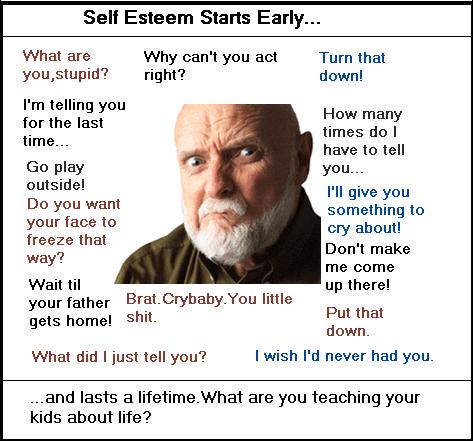
| #4- Stop destructive selftalk |
 |
 |
|
| You Can Break The Chains Which Hold You Down. You Have That Power. |
| Back to Home Page |
 |
| a |
| a |
| Marvellous happy it was to be Alone,and yet not solitary. O out of terror and dark, to come In sight of home. Walter de la Mare "The Pilgrim" |
| Some Tools for Personal Healing Tell a friend about the abuse.Tell just one person you can trust every awful detail. Get the poison out--purge yourself--and just tell someone. Next, take a bigger step and tell a support group about the abuse. Shared experiences can, do, will, save lives...your own, someone else's, your daughter's, your sister's, your best friend's. Now that you've confronted and beaten the first demon, you've a responsibility to other survivors to tell your experiences so that no one else, ever, will have to go through what you have been through; Allow yourself to feel your full range of emotions about the abuse. Express your emotions in writing, remembering that you are entitled to your anger, your sorrow, your grief, your sadness--everything. These emotions are yours. Your abuser tried to take them away from you. Control them. Even kill them. But they are part of what makes you, you. Your experiences--and your emotions about your experiences--are unique to you alone. You own them. They are imprinted on your soul. Recognize that although you are entitled to all of your emotions, you must not allow your history--or your feelings about your history--to imprison you in your present life. No one can tell you when you have grieved enough. Only you have the right (and the authority) to do that. But you can resolve today to move forward with your life--to find a place where you think you have grieved enough. Then begin to think about creating positive ways to address your history, the abuse you've survived, and the challenge of building a future for yourself, a better world for your children--a better world for everyone you meet who has suffered like you and can't seem to find a place where the grief and pain end. Maybe you can show them the end of the rainbow and the colors inside, and help them to understand, like you, that they can choose whichever colors make them happiest. Take a trip alone to some place you have never been. Sometimes, when you are alone in a place you've never been, you are better able to confront fears. Maybe you will discover many of your fears are foolish. Or maybe you'll learn that you have resiliencies and strengths you never imagined. One thing is for certain, it takes courage to go someplace new alone when you've been told that you should fear independence--that you're too stupid to walk two miles from home without something bad happening to you just because you dared to be alone. We get conditioned to thinking that we don't know how to take care of ourselves, but when we go someplace new alone, we learn that we can survive, that maybe, just maybe, we've already survived the worst and that what comes next will be a refreshing adventure, not a painful disaster. Just by taking a trip, you may discover that you are resourceful and capable of making solid decisions on your own. Maybe you'll even find that being alone suits the quiet part of you--that it doesn't mean you are isolated, without hope or help. Maybe you'll find that you don't have to feel lonely just because you are alone. |
 |
|
|
|