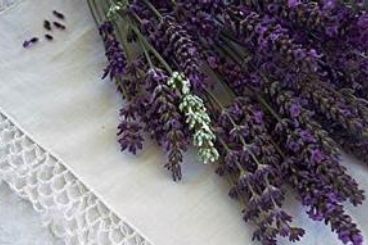
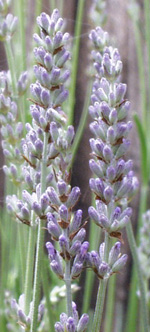
Lavender is a plant rich in history and myth. It has been around for several thousands of years, dating back at least to the times of the ancient Greeks. It is perhaps a surprise to some to learn that Lavender is a herb closely related to Rosemary, Sage, Thymes and others.


Lavender oil has long been a staple of the cosmetics industry. The highest quality oil comes from English or "true" Lavender (Lavendula augustifolia). There are many varieties of lavender available today including lavenders with different colours including White, Green and Pink.


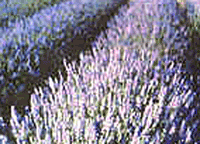
Lavender has always been a popular rock and flower garden plant, and is relatively easy to grow. As a craft item it has found many uses, dried loose or on the stems and grouped in bundles.

Lavender, in the form of potpourri and in sachets, has long been used to help keep moths away and to generally enhance the aroma of rooms, closets and linens. For centuries lavender was a staple herb in many kitchens and it's culinary popularity is slowly returning.

As a sedative and disinfectant the medicinal uses of lavender are well known and with modern trends toward herbal remedies it is regaining popularity.  Lavender's aroma imprint is sweet and rich with a herbaceous floral heart and balsamic-wood undertone. It is calming, refreshing, uplifting, expansive, soothing and purifying.


The Romans were most responsible for the spread of Lavender throughout Europe, taking it with them everywhere they went in order to have local supplies of Lavender oil which they used extensively in bath water and soap
as well as in many other ways.


The name of Lavender is a derivative of the word "lavare", meaning "to wash"


A few Important properties of Lavender!



It is antibacterial, anticonvulsive, antidepressant, antiflammatory, analgesic,antirheumatic,antispasmodic, antitoxic, antiviral,anticoagulant, carminative, cholagogue, cicatrisant, ccytophylactic, deodorant, decongestant, diuretic, emmenagogue,galactogogue, Insecticidal, nervine,parasiticidal,rubefacient,restorative, sedative, sudorfic, tonic, vermifugal, vulnerary.


Common Uses.


For physical & emotional support!

Back To return to English Lavender Cottage,
or Please click your BACK button to return to your page! :0)


Hosted by www.Geocities.ws

Hosted by www.Geocities.ws

Hosted by www.Geocities.ws

1