 |
| "Voicelessness, Roots, Consequences and Cure", by Richard Grossman |
|
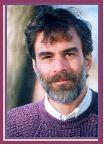
| Between 1980 and 1987, Dr. Richard Grossman taught and supervised in the internship and postdoctoral psychotherapy programs at Massachusetts General Hospital/ Harvard Medical School where he was on staff. Since 1985, he has maintained a private practice in Brookline, Massachusetts specializing in individual psychotherapy, couples counseling, and parenting skills. Dr. Grossman presented a session entitled "Voicelessness" at the 2000 Moebius Syndrome Conference, in Sturbridge, MA. |
| Voicelessness: Roots, Consequences, and Cure by Richard Grossman, Ph.D. July 23, 2000 (Address to the International Moebius Syndrome Conference, July, 23rd, 2000) If I asked you what children need in order to be psychologically healthy, you would probably answer: love and attention. Of course, you would be right--love and attention are essential for every child. But, there is a third psychological need critical to the emotional well-being of children: "voice." What is "voice"? It is the sense of agency that makes a child confident that he or she will be heard, and that he or she will impact his or her environment. Exceptional parents grant a child a voice equal to theirs the day that child is born. And they respect that voice as much as they respect their own. How does a parent provide this gift? By following three basic "rules:" 1 - Assume that what your child has to say about the world is just as important as what you have to say. 2 - Assume that you can learn as much from them as they can from you. 3 - Enter their world through play, activities, discussions: don't require them to enter yours in order to make contact. I'm afraid this is not as easy as it sounds, and many parents do not do it naturally. Essentially, a whole new style of listening is required. Every time a young child says something, he or she is opening a door to their experience of the world--about which they are the world's foremost expert. You can either keep the door open and learn something of value by asking more and more questions, or you can close it by assuming you have heard everything worth hearing. If you keep the door open, you are in for a surprise--your children's worlds are as rich and complex as your own, even at age two. If you value your children's experience, of course they will too. They will feel: "Other people are interested in me. There is something of value inside me. I must be pretty good." There is no better anti-anxiety, anti-depressant, anti-narcissism inoculation than this implicit sense of worth. Children with voice have a sense of identity that belies their years. They stand up for themselves when necessary. They speak their mind and are not easily intimidated. They accept the inevitable frustrations and defeats of life with grace and keep moving forward. They are not afraid to try new things, to take appropriate risks. People of all ages find them a joy to talk with. Their relationships are honest and deep. Many well-intentioned parents think that they can create the same effect simply by saying positive things to their children: "I think you're very smart/pretty/special etc. I coached my daughter's co-ed soccer team for many years, and I often heard this happen. One mother always brought a beach chair and a novel, and she would sun herself and read throughout the game. When the final period ended, she would clap and tell her son he did a great job, he played very well, etc. But how did she know? She paid no attention to his efforts on the field. Of course he knew this. Without entering a child's world, compliments are heard as false or rote. "If you really felt I was terrific, you would want to know me better," the child thinks. "You would want to listen to me." Other parents feel that their only role is to advise, educate, or otherwise improve their children�they assume children have no inherent value and they must teach them how to be worthwhile human beings. Sadly, these parents reject the child's experience of the world entirely and do great psychological damage--usually the same damage that was done to them. Children who are not given "voice" often feel defective and worthless, even if they have received love and attention. Many of their behaviors represent an effort to counter these feelings. Depending on temperament and other factors, they may build protective walls, take drugs to escape, starve and purge themselves to "look better," bully other children, or simply succumb to crippling depression and anxiety. Of course, parents are at a loss to understand. They have not examined their own lives well enough to know that their children's problems are merely part of an ever-repeating inter-generational cycle of voicelessness. One of my client's, Stan, for example, was determined to be a better father than his own workaholic father. As a result, he would put his three year old child, Evan, on his lap while he worked at home for an hour or so on legal briefs. He believed he was making contact in this way. While this was their only time alone together, it was a lot more than Stan had received from his father, and Stan felt proud of his parenting. However, at 8 years of age, Evan became depressed: "Why don't you just send me back where I came from," Evan said repeatedly to Stan, as if it were a mantra. Stan was shocked. Hadn't he been a devoted father? Why couldn't the boy see how much attention he had received? It was only after having spent a year in therapy, part of which was devoted to re-examining his own childhood, did he suddenly realize that he gave Evan no more voice than his father had offered him. Stan had never entered Evan's world. From generation to generation very little had changed, even though Stan had had the best of intentions. Of course, the psychological problems resulting from voicelessness do not end with childhood... (to read the rest of Dr. Grossman's presentation, go here...) |