


The Venerable BEDE



|
|
|
|
|
|
|
|
|
|
|
|
|
|
|
|
|
|
|
|
|
|
|
|
|
|
|
|
|
|
|
|
|
|
|
|
|
|
|
|
|
|
|
|
|
|
|
|
|
|
|
|
|
|
|
|
|
|
|
|
|
|
|
|
|
|
|
|
|
|
|
|
|
|
|
|
|
|
|
|
|
|
|
|
|
|
|
|
|
|
|
|
|
|
|
|
|
|
|
|
|
|
|
|
|
|
|
|
|
|
|
|
|
|
|
|
|
|
|
|
| November-December 2000 AD Volume 2.3 | |||||||||||||||||||||||||||||||||||||||||||||||||||||||||||||||||||||||||||||||||||||||||||||||||||||||||||||||||||||||
| Sancta Sacrificia Illibata | |||||||||||||||||||||||||||||||||||||||||||||||||||||||||||||||||||||||||||||||||||||||||||||||||||||||||||||||||||||||
| Una Voce - Houston | |||||||||||||||||||||||||||||||||||||||||||||||||||||||||||||||||||||||||||||||||||||||||||||||||||||||||||||||||||||||
| In this Issue... . | |||||||||||||||||||||||||||||||||||||||||||||||||||||||||||||||||||||||||||||||||||||||||||||||||||||||||||||||||||||||
|
|||||||||||||||||||||||||||||||||||||||||||||||||||||||||||||||||||||||||||||||||||||||||||||||||||||||||||||||||||||||
| 2 | A True Monk - The Venerable Bede. | ||||||||||||||||||||||||||||||||||||||||||||||||||||||||||||||||||||||||||||||||||||||||||||||||||||||||||||||||||||||
| 4 | Food for Thought. | ||||||||||||||||||||||||||||||||||||||||||||||||||||||||||||||||||||||||||||||||||||||||||||||||||||||||||||||||||||||
| 5 | The Nature of the Mass (Conclusion). | ||||||||||||||||||||||||||||||||||||||||||||||||||||||||||||||||||||||||||||||||||||||||||||||||||||||||||||||||||||||
| 6 | Editors Notes || Spotlight on Heresy | ||||||||||||||||||||||||||||||||||||||||||||||||||||||||||||||||||||||||||||||||||||||||||||||||||||||||||||||||||||||
| 7 | A Sermon for Christmas Day | ||||||||||||||||||||||||||||||||||||||||||||||||||||||||||||||||||||||||||||||||||||||||||||||||||||||||||||||||||||||
| 9 | San Giovanni Bosco , v 2.3 | ||||||||||||||||||||||||||||||||||||||||||||||||||||||||||||||||||||||||||||||||||||||||||||||||||||||||||||||||||||||
| 10 | Saint Francis Xavier (Feast day Dec 3). | ||||||||||||||||||||||||||||||||||||||||||||||||||||||||||||||||||||||||||||||||||||||||||||||||||||||||||||||||||||||
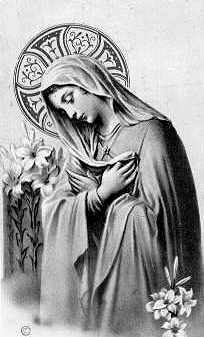
| The Angel of the Incarnation was sent to that maiden of Nazareth, who, deeming herself least worthy amongst the daughters of Sion, had been chosen by her creator to be the most blessed of amongst women. "And when the angel had come to her, he said, 'Hail, full of grace, the Lord is with thee: Blessed art thou among women.' Who having heard, was troubled at his saying and thought with herself what manner of salutation this should be. And the angel said to her, 'Do not be afraid, Mary, for thou hast found grace with God. ? The Holy Ghost shall come upon thee, and the power of the Most High shall overshadow thee. And therefore also the Holy which shall be born of thee shall be called the Son of God.' ? And Mary said, 'Behold the handmaid of the Lord: be it done to me according to thy word.'" (Luke 1, 28-38) | |||||||||||||||||||||||||||||||||||||||||||||||||||||||||||||||||||||||||||||||||||||||||||||||||||||||||||||||||||||||
| Mary bowed her head and will to the Divine decree; and at that instant the great fact of the Incarnation was accomplished. A Virgin of the house of David had become the Mother of God. The Second Person of the Blessed Trinity had become Man, man like unto us in all things save sin. The fact of the Incarnation proves that Mary is the Mother of God. He, Who was born Man of her is God, and Mary is His Mother. She is the Mother of the Divine Redeemer of the world; she is the Mother of the Savior and our Perfect Friend; she is the Mother of the Savior Who shed His Blood for us on Calvary. | |||||||||||||||||||||||||||||||||||||||||||||||||||||||||||||||||||||||||||||||||||||||||||||||||||||||||||||||||||||||
| There is no one whom Jesus venerated and loved, after His Heavenly Father and the Holy Spirit, more than He venerated and loved His Blessed Mother. He who has not love and veneration for the Mother of Jesus is unlike our Divine Savior in that particular perfection of His character which comes next after His piety toward the Eternal Father and Holy Spirit. But, besides all this, love and veneration are due to her for her own sake, because she is the Mother of mankind; because above all mere creatures she has been sanctified by the Holy Spirit; and because in being chosen the Mother of the Incarnate Son, she is the Mother of us all. | |||||||||||||||||||||||||||||||||||||||||||||||||||||||||||||||||||||||||||||||||||||||||||||||||||||||||||||||||||||||
| As soon as a man receives into his heart the full meaning of the Annunciation and the full light of the Incarnation, two self-evident truths arise to his reason: the one, the presence of Jesus in the Blessed Sacrament; the other, the love and veneration of His Blessed Mother. | |||||||||||||||||||||||||||||||||||||||||||||||||||||||||||||||||||||||||||||||||||||||||||||||||||||||||||||||||||||||
|
|||||||||||||||||||||||||||||||||||||||||||||||||||||||||||||||||||||||||||||||||||||||||||||||||||||||||||||||||||||||
|
|||||||||||||||||||||||||||||||||||||||||||||||||||||||||||||||||||||||||||||||||||||||||||||||||||||||||||||||||||||||
| A True Monk - The Venerable BEDE |
|||||||||||||||||||||||||||||||||||||||||||||||||||||||||||||||||||||||||||||||||||||||||||||||||||||||||||||||||||||||
| Confessor and Doctor of the Church | |||||||||||||||||||||||||||||||||||||||||||||||||||||||||||||||||||||||||||||||||||||||||||||||||||||||||||||||||||||||
| To the student of history there is always an unaccountable and inexplicable fascination about those old English cathedrals and monasteries whose defaced interiors stand as a protest against the vandalism of the sixteenth century, and whose ivy-grown exteriors show that grim time has dealt more gently with the works of man than has man himself. There is something mysterious about these grand old piles, and with them in our minds, there is always associated something of the marvelous. Nor are we much astray in thus bringing together the marvelous of imagination with the wonderful in building, for within these old ruins were centered at different epochs all of England's greatest saints and scholars. If the very walls speak to us now so plainly, and are even yet centers of interest to scholars, how much louder must they have preached and how much more interesting must they have been when re-echoing the voices of the hundreds and thousands of beings who daily and hourly chanted the praises of their Creator! It is true the pseudo-historians of the past century have sought to bring discredit on the occupants of these venerable institutions by assertions based on prejudice and hatred, and by accusations which have not been able to stand the test of historic investigation; but that day is past. The researches of learned and trusty men have vindicated the character of the early monks from the aspersions cast upon them, and have satisfactorily proved to the intelligent world that the monks, instead of being the lazy, dissipated persons so often represented in caricature, were in reality the learned and scientific men of their time. Their convents became storehouses for books, and their cowls a protection for learning. Then, too, when a mighty intellect arose, students flocked to him from all parts of the known world. His words were listened to with respect and reverence, were copied by loving scribes, and sent to the various parts of the continent. Yet full oft when the lecturer had closed his instruction did he doff his doctor's cap and betake himself to the field, where with the humblest he divided the task of the farm labors. Such was the Venerable Bede, rivaling his brethren in humility, and in the practice of monastic virtues those whom he excelled in worldly knowledge and science. "Born at the end of the Christian world," writes Montalembert, "and of a race which half a century before his birth was still plunged in the darkness of idolatry, this Anglo-Saxon at once reveals himself clothed in the fullness of all enlightenment known to his time. He was for England what Cassiodorus was for Italy and St. Isidore for Spain. But he had in addition an influence and echo beyond his own country which has been surpassed by none; his influence on Christendom was as rapid as it was extensive, and his works, which soon found a place in all the monastic libraries of the West, brought down his fame to the period of the Renaissance. He wrote at his pleasure in prose or verse, in Anglo-Saxon, in Latin, and in Greek. Astronomy, meteorology, physics, music, philosophy, geography, and arithmetic, besides theology, became at times the subjects of his various books, and thus he fairly won for himself the title given to him by Edmund Burke of `the father of English learning.' | |||||||||||||||||||||||||||||||||||||||||||||||||||||||||||||||||||||||||||||||||||||||||||||||||||||||||||||||||||||||
| Bede was born in the year 673 near Wearmouth. At the age of seven, he was entrusted by his parents to the care of St. Benedict Biscop, who at that time was founding his celebrated monastery of Wearmouth. Never, perhaps, was name more appropriately conferred than was that of the child Bede. In Anglo-Saxon it means "prayer," and was thoroughly indicative of the spirit that guided its possessor. By St. Benedict, Bede was sent to Yarrow with a score of others to found the afterward-celebrated monastery of that place, under the guidance of the saintly Ceolfrid. Shortly after its establishment, however, an epidemic broke out which carried off all the members of the community save the aged superior and the youthful novice, Bede. With grieved hearts these clung closely to the rule of their founder, and met each day to chant in unison the divine office. Nor did they abandon their holy custom. For the ancient annals tell us that God, pleased with their fidelity to rule, sent them other holy souls to replace the ones whom death had snatched away. At the age of thirty, he was ordained priest in the monastic chapel at Yarrow by St. John of Beverly. His remaining years he passed amid his brethren in his favorite monastery of Yarrow, never leaving it, save for the sake of obtaining greater knowledge or doing greater good. Of course it may be a matter of great surprise to the many industrious members of Bible societies to learn that one of the greatest labors of Bede was his anxious endeavor to combat the ignorance and lukewarmness of the new Catholics of England by making them capable of reading and understanding the Bible: "To bring to the level of all capacities the most approved explanations of obscure passages; to seek out with scrupulous care the mystic sense and spiritual use of biblical narratives; to go deeply into and to simplify that study of the sacred words which is so dear and so necessary to real piety; to draw from it the lessons, and especially the consolations, pointed out by St. Paul-such was the task of Bede. He gave himself up to it with a fervor which never relaxed; with a perseverance which consumed his nights and days; with touching and sincere modesty; with delicate precaution against the danger of being taken for a plagiarist (for he gave a synopsis of all the Fathers in his explanations); with a courage sometimes failing, yet ever springing up anew; and, in short, with a solidity and assurance of doctrine which have kept for him till the present time a place among the best authorized interpreters of the Catholic faith." One of his greatest works, which he in his humility styled a pamphlet, was his 'Ecclesiastical History of the English Nation'. This it was which justly obtained for him the title of "Father of English History" and the "founder of history in the middle ages. His preface may well be contrasted with those of works of greater pretensions of our own times. Moreover, we fear that if the comparison were made it would not be in favor of the faith, or piety, or honesty of many historians whose works are a thousand times more known than are those of the Venerable Bede. In his preface he says: "I entreat all those of our nation who read this history, or hear it read, to recommend often to the divine clemency the infirmities of my body and of my soul. Let each man in his province, seeing the care which I have taken to note down everything that is memorable or agreeable for the inhabitants of each district, pay me back by praying for me." When he sent the first copy of his history to the friend who had first suggested the idea of it to him, he wrote: "Dear and good father, beloved friend in Christ, remember, I beseech you, my weakness-you and all the servants of Christ who live with you; remember to intercede for me with the merciful Judge, and make -all those who read my humble work do the same. In the preparation of his history, Bede was much assisted by the learning and the researches of the monk Albinus. Albinus furnished him with memoranda of all that had happened in Kent and the neighboring counties from the time of the missionaries under St. Augustine. He even dispatched a priest from London to Rome to make researches among the archives of the Eternal City. All the bishops of England and the abbots and monks of the principal monasteries busied themselves in collecting information and data concerning the origin of their various establishments. The history is written in a clear, simple style, with more regard for truth than rhetoric. The greatest opponents of Catholic truth have looked in vain through its pages for a single narrative that they might condemn. How strangely different from the style of those who by beauty of language and profusion of imagery seek to hide the truth or distort it! His written works, most of which are extant, comprise all branches of knowledge: history, rhetoric, cosmography, orthography, astronomy, music, grammar, philosophy, poetry, exegesis, hagiography. Before his last illness, Bede had completed forty-five volumes upon various subjects. He gives the list of these works himself, and then concludes with the following prayer: "0 good Jesus! who hast deigned to refresh my soul with the streams of knowledge, grant to me that I may one day ascend to thee, who art the source of all wisdom, and remain for ever in thy divine presence." Like all other great souls, Bede had his trials and difficulties. In his treatise on chronology he had ridiculed the idea then prevailing among the common people, and even asserted by some of the learned, that the world was to last only six thousand years. Again, he differed from other writers about the date of the birth of our Savior. Popular opinion was excited against him because of these things, and by some, he was even proclaimed a heretic. To one of his gentle disposition, and to one so careful in those troublous times to keep himself in perfect accord with Roman doctrines and practices, this was a severe blow. He grew pale, he says himself, with surprise and horror when he heard it. He became troubled and indignant. He wrote an apologetic letter to one of his monastic friends, and charged him to read it to Wilfred, Bishop of York, who, it appears, had al lowed the calumny to be uttered at his table without rebuke. The orthodoxy of his writings has since been suitably vindicated by the church, which has inserted several of his homilies in the divine office. One of his grandest letters, and one which can with advantage be studied by rulers of the nineteenth century, was written to Egbert, Bishop of York and brother of the king of Northumbria. It teems with sound advice against both spiritual and temporal abuses, gives many practical instructions for the suitable guidance of the people, and shows how, by the proper union of church and state, the happiness of nations may be promoted. | |||||||||||||||||||||||||||||||||||||||||||||||||||||||||||||||||||||||||||||||||||||||||||||||||||||||||||||||||||||||
| It was thus that his life was passed in advancing the interests of his soul and instructing those under his charge. But Bede grew old, and death claimed him for its victim. Yet even in his last hours, as recorded by his faithful Cuthbert, has he given the world an example of how the servant of Jesus Christ can meet death without fear, with confidence. The history of his last days forms in itself a most pleasing episode, and the thanks of present ages are due to the saintly monk who so faithfully gave us the picture of the dying saint. I cannot do better than repeat his words: "Nearly a fortnight before Easter be was seized with an extreme weakness in consequence of his difficulty of breathing, but without great pain. He continued thus until Ascension, always joyous and happy, giving thanks to God day and night, and even every hour of the night and day. He gave us our lessons daily, and employed the rest of his time in chanting psalms.... From the moment of awaking, he restated his prayers and praises to God, with his arms in the form of a cross. O happy man! He sang sometimes texts from St. Paul and other Scriptures, sometimes lines in our own language-for he was very able in English poetry. He also sang anthems according to his liturgy and ours-among others the following: `0 King of glory, who now bast mounted in triumph above the skies, leave us not like orphans, but send us the Spirit of truth promised to our fathers.' At the words like orphans he burst into tears. An hour after he repeated the same anthem, and we mingled our tears with his.... During all these days, in addition to the lessons which he gave us and the psalms which he sang with us, he undertook two pieces of work: a translation of the Gospel according to St. John into our English tongue, for the use of the church of God, and some extracts from Isidore of Seville. `For,' said he, `I would not have my children read lies, nor that after my death they should give themselves up to fruitless work.'" As his sickness advanced" be continued to dictate in good spirits, and sometimes added, `Make haste to learn, for I know not how long I may remain with you, or if my Creator may call me shortly.' On the eve of the feast of the Ascension, at the first dawn of the morning, he desired that what had been commenced should be quickly finished, and we worked till the hour of tierce. Then we went to the procession with the relics of the saints, as the solemn occasion required. But one of us remained by him and said to him: `Beloved father, there is still a chapter wanting; would it fatigue you to speak any more?' Bede answered: `I am still able to speak. Take your pen, make it, and write rapidly.' The other obeyed.... Towards the evening the disciple of whom I have already spoken said to him, `Beloved master, there remains only one verse which is not written.' 'Write it, then, quickly,' he answered. The young man, having completed it, in a few minutes exclaimed: 'Now it is finished.' 'You say truly it is finished,' said Bede. 'Take my head in your arms (said the dying monk), and turn me, for I have great consolation in turning towards the holy place where I have prayed so much.' Lying in this position on the floor of his cell, he sang for the last time 'Glory be to the Father, to the Son, and to the Holy Ghost,' and gave up the spirit as he pronounced the last of these divine names." The great saint, and great monk, and great historian was dead, and who will deny that even in death he was grander than the most renowned of worldly heroes or famous men? He seemed little in his own eyes, but God made him great, and bas even wrung the praise of Bede from the mouths of those who, as far as his honor and glory are concerned, would much rather have been silent. + | |||||||||||||||||||||||||||||||||||||||||||||||||||||||||||||||||||||||||||||||||||||||||||||||||||||||||||||||||||||||
| FOOD FOR THOUGHT | |||||||||||||||||||||||||||||||||||||||||||||||||||||||||||||||||||||||||||||||||||||||||||||||||||||||||||||||||||||||
| Company--Bad company is like a nail driven into a post, which, after the first or second blow, may be drawn out with little difficulty; but once driven up to the head, the pincers cannot take hold to draw it out, but the which can only be done by the destruction of the wood. Augustine. | |||||||||||||||||||||||||||||||||||||||||||||||||||||||||||||||||||||||||||||||||||||||||||||||||||||||||||||||||||||||
| Good --That which is good to be done, cannot be done too soon; and if it is neglected to be done early, it will frequently happen that it will not be done at all. Bishop Mant. | |||||||||||||||||||||||||||||||||||||||||||||||||||||||||||||||||||||||||||||||||||||||||||||||||||||||||||||||||||||||
| Subjects for daily meditation. | |||||||||||||||||||||||||||||||||||||||||||||||||||||||||||||||||||||||||||||||||||||||||||||||||||||||||||||||||||||||
| Remember, Christian soul, that thou hast this day and every day of thy life ---- | |||||||||||||||||||||||||||||||||||||||||||||||||||||||||||||||||||||||||||||||||||||||||||||||||||||||||||||||||||||||
| God to glorify, | |||||||||||||||||||||||||||||||||||||||||||||||||||||||||||||||||||||||||||||||||||||||||||||||||||||||||||||||||||||||
| Eternity to prepare for, | |||||||||||||||||||||||||||||||||||||||||||||||||||||||||||||||||||||||||||||||||||||||||||||||||||||||||||||||||||||||
| Jesus to imitate, | |||||||||||||||||||||||||||||||||||||||||||||||||||||||||||||||||||||||||||||||||||||||||||||||||||||||||||||||||||||||
| Time to profit by, | |||||||||||||||||||||||||||||||||||||||||||||||||||||||||||||||||||||||||||||||||||||||||||||||||||||||||||||||||||||||
| The Angels and Saints to invoke, | |||||||||||||||||||||||||||||||||||||||||||||||||||||||||||||||||||||||||||||||||||||||||||||||||||||||||||||||||||||||
| Neighbors, to edify, | |||||||||||||||||||||||||||||||||||||||||||||||||||||||||||||||||||||||||||||||||||||||||||||||||||||||||||||||||||||||
| A soul to save, | |||||||||||||||||||||||||||||||||||||||||||||||||||||||||||||||||||||||||||||||||||||||||||||||||||||||||||||||||||||||
| The world to despise, | |||||||||||||||||||||||||||||||||||||||||||||||||||||||||||||||||||||||||||||||||||||||||||||||||||||||||||||||||||||||
| A body to mortify, | |||||||||||||||||||||||||||||||||||||||||||||||||||||||||||||||||||||||||||||||||||||||||||||||||||||||||||||||||||||||
| Devils to combat, | |||||||||||||||||||||||||||||||||||||||||||||||||||||||||||||||||||||||||||||||||||||||||||||||||||||||||||||||||||||||
| Sins to expiate, | |||||||||||||||||||||||||||||||||||||||||||||||||||||||||||||||||||||||||||||||||||||||||||||||||||||||||||||||||||||||
| Passions to subdue, | |||||||||||||||||||||||||||||||||||||||||||||||||||||||||||||||||||||||||||||||||||||||||||||||||||||||||||||||||||||||
| Virtues to acquire, | |||||||||||||||||||||||||||||||||||||||||||||||||||||||||||||||||||||||||||||||||||||||||||||||||||||||||||||||||||||||
| Death perhaps to suffer, | |||||||||||||||||||||||||||||||||||||||||||||||||||||||||||||||||||||||||||||||||||||||||||||||||||||||||||||||||||||||
| Hell to avoid, | |||||||||||||||||||||||||||||||||||||||||||||||||||||||||||||||||||||||||||||||||||||||||||||||||||||||||||||||||||||||
| And Judgment to undergo. | |||||||||||||||||||||||||||||||||||||||||||||||||||||||||||||||||||||||||||||||||||||||||||||||||||||||||||||||||||||||
| Heaven to gain, | |||||||||||||||||||||||||||||||||||||||||||||||||||||||||||||||||||||||||||||||||||||||||||||||||||||||||||||||||||||||
| The Gifts of the Holy Ghost . | |||||||||||||||||||||||||||||||||||||||||||||||||||||||||||||||||||||||||||||||||||||||||||||||||||||||||||||||||||||||
| Wisdom | which teaches us to direct our whole lives and actions to the honor of God and the salvation of souls. | |||||||||||||||||||||||||||||||||||||||||||||||||||||||||||||||||||||||||||||||||||||||||||||||||||||||||||||||||||||||
| Understanding | which enables us to comprehend more perfectly the great mysteries of our faith. | |||||||||||||||||||||||||||||||||||||||||||||||||||||||||||||||||||||||||||||||||||||||||||||||||||||||||||||||||||||||
| Counsel | which leads us to make a right choice in things relating to our salvation. | |||||||||||||||||||||||||||||||||||||||||||||||||||||||||||||||||||||||||||||||||||||||||||||||||||||||||||||||||||||||
| Fortitude | whereby we are enabled to undergo and despise all dangers for God's sake, and to be firm and constant in the performance of our Christian duties. | |||||||||||||||||||||||||||||||||||||||||||||||||||||||||||||||||||||||||||||||||||||||||||||||||||||||||||||||||||||||
| Piety | which makes us devout and zealous in the service of God, faithful to Him in all things, and put the duties of our religion in practice. | |||||||||||||||||||||||||||||||||||||||||||||||||||||||||||||||||||||||||||||||||||||||||||||||||||||||||||||||||||||||
| Fear of the Lord | which checks our rashness, keeps us from sin, and makes us obedient to the law of God, and dread even offending Him. | |||||||||||||||||||||||||||||||||||||||||||||||||||||||||||||||||||||||||||||||||||||||||||||||||||||||||||||||||||||||
|
|||||||||||||||||||||||||||||||||||||||||||||||||||||||||||||||||||||||||||||||||||||||||||||||||||||||||||||||||||||||
| The Nature of the Mass. | |||||||||||||||||||||||||||||||||||||||||||||||||||||||||||||||||||||||||||||||||||||||||||||||||||||||||||||||||||||||
| (Continued from the previous issue) | |||||||||||||||||||||||||||||||||||||||||||||||||||||||||||||||||||||||||||||||||||||||||||||||||||||||||||||||||||||||
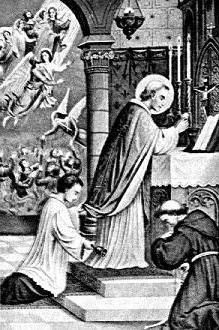
| Christ freely offered Himself for the cruel death His enemies inflicted on Him. "I lay down My life, that I may take it up again. No man taketh it away from Me: but I lay it down of Myself." (John. x. r7, 18.) In the Mass, He again freely offers Himself a victim through the priest. And how? By the very words that He employed when first offering Himself to be immolated. At the Last Supper He gave Himself a victim to be immolated, His death, on the following day, being the consummation of that offering. In the Mass He offers Himself again as the Victim that was immolated on Calvary -- renewing the Sacrifice. | |||||||||||||||||||||||||||||||||||||||||||||||||||||||||||||||||||||||||||||||||||||||||||||||||||||||||||||||||||||||
| 	But it may be asked, how can Christ Who is now in glory be a sacrificial victim? Christ can die no more. How then can He be offered as a sacrificial victim in the Mass? | |||||||||||||||||||||||||||||||||||||||||||||||||||||||||||||||||||||||||||||||||||||||||||||||||||||||||||||||||||||||
| The actual shedding of blood is not an essential part of sacrifice. The same blood, once previously offered up in sacrifice, may again be offered up to constitute a second distinct sacrifice. Thus the Jewish high-priest, on the solemn festival of expiation, did not immolate a fresh victim within the holy of holies, but carried with him, within the veil, the blood of the victim that had been previously shed on the altar of holocausts, and offered it up a second time to accomplish atonement. This second offering constituted of itself a sacrifice, although not accompanied with the shedding of blood. | |||||||||||||||||||||||||||||||||||||||||||||||||||||||||||||||||||||||||||||||||||||||||||||||||||||||||||||||||||||||
| In like manner Jesus does not die a second time on our altars, but the Sacrifice which He made once for all on the Cross He continually renews upon the altar, by offering up again the Victim slain once for all on Calvary; thus constituting the Sacrifice of the Cross and that of the Mass one and the same Sacrifice. The Sacrifice, which was first offered at the Last Supper, and then consummated on the Cross, is perpetuated on the altars of the Church. At the Last Supper, Christ offered Himself a victim to be immolated. On the Cross He was immolated. In the Mass that immolated Victim is offered again. This makes the Mass a sacrifice, because in the Mass Christ offers to Almighty God the. Victim once slain, but now perpetually living and glorified. | |||||||||||||||||||||||||||||||||||||||||||||||||||||||||||||||||||||||||||||||||||||||||||||||||||||||||||||||||||||||
| It is thus that the Mass renews the Sacrifice of the Cross. Until the end of time, the Mass will be offered as an infinite oblation to the Divine Majesty for man's salvation and sanctification. The "Imitation of Christ" says: "The visible priest is but the minister of Christ using the words of Christ, by the command and institution of Christ." (Bk. iv. 5.) The Sacrifice of the Cross redeemed us. The Sacrifice of the Mass gives to succeeding generations the blessing of participating most beneficially in the Sacrifice of Calvary. The Sacrifice of the Cross was of infinite value; its effects can never be exhausted. | |||||||||||||||||||||||||||||||||||||||||||||||||||||||||||||||||||||||||||||||||||||||||||||||||||||||||||||||||||||||
| By the Mass, the fruits of Redemption are most effectually imparted to mankind. For the Mass, besides showing the death of the Lord, and offering up the divine Victim as a sacrifice, is also the means of uniting us intimately with Our Redeemer. When at Mass we receive Holy Communion we partake of the Eucharist, the Sacrament of Christ's Body and Blood. | |||||||||||||||||||||||||||||||||||||||||||||||||||||||||||||||||||||||||||||||||||||||||||||||||||||||||||||||||||||||
| To sum up, therefore, let it be repeated that the same Sacrifice that was offered on Calvary by the shedding of blood is offered on our altars in an unbloody manner. In everything except the manner of offering, the Mass is the same Sacrifice as that of the Cross. Christ is the Lamb of God Who was slain for the redemption of the world. He is the perpetual Victim, for He is the Lamb of God even in the Kingdom of Glory. As the perpetual Lamb of God, He is offered daily at Mass throughout the world from the rising of the sun until its going down, thus fulfilling the prophecy of Malachias. "From the rising of the sun even to the going down, My name is great among the Gentiles, and in every place there is sacrifice, and there is offered a clean oblation." (Mal. i. 11.) | |||||||||||||||||||||||||||||||||||||||||||||||||||||||||||||||||||||||||||||||||||||||||||||||||||||||||||||||||||||||
| The Holy Sacrifice of the Mass is the highest act of worship that can be paid to Almighty God. It is the worship instituted by Jesus Christ Himself. It is the most sacred action that can be performed on this earth. When we assist at Mass, we stand at the foot of the Cross. | |||||||||||||||||||||||||||||||||||||||||||||||||||||||||||||||||||||||||||||||||||||||||||||||||||||||||||||||||||||||
| Taken from : Fr. Scott's Radio Talks. | |||||||||||||||||||||||||||||||||||||||||||||||||||||||||||||||||||||||||||||||||||||||||||||||||||||||||||||||||||||||
|
|||||||||||||||||||||||||||||||||||||||||||||||||||||||||||||||||||||||||||||||||||||||||||||||||||||||||||||||||||||||
| Una Voce-Houston | Editors Notes. | |||||||||||||||||||||||||||||||||||||||||||||||||||||||||||||||||||||||||||||||||||||||||||||||||||||||||||||||||||||||
| The Traditional Latin Mass is celebrated each Sunday morning at 8 am at Annunciation Catholic Church in downtown Houston on the corner of Texas and Crawford. Please come and invite friends and relatives. Deo Gratias. | |||||||||||||||||||||||||||||||||||||||||||||||||||||||||||||||||||||||||||||||||||||||||||||||||||||||||||||||||||||||
| November is the month of the Holy Souls || December is the month of the Holy Infancy | |||||||||||||||||||||||||||||||||||||||||||||||||||||||||||||||||||||||||||||||||||||||||||||||||||||||||||||||||||||||
| Visit Una Voce America?s Website: www.unavoce.org | |||||||||||||||||||||||||||||||||||||||||||||||||||||||||||||||||||||||||||||||||||||||||||||||||||||||||||||||||||||||
|
|||||||||||||||||||||||||||||||||||||||||||||||||||||||||||||||||||||||||||||||||||||||||||||||||||||||||||||||||||||||
|
|||||||||||||||||||||||||||||||||||||||||||||||||||||||||||||||||||||||||||||||||||||||||||||||||||||||||||||||||||||||
| SPOTLIGHT ON HERESY: MONTANISM. | |||||||||||||||||||||||||||||||||||||||||||||||||||||||||||||||||||||||||||||||||||||||||||||||||||||||||||||||||||||||
| Around the year A.D. 156, there arrived in a small village in what is now central Turkey, a recent Christian convert named Montanus. It was there that Montanus fell into a trance and started to "prophesy under the influence of the Spirit." Montanus was joined by two women, Priscilla and Maximilla, and some others, who joined him in the prophesizing. The group was called the illuminati ("the enlightened"). They exhibited the frenzied nature of their religious experience by enraptured seizures and utterances of strange languages that the disciples regarded as oracles of the Holy Spirit. Montanism spread throughout Asia Minor, where a number of towns almost completely converted to Montanism. | |||||||||||||||||||||||||||||||||||||||||||||||||||||||||||||||||||||||||||||||||||||||||||||||||||||||||||||||||||||||
| The essential principle of Montanism was that the Paraclete, the Spirit of truth, whom Jesus Christ had promised in the Gospel According to John, was manifesting himself to the world through Montanus and the prophets and prophetesses associated with him. It became clear though, that the Montanist prophecy was not the prophecy of old but a new prophecy. True prophets did not, as Montanus did, deliberately induce a kind of ecstatic intensity and a state of passivity and then maintain that the words they spoke were the voice of the Spirit. It also became clear that the claim of Montanus to have the final revelation of the Holy Spirit implied that the church had to accept a fuller revelation, other than that of Christ and the Apostles. In addition to this, Montanists "wanted to revive some of the things which had given power to primitive Christianity." | |||||||||||||||||||||||||||||||||||||||||||||||||||||||||||||||||||||||||||||||||||||||||||||||||||||||||||||||||||||||
| Together with this new revelation and desire for things of primitive Christianity, they believed in the Second Coming of Christ as imminent. Although the Montanists were not the only ones with this belief, theirs took on a special form. They believed the heavenly Jerusalem was soon to descend on the Earth in a plain between the two villages of Pepuza and Tymion in Phrygia (Turkey). Because of the Montanist's belief in the imminent Second Coming of Christ and the end of the world, Montanism taught a legalistic moral rigorism to purify Christians and detach them form their material desires. The time of fasting was lengthened, followers were forbidden to flee from martyrdom, marriage was discouraged, and second marriages were prohibited. What is more, they denied the power of the Church to forgive sins. | |||||||||||||||||||||||||||||||||||||||||||||||||||||||||||||||||||||||||||||||||||||||||||||||||||||||||||||||||||||||
| The movement did not remain within the Church, but "began to organize itself as a sect with its own clergy." The bishops of Asia Minor gathered in synods and finally excommunicated the Montanists, around 177. Montanism then became a separate sect. About twenty-five years after its schism, Montanism had a group in Rome. It was in Carthage, in North Africa, that its most illustrious convert, Tertullian, resided. | |||||||||||||||||||||||||||||||||||||||||||||||||||||||||||||||||||||||||||||||||||||||||||||||||||||||||||||||||||||||
| During the closing years of the second century Africa was the scene of a violent persecution. Christians throughout the region were cast into prison, devoured by wild beasts, beheaded, or crucified. A witness to these horrors, Tertullian wrote numerous books either to defend the Christians against their persecutors or to encourage them in their trials. Unfortunately, around 203-206, Tertullian fell under the influence of Montanism, leaving the Catholic Church 6 years later. He primarily supported the moral rigorism of the movement against what he considered the moral laxity of the Catholic bishops. Some of his favorite contentions were that the Church could not absolve persons guilty of very grave offenses, such as apostasy and adultery; that Christians were not at liberty to avoid persecution by flight; that second marriage was adultery; and that the power to rule in the Church depended on spiritual endowments and not on the Sacrament of Holy Orders. | |||||||||||||||||||||||||||||||||||||||||||||||||||||||||||||||||||||||||||||||||||||||||||||||||||||||||||||||||||||||
| Montanism continued in the East until severe legislation against Montanism by Emperors Constantine I and Justinian I essentially destroyed it, but some remnants evidently survived into the ninth century. + | |||||||||||||||||||||||||||||||||||||||||||||||||||||||||||||||||||||||||||||||||||||||||||||||||||||||||||||||||||||||
| A GOOD SERMON FOR CHRISTMAS, by Rev. Hickney | |||||||||||||||||||||||||||||||||||||||||||||||||||||||||||||||||||||||||||||||||||||||||||||||||||||||||||||||||||||||
| "This day is born unto you a Savior, Who is Christ the Lord." --Luke ii. II. | |||||||||||||||||||||||||||||||||||||||||||||||||||||||||||||||||||||||||||||||||||||||||||||||||||||||||||||||||||||||
| The Gospel has carried our hearts to Bethlehem. In spirit we are in that country where the shepherds were keeping the night watch over their flocks, when, behold, the brightness of God shone round about them, and the angel of the Lord stood by them. "Behold, I bring you tidings of great joy, that shall be to all the people, for this day is born to you a Savior, Who is Christ the Lord." | |||||||||||||||||||||||||||||||||||||||||||||||||||||||||||||||||||||||||||||||||||||||||||||||||||||||||||||||||||||||
| That is why our hearts are at Bethlehem; we have come "to see the word which has come to pass," to adore that God Who became Man, that we, poor sinners, might become the sons of God. My dear brethren, our first thoughts are of lowly adoration and thanksgiving to Him, "Who gave Himself for us, that He might redeem us from all iniquity." But where is the Saviour? Let us be thankful for the word of the Gospel, "This shall be a sign unto you," for without it how could we recognize our God? "You shall find the Infant wrapped in swaddling clothes, and laid in a manger," and yet, beholding merely that, we must believe and adore, "He is the Saviour, Christ the Lord"! Oh, faith and sight how different the picture they present to us! | |||||||||||||||||||||||||||||||||||||||||||||||||||||||||||||||||||||||||||||||||||||||||||||||||||||||||||||||||||||||
| We see the picture that sight presents to us. The stable of Bethlehem, a rude cave on the hillside, adjoining the inn, and used for cattle. Moreover, there we find two poor people who had been seeking in vain for shelter, but there was no room for them at the inn, though the young mother sorely needed a shelter from that winter?s night. "But she brought forth her firstborn Son and laid Him in a manger." | |||||||||||||||||||||||||||||||||||||||||||||||||||||||||||||||||||||||||||||||||||||||||||||||||||||||||||||||||||||||
| Such is the picture that sight presents; but what does faith depict? Faith bids us to see in that poor Infant the blessed hope, the glory of the great God, our Saviour Jesus Christ. It tells us, "He was in the world, and the world was made by Him, and the world knew Him not." And the reason why He came, "that we might be made sons of God." And He came poor and an infant to win our hearts from us, to show He came to the poor and simple, to show that He did not want fear, but love. And the God Who came to redeem His own world was an outcast in that world! | |||||||||||||||||||||||||||||||||||||||||||||||||||||||||||||||||||||||||||||||||||||||||||||||||||||||||||||||||||||||
| And faith tells us yet more. It tells us that His coming was successful in spite of the world. The world knew Him not, and rejected Him. Yet what name is revered and adored the wide world over, more than nineteen hundred years after that Christmas night, but the blessed name of Jesus? Then, He only had a stable for a home, and now all the countless churches in the world are His home, and the costly altars, ablaze with lights, beautiful as man can make them, instead of the manger where poor Mary laid Him. And millions of hearts are worshipping Him this Christmas, in the spirit bending over the Infant, their aspirations, their love, their yearning centered on Him, Jesus alone influencing their lives and destinies. And is this Christmas night a mere memory -- mere poetry of the past? Many may say so, but with us Catholics it is not. Christmas to us is a blessed reality. We believe that the same Lord becomes present on our altar during Mass, Who was found by the shepherds in the manger with His Virgin Mother by His side. Let us rejoice that we can come, as the shepherds did, and adore our newborn Savior. How can we do it worthily? We must imitate the shepherds. They were poor, simple, obedient men. They did not argue and contradict in their ignorance; but they believed the announcement of the angels, and hastened to adore. And the angel found them at their duty, keeping the night watch. We, too, are keeping the night watch over our souls, looking for the blessed hope and coming of our Savior. | |||||||||||||||||||||||||||||||||||||||||||||||||||||||||||||||||||||||||||||||||||||||||||||||||||||||||||||||||||||||
| And we must come in the company of the angels. May they lead us to Him to worship their God and ours! | |||||||||||||||||||||||||||||||||||||||||||||||||||||||||||||||||||||||||||||||||||||||||||||||||||||||||||||||||||||||
| We owe our Lord a special acknowledgment of His Divinity on Christmas Day. All through life, the hidden Godhead showed Itself in some way. On earth He spoke as one having power; at His baptism the heavens opened, His heavenly Father spoke; His miracles proclaimed Him more than man; at His death the Jews struck their breasts, saying, "Indeed this was the Son of God"; but in the manger, the weak-ness, the defenselessness of infancy was relieved by no miraculous distinction. The angels bade the shepherds go, but we read of no angels at the stable. The Infant in swaddling clothes! If faith were not at hand to remind us who this Child of Mary is, could we realize the unspeakable abasement of the eternal and infinite Son of God? | |||||||||||||||||||||||||||||||||||||||||||||||||||||||||||||||||||||||||||||||||||||||||||||||||||||||||||||||||||||||
| Christmas speaks to our hearts. It speaks to us, indeed, of sin, or why should we need a Savior? But it speaks to us, too, of God?s pity and forgiveness, "of the plenteous redemption there is with Him." He became an Infant, appealing for our sympathy and love. Let us bid Him welcome to our hearts, and give our lives to Him. He is easily content; He only asks for our love. "For not by the works of justice that we have done, but according to His mercy, He hath saved us." (Titus iii.V.) AMEN. | |||||||||||||||||||||||||||||||||||||||||||||||||||||||||||||||||||||||||||||||||||||||||||||||||||||||||||||||||||||||
|
|||||||||||||||||||||||||||||||||||||||||||||||||||||||||||||||||||||||||||||||||||||||||||||||||||||||||||||||||||||||
| ST. CECILIA (Patroness of Musicians) | |||||||||||||||||||||||||||||||||||||||||||||||||||||||||||||||||||||||||||||||||||||||||||||||||||||||||||||||||||||||
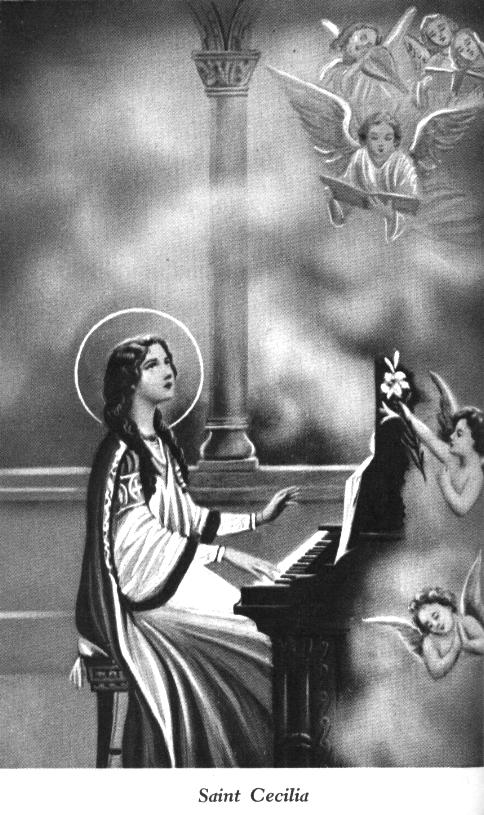
| The name of Cecilia has always been most illustrious in the Church, and since the primitive ages it has been mentioned in the anon of the Mass. She is honored as the patroness of ecclesiastical music. Her feast is celebrated on November 22. | |||||||||||||||||||||||||||||||||||||||||||||||||||||||||||||||||||||||||||||||||||||||||||||||||||||||||||||||||||||||
| According to her legendary Acts, St. Cecilia was a native of Rome. At an early age, she made a vow of virginity, but her parents forced her to marry a pagan nobleman named Valerian. On the day of the wedding, she told him, "You must know this that I have an angel of God watching over me. If you let me keep my promise to be Christ's bride only, my angle will love you as he loves me." Valerian in disbelief said, "Show me this angel. If he comes from God, I will do as you wish." Cecilia replied, "If you believe in the one true God and receive the waters of baptism, then you shall see the angel." Valerian therefore went the holy Bishop Urban and was received with joy. After he had professed his belief in the Christian religion, he was baptized and returned to Cecilia. There by the Saint's side, the you man saw the splendid angel! Thus was it that she converted him through God's grace to the Faith of Christ, and, by the providence of God, preserved her virginity. She also converted Tiburtius, the brother of Valerian. Both these men suffered martyrdom for the Faith, and St. Cecilia loving buried their bodies. A few days later she was brought before the tribunal and condemned to be put in a fire, but the flames did not harm her. When this failed, she was ordered to be beheaded. The executioner stuck her neck three times yet she did not die immediately. She lay on the floor unable to move, yet holding out her three fingers on one hand while one on the other, professing her faith in the Blessed Trinity. Her death occurred probably in the reign of Marcus Aurelius or of Commodus, between the years 161 and 192. | |||||||||||||||||||||||||||||||||||||||||||||||||||||||||||||||||||||||||||||||||||||||||||||||||||||||||||||||||||||||
| Prayer: O God, Thou who gladdens us with the annual feast of Blessed Cecilia, Thy Virgin and Martyr, grant that we who honor her by this service, may also follow the example of her holy life. Amen. | |||||||||||||||||||||||||||||||||||||||||||||||||||||||||||||||||||||||||||||||||||||||||||||||||||||||||||||||||||||||
| Saint Francis Xavier | |||||||||||||||||||||||||||||||||||||||||||||||||||||||||||||||||||||||||||||||||||||||||||||||||||||||||||||||||||||||
| (Patron of Foreign Missions) Dec 3 | |||||||||||||||||||||||||||||||||||||||||||||||||||||||||||||||||||||||||||||||||||||||||||||||||||||||||||||||||||||||
| This Apostle of the Indies was born at the castle of Xavier in Navarre, Spain, in 1506. He was of noble descent. At the age of eighteen, he went to Paris to study philosophy. About four years later, St. Ignatius Loyola came to the same city and took his abode in the College of St. Barbara, to which St. Francis belonged. At that time St. Francis was full of the world and ambition, but the company of St Ignatius exercised such a beneficial influence upon him, that he grew to be a changed man and became one of the first disciples of the saint. | |||||||||||||||||||||||||||||||||||||||||||||||||||||||||||||||||||||||||||||||||||||||||||||||||||||||||||||||||||||||
| In 1536, he went to Venice with the first companions of St. Ignatius. After visiting Rome, he was ordained a priest as Venice in 1537, and the first Jesuits made their vows before the Pope's nuncio. Shortly after the Society had been established, St Francis was sent to Portugal. In 1541 he set sail for India, which was to be the field of his labors for the rest of his life, and landed at Goa the following year. From that city, which he completely reformed, his apostolic labors extended to the coast of Malabar, to Travancor, Malacca, the Moluccas and Ceylon, and in all these places he converted numbers to Christianity. In 1549, he carried the light of the Faith to Japan, of which he became the first missionary, and where a flourishing Christian community soon arose. He remained in Japan for two years and four months. | |||||||||||||||||||||||||||||||||||||||||||||||||||||||||||||||||||||||||||||||||||||||||||||||||||||||||||||||||||||||
| He then turned his eyes to China. After visiting Goa, he set sail in 1552, to carry out his resolve, but God was satisfied with his will. On the twenty-third day after his departure from Malacca, he arrived in Sancian. On November 20th a fever seized him, and, alone upon a foreign shore, he died on Friday, December 2, 1552, at the age of forty-six. | |||||||||||||||||||||||||||||||||||||||||||||||||||||||||||||||||||||||||||||||||||||||||||||||||||||||||||||||||||||||