◙◦◙◦◙◦◙◦◙◦◙◦◙◦◙◦◙◦◙◦◙◦◙◦◙
The Catholic Spanish Missions of Texas.
By: G. E. Brown
◙◦◙◦◙◦◙◦◙◦◙◦◙◦◙◦◙◦◙◦◙◦◙◦◙◦◙
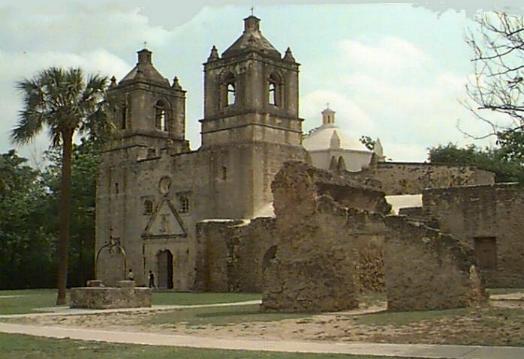
Mission Concepcion (1731)
The ruins of Spanish missions are part of the Texas landscape, but how were they launched on the early-unexplored Texas soil? Spanish explorers, uncommonly brave and deeply religious, trudged across some of the most perilous expanses on earth. They were the explorers of the western hemisphere from Argentina to the Southwestern United States. However, before the seventeenth century, expeditions into the interior of modern Texas were rare (with only five Spanish expeditions into present-day Texas), but that would change.
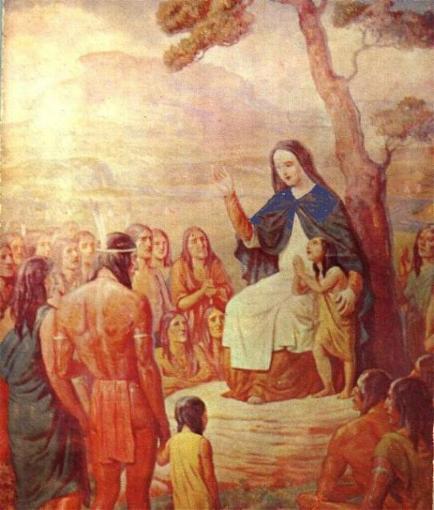
In July of 1629, the Jumanos, an Indian tribe living around the Concho River or area where San Angelo now stands, sent fifty representatives to a Spanish settlement located near the present Albuquerque, New Mexico, a distance of more than 450 miles. At the Franciscan convent, the Jumanos delegation requested that missionaries come back with them and start a mission. Besides their eagerness, the natives' remarkable grasp of the basic tenets of the Christianity surprised the Spanish. This was particularly odd since officially no Christian missionary had ever visited them. The Jumanos, when asked to explain, replied that they received a visit of "a lady in dressed in blue," who had taught them rudiments of the Faith and furthermore told the tribe to seek out the Spanish. Chipman, in his book Spanish Texas, 1519-1821, explains this: "Prior to the arrival of the Jumanos, the archbishop of Mexico had written the religious superior of New Mexico requesting information about a young nun's claim of bilocating to the frontier of New Spain. Sister María de Jesús had accepted vows in 1620 and entered the Franciscan convent of the Immaculate Conception in Agreda, a small village in northeastern Spain. Throughout the 1620's Maria de Jesus repeatedly lapsed into deep trances, and on those occasions she experienced dreams in which her spirit was transported to a distant land, where she taught the Gospel to pagan people" (Chipman 61). Following the arrival of the Jumanos at the mission and their startling information, a couple of the padres immediately departed with the delegation. They were greeted upon arrival, by the Jumanos and their neighbors, who asked to be baptized on the advice of the 'lady' who used to visit them with all the appearances of a flesh-blood human being (Fernandez-Shaw 23). The appearance of the Jumanos delegation asking for the Spanish to come and teach them, as well as later French attempts to colonize Texas (like La Salle's expedition to the Texas coast in 1684), led the Spanish authorities to seriously put into effect plans to bolster their hold on the Texas frontier. The Spaniards decided the best way to accomplish their goal was by establishing a system of missions and presidios, to not only maintain claim to their territory, but to also civilize the Texas frontier.

To understand the Spanish missions, one must look at their aim and purpose. The chief goal of a Spanish mission was to convert the wild natives of Texas to "'Christianized citizens of the Spanish crown with the same rights and privileges as other Spanish subjects'" (Chipman 249). To be able to accomplish this aim, to Christianize the natives, the padres knew that for the conversion of a native to begin, the native had to divest himself of his heathen ways. "The Spanish clergy, who labored in the missions, while primarily interested in Christianizing the mostly nomadic Indians, knew full well that unless and until the Indian learned and absorbed the rudiments of sedentary civilized life, his conversion could not be considered complete or permanent" (Day 73). Hence, the Spanish missions, agencies of the Church and State, were crucial to the civilizing and conversion of the Texas frontier.
The introduction to the natives to the basic technology and advances of the Old World was also part of the Spanish Missions. Present in each mission were trade schools, making the Spanish missions 'great industrial schools'. "There were weaving rooms, blacksmith shop, tannery, winepress, and warehouses; there were irrigated ditches, vegetable gardens, and grain fields, and on the range roamed thousands of horses, cattle, sheep, and goats. Training in the care of fields and stock no only made the Indian neophytes self-supporting, but afforded the discipline necessary for the rudiments of sedentary civilized life. The women were taught to cook, sew, spin, and weave; the men to fell the forest, build, run the forge, tan leather, make ditches, tend cattle, and shear sheep" (Guerra 48).
The missions were built under the belief that the Indians could be converted within a ten to twenty year period. After some time, when the natives began to become accustomed to life in the mission they were taught how to govern themselves. "Once they were converted [baptized] they administered the government, subject to supervision by the padres" (Day 137). After a period when their conversion was deemed complete, communal living under supervision would be terminated, and hopefully the natives would join well-organized communities and assume responsibilities of ordinary citizens. The property of the mission would be divided and distributed equally among the now civilized community. "The act of dividing and distributing the properties of the mission, called secularization, consisted of distributing all the moveable properties and surplus products as well as the livestock and agricultural lands which had been cultivated and held in common during the formation period. These properties were to be divided equitably among the Indians, who were then expected to take their place in a civilized community living under the laws of Spain" (Day 86).
Spain also established presidios near missions, fortified garrisons of troops, to protect these missions as well as the ranches or settlers from attacks from the wild natives or foreign foes. One must not forget that these missions were located in hostile country several leagues from the Spanish military garrison. "To see that the missions functioned without violence, from within or without, soldiers were sent from the presidio (fort)… The soldiers were probably needed for a time, at least until the Indians became accustomed to mission life…" (Day 137-138). Military training and preparedness of everyone in the missions, including the natives, was an essential part of the mission life. One may be surprised that the missions actually trained the natives, but "…military training fosters discipline and orderliness and promotes leadership -- qualities necessary along with Christian conversion to make the Indian an effective member of the Spanish empire" (Day 148).
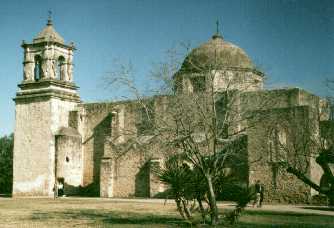
Besides setting the foundation for civilized life in Texas, the missions played a role laying the groundwork for modern Texas. One of the areas they left an impression was architecture. "Hispanic contributions to architecture are still in evidence. … Apart from California, perhaps the best examples of Spanish missions in the Southwest are found in Texas. The restored missions at San Antonio, all of which are much older than their California counterparts are graceful reminders of 'Spain's lasting contributions to the cultural life of the Borderlands'" (Chipman 254). The architecture of the missions is a variety of styles. Baroque, Gothic, Moorish, and Romanesque styles are the various architectural influences brought by the Spanish. Inside the missions, some paintings depict the southwestern landscape and the artistic traditions of the Indians. The finest intact mission to visit is Mission San Jose (
photo above left) in San Antonio.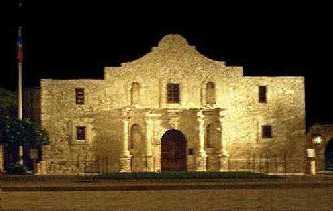
The immense buildings that once provided the only flurry of civilization in the infancy of Texas are being recognized as landmarks today, some becoming National Historical Parks. Park Historian Gilbert E. Cruz stated in 1984, "'These magnificent missions are historically the first institutions to introduce Western Civilization, European values, and the Christian tradition on Texas soil. They have generated an immeasurable spiritual, historical and cultural influence on the early development of the Southwest'" (Chipman 255). Some also, with time, became military landmarks. The Alamo, site of a heroic battle of the Texas Revolution, was before the Spanish mission of San Antonio de Valero. Founded in 1718, the mission was secularized in 1792 and fell into decay, being used variously as a hospital and troop garrison. On March 6, 1836, the Mexican General Antonio Lopez de Santa Ana learnt that William Travis, Davy Crockett, and 187 men from Tennessee had barricaded themselves in the mission. Santa Ana then ordered his army to attack the mission, which would end in the deaths all the Texan fighters. In the wider scope of national history, the battle of the Alamo was the catalyst that led to the Mexican War and the cession of not only Texas, but also California, Arizona, New Mexico, Colorado, Utah and Nevada.
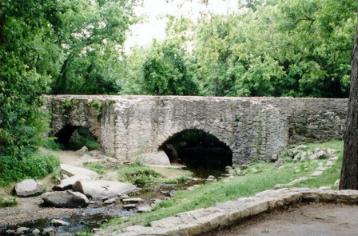
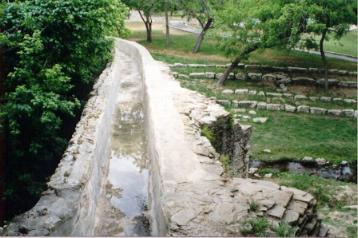
The missions of Texas constructed the first irrigation systems needed especially in Texas to grow crops or raise animals. Although the Spanish usually built the missions near water sources, they still built acequias, aqueducts or canals, to help saturate the dry land and turn it into something functional (Fernandez-Shaw 192). These acequias have become some of the oldest irrigation systems still in use in the United States. "The mission San Francisco de la Espada constructed an irrigation system, the oldest water system in the United States still in use, for channeling water from Espada Dam and the Aqueduct to the farmlands" (Guerra 29).
Pictured on the right and left is an acequia that still is used.One of the familiar sights in Texas is the Texas longhorn cattle, which are well known for their toughness. The Spaniards were known for their cattle breeding and most of the terms used in Spanish ranching became part of the language of the Texas cowboys. "Until the coming of the Anglo-Americans in the 1800's, ranching was the exclusive domain of Spaniards. Much of the terminology presently used in stock raising, such as 'cinch, 'rodeo,' 'remuda,' 'chaps,' 'lasso,' and 'corral,' is either Spanish or of Spanish derivation" (Chipman 247).
Spanish culture and art has been incorporated into the everyday life in the Lone Star State. Roman Catholicism probably claims the most adherents today, due to influence of the missions. Ranching, due to the Spanish missions, use a lot of vernacular Spanish words, such as patio, plaza, and rodeo, and place names like San Antonio, El Paso, and Padre Island. The padres would, for general merriment or to instruct the natives, often put on religious theater/skits or even a light concert, "In America, missionaries drew upon liturgical drama, and religious plays were brought into the southwest to transmit church doctrine to the Indians. Furthermore, folk drama, as adapted to the borderlands, allowed settlers to participate in religious activities and provided entertainment as well. An example of these persistent Spanish influences may be found in folk presentations and musical productions, especially the plays Las Posadas (The Inn) and Los Pastores (The Shepherds), still popular during the Christmas season" (Chipman 257). An even more important contribution, was the legacy of literature and the astonishing bureaucratic ardor for preserving historical records by the Spanish padres. "The best of them [the padres of the missions] believed that it was necessary to learn as much as possible about their Indian charges in order to facilitate the natives' conversion to Christianity, just as a physician must first diagnose a patient's condition before administering treatment. With that in mind, friars in Texas found time to be good geographers, ethnologists, botanists, and historians, as well as servants of their faith" (Chipman 245).
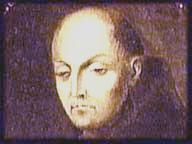
To talk about the missions of Texas, one must talk about the Padres that made the missions run daily. The number of missions built in Texas between the sixteenth to the nineteenth century reached a total of forty-four. The missionary order that administered to the Texas missions was the Order of St. Francis (or the Franciscans). These Franciscan padres were concerned with the conversion of the natives to Christianity, the natives integration into Spanish society, and their physical as well as moral health. In fact, some point out that by "'painful trial and error, Indian and Spanish communities evolved toward peaceful coexistence.' …[One such San Antonio mission] Bexar in the 1780s and 1790s [acted] as a place of interaction between Spaniards and Indian allies who came "to trade and talk, to nourish bonds of brotherhood." (Chipman 250) As for the critics of the missions, the natives were "protected by special laws and ensured possession of their lands. Spanish legislation was the broadest, most comprehensive, systematic and humanitarian of its day. … From a cultural standpoint, there were schools for Indians in America from 1524 onwards. … [Hence] it is curious how often Spanish policy with respect to the Indians comes under attack, while excesses committed by Anglo-Saxon frontiersmen against Indians in those regions are ignored. In fact, the Indians of New Mexico and Arizona are the only Indians in the United States who inhabit the same lands as their forefathers. They live in towns established by the Spaniards…" (Fernanadez-Shaw 14-5). The motives of the missionaries were education, justice, humanity, and moral guidance. Eighty missionaries would lose even their lives working in America. The best-known Franciscan that set foot on the dusty trails of Texas is
Ven. Antonio Margil (picture is on the upper left).What brought about the decline in missions? Well several factors were at play. One factor was that the still primitive stage of mission life allowed continual adding of uncivilized natives. The outbreaks of measles or smallpox that swept through the missions were another factor. Contrary to common thought, the Spanish "…provided good medical treatment for the people, and its program of vaccination (supplied free to those unable to pay) helped halt the frequent smallpox epidemics in early-day San Antonio" (Day 17). Yet, there were many casualties, due probably to the lack of cleanness by the natives. "The padres at San Jose labored long and hard to save lives, to comfort the sick, to baptize those who were close to death, and to persuade those who were healthy to remain at their posts. This last task was the most difficult of all, for one of the old beliefs of the Indians was to abandon those who had the dreadful disease" (Day 139).
Around the late eighteenth century, the Spanish authorities began to look at the missions as a drain on the royal treasury. This prompted them to push for a speedy secularization, which gave each native the liberty, freedom, and privileges granted by law to Spaniards. "The Spanish officials continued to study the problem until the Commandante General of the Interior Provinces, Don Pedro de Nava issued a decree on April 10, 1794, ordering the secularization of most of the missions in Texas and outlining the procedure for distributing personal property and communal property. … The directives illustrate that the higher Spanish officials recognized that minor officials and ordinary citizens would be tempted to exploit the Indians after they were removed from the protective custody of the Padres; they also demonstrate that Spanish policy demanded justice for the Indians" (Day 89).
The laws of the State of Texas are greatly influenced by Spanish colonial law, despite the scornful view of Hispanics held by many Anglo-Texans in the nineteenth century. Three broad areas that show the influence of the Spanish missions are judicial procedure, family law, and land and water law. Spanish colonial law stated that the defendant's trial take place were it was convenient for the defendant. "This differed from the English law, which stipulated that cases be heard where the circumstance producing the dispute arose. … Here again, following Hispanic precedent, the basic rule of law [in Texas] is "that a person must be sued where he lives for his convenience" (Chipman 251). Also added to this is that Texas recognizes that cases, were Spanish law is relevant, that the courts should accept Spanish law as a body of law that was once enforced in the state. On family law, Texas is especially immersed in the colonial Spanish law. The mission compound had laws that today are applicable to women. Modern Texas laws concerning legitimacy or adoptions were of Spanish origin, remaining today part of the legal codes of Texas.
"Family law in Texas … governs the property rights of partners in marriage as well as the adoption of children, and it effects at one time or another virtually every resident of the state. The basic principle under Spanish law is that when couples enter into marriage in good faith, many of the legal consequences are the same as in a valid marriage, even if it later transpires that the union is invalid. In brief, children of marriages later deemed invalid are considered legitimate, and a fair division of the profits of marriage results as though such union had always been valid…. Under English law, the concept of adoption was unknown. It was not only alien as a general principle but was not even attempted in individual instances by legislation. With the advent of Anglo-American law in Texas, adoption as a legal procedure ended in 1840. However, ten years later, after the legislatures of the republic and the state had been repeatedly petitioned to approve adoption in specific instances, the Spanish principle was re-instated. Apart from Mississippi, Texas was the first Anglo-American State to institute adoption generally and permanently. The adoption statute in Texas, as McKnight has observed, had a "particularly Spanish ring" to it. It meant that an adopted child also became an heir of the adoptive parent. Following the Spanish example, a child acquired by adoption had the same rights as a biological offspring" (Chipman 252-3).
The same holds true with in the area of land and water law, where Spanish influences show themselves. In one instance where English law reserves seashores over which the tide ebbs and flows to up on the shore, under Spanish practice, the line is drawn farther up on the shore (Chipman 252).
All this and more leads one to see how the Spanish Missions were crucial in Texas's early development and identity. The Spanish Missions are the roots of this great state; hence, we should acknowledge their place in our history, in our Texan culture, in our heritage, in our socioeconomic fiber, and in the development of our unique identity.
WORKS CITED:
Chipman, Donald E. Spanish Texas, 1519-1821. Austin: University of Texas, 1992.

Day, J., Frantz, J., and Procter, B. Six Missions of Texas Waco: Texan Press, 1965
Fernandez-Shaw, Carlos M. The Hispanic Presence in North America from 1492 to today. New York : Fact on File, 1991.
Guerra, Mary Ann Noonan The Missions of San Antonio Austin: The Alamo Press, 1982
_________________________________________________________________
HOME | Archives | Links | Next | Contact us at: [email protected]