| FUNGI |
| Types of Fungi!!! |
| Yo if you want to go Back to Mr. Politano's Page click right here! |
| So what are fungi? Fungi are eukaryotic heterotrophs that have cell walls. And they are not plants silly. |
 |
|
 |
| Why don't you like me? I'm a "Fungi" |
 |
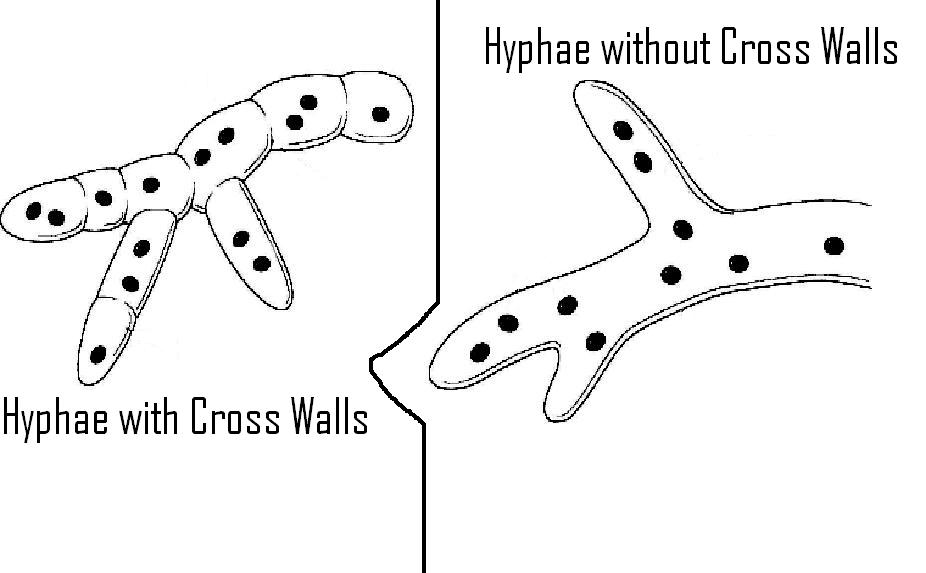
| Structure of Fungi The cell walls of fungi are made up of chitin. Chitin- a complex carbohydrate that is also found in the external skeleton of insects. Except for yeast, all fungi are multicellular, and multicellular fungi are made up of tiny filaments called hyphea. Each hyphea is only one cell thick. <===There are 2 different types of hyphea *Hyphea with cross walls- cross walls in these fungi separate hyphea into cells containing one or two nuclei. In cross walls there are tiny openings through which the cytoplasm and nucleus can move. *Hyphea without cross walls- there are no cross walls separating hyphea and they contain many nuclei The bodies of multicellular fungi are composed of many hyphae tangled together into a thick mass called a mycellium. Mycellium is well suited to absorb food because it permits a large surface area to come in contact with the food source through which it grows. Fruiting body- a reproductive structure that develops from a mycellium. |
 |
 |
| Reproduction Of Fungi!!! |
| Most fungi reproduce both asexually and sexually. |
| Asexual reproduction- cells or hyphae break off from a fungus and begin to grow on their own. Some fungi also make spores, which can scatter and grow into new organisms. Spores are reproductive cells, formed by mitosis, that are capable of growing into new organisms. In some fungi, spores are produced in structures called sporangia. Sporangia are found on the tips of specialized hyphea called sporangiophores. Sexual reproduction- usually involves two different mating types. These two mating types are about the same size, so they are not called male and female. One is called "+" (plus) and the other "-" (minus). When the hyphea of the opposite mating type meet, they form a gametangium, or structure that forms gametes. |
| So how does fungi spread? |
| Sac Fungi |
| Molds |
| Fungi do not make their own food like plants. They decompose and break down existing organic matter that surrounds their mycellium. |
| Fungal spores are found in pretty much every environment. Many produce dry, very light spores that can scatter easily in the wind. Other fungi use animals to spread their spores over long distances. For these spores to germinate, or sprout and develope, they must land in an environment that contains the proper combination of temperature, moisture, and food for them to grow. Even in the best circumstances the chances of a spore producing a mature organism can be less than one in a billion! |
 |
 |
 |
| Club Fungi |
| Imperfect Fungi |
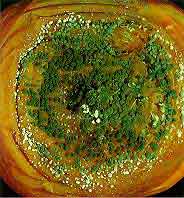 |
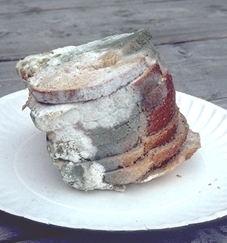
| Member of the phylum Zygomycetes. All that nasty stuff that mysteriously grows on meats, cheese, and bread. |
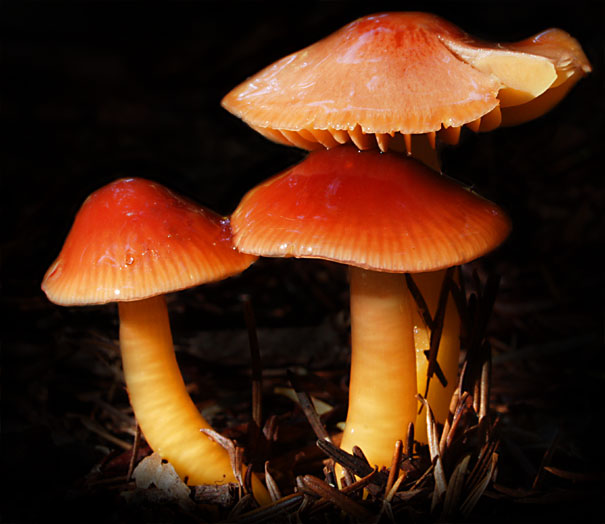
| Member of the phylum Basidiomycata. Gets its name from its specialized fruiting body that resembles a club. |
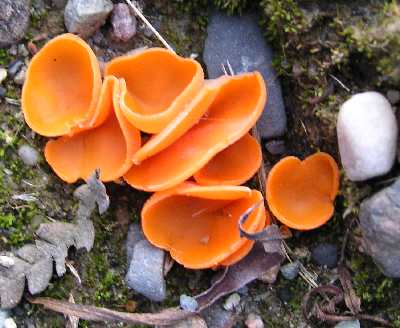
| Belongs to the phylum Ascomycota life cycle includes both sexual and asexual reproduction Their fruiting bodies have a sac-like shape. |
| Belongs to the extremely varied phylum Deuteromycota. These fungi are not placed in other phyla because researchers have not yet found a sexual phase in their life cycle. |
 |
 |
|
|
| Resources: Biology, by Kenneth Miller and Joseph Levine. Pearson Education, Inc., Upper Saddle River, New Jersey: 2002 |
 |
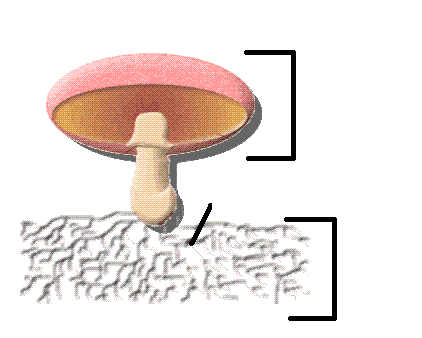 |
| Hyphea |
| Mycellium |
| Fruiting Body |
 |
| Samuel Woodworth presents: |