About Jordan
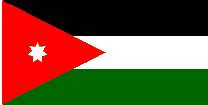
|
Jordan, Hashemite Kingdom of (Arabic al-Mamlakah al-Urdunniyah al-Hashimiyah), kingdom of southwestern Asia, bounded on the north by Syria, on the east by Iraq and Saudi Arabia, on the south by Saudi Arabia and the Gulf of Aqaba, and on the west by Israel. The area of Jordan, including that part west of the Jordan River which was occupied by Israel in 1967, is 97,740 sq km (37,738 sq mi).
The principal geographical feature of Jordan is an arid plateau that thrusts abruptly upward on the eastern shores of the Jordan River and the Dead Sea, reaching a height of about 610 to 915 m (about 2000 to 3000 ft), then sloping gently downward toward the Syrian Desert in the extreme east of the country. The area west of the Jordan River, known as the West Bank, comprises rolling hills and highlands. It is separated from the rest of the country by the deep depression of the Rift Valley, which is about 213 m (about 700 ft) below sea level in the area of Lake Tiberias (Sea of Galilee) and 395 m (1296 ft) below sea level at the Dead Sea, the world's lowest point. Deep canyons and mountainous outcroppings with elevations of approximately 1500 m (approximately 4920 ft) and more characterize the Arabian Plateau in the southern portion of the country.
The climate of Jordan is marked by sharp seasonal
variations in both temperature and precipitation. Temperatures below
freezing are not unknown in January, the coldest month, but the average
winter temperature is above 7.2‹ C (45‹ F). In the Jordan Valley
summer
Because much of Jordan consists of desert and steppe,
plant life is not abundant. Grassland and wooded areas are found largely
in the hills west of the Jordan River and in the Jabal Ajlun district
between Amman and the Syrian border. In these regions the trees include
oak, ilex, olive, Aleppo pine, and palm. Wildlife includes the hyena,
hyrax, gazelle, ibex, fox, partridge, mongoose, and mole rat.
Except for potash and phosphate deposits, Jordan has few known mineral resources that are large enough for commercial exploitation.
The population of Jordan is almost entirely Arab. The only sizable racial minorities in the country are the Caucasians and the Armenians; each group accounts for less than 1% of the population. Jordan is approximately 70% urban; nomads and semi nomads make up perhaps 5% of the population.
The population of Jordan (1989 estimate), excluding the West Bank, was 3,059,000, yielding an average population density of 34 per sq km (89 per sq mi). The Arab population of the West Bank (1989 estimate) was 1,014,900, in addition to some 65,000 Jewish settlers.
Amman, the capital and largest city of Jordan, grew in population from a census estimate of 321,000 in 1966 to nearly 648,000 in 1979 (according to the 1979 census), largely because of the influx of West Bank refugees in the wake of the Six-Day War with Israel in 1967; in 1989 the city had about 936,300 inhabitants. Other important cities, with populations estimated in the early 1970s, include the Old City of Jerusalem (65,900), Nabulus (56,900), Hebron (40,000), Bethlehem (26,800), Jericho (15,200), and Janin (13,400), all of which were occupied by Israel in 1967. The largest East Bank cities (1989 estimated populations) are az-Zarga (318,100) and Irbid (167,800). Al-Aqaba, the only seaport, has a population of about 41,900.
The great majority of the Jordanian people are Sunnite Muslims. Shiite Muslims form a small minority. Christians, about one-third of whom belong to the Greek Orthodox church, make up about 5% of the population. Islam is the state religion and Arabic the official language.
Jordan has made significant strides in education in recent decades, despite the influx of hundreds of thousands of refugees and the very large share of the national budget assigned to the armed forces. Public education at the primary level is free and compulsory beginning at the age of five. At the secondary level, about 80% of the male children and 78% of the female children go to school. In the late 1980s some 605,800 pupils were attending elementary schools on the East Bank, more than 400,000 students were attending vocational and secondary schools, and 36,100 students were enrolled in institutions of higher education. The country has three major universities: the University of Jordan (1962) and Mu'tah University (1981), both in Amman, and Yarmouk University (1976), in Irbid; several other universities exist on the West Bank. Other facilities for higher education in Jordan include the Statistical Training Center and institutes for the study of agriculture, banking, social work, and public administration.
The major libraries of Jordan are the Public Library of Amman, the University of Jordan Library, and the British Council Library. Major museums housing historical, religious, and archaeological treasures are the Jordan Archaeological Museum, the Mosaic Gallery, and the Folklore Museum.
Underdeveloped industrially, poor in natural resources, and with the major part of its territory too arid for agriculture, Jordan is not economically self-supporting and must depend heavily on foreign aid (primarily from petroleum-rich Arab countries). Further burdens were placed on the economy after the 1967 Israeli occupation of the West Bank, which contained nearly half of Jordan's agricultural land, and by the subsequent influx of unemployed refugees. In the late 1980s, annual budget revenues totaled $1.2 billion and expenditures reached $2.3 billion. During this period Jordan's economy became increasingly dependent on the overland transport of goods from the port of al-Aqaba to Iraq and on remittances from Jordanian workers employed in the Persian Gulf states. Both these sources of revenue were jeopardized by Iraq's invasion of Kuwait in August 1990 and by the subsequent UN embargo on the shipment of goods to and from Iraq.
The proportion of the labor force engaged in agriculture declined from 37% to 7% between 1965 and 1987. Only about 5% of the land is arable, and only a small percentage of the cultivated area is irrigated. With so much of its agriculture dependent on rainfall, annual production figures fluctuate widely. Wheat and barley are the major grain crops, but production is not sufficient to meet the needs of the country. Annual wheat production in the late 1980s was about 80,000 metric tons and barley about 40,000 metric tons. Some fruit crops, primarily olives, almonds, figs, grapes, and apricots, and such vegetables as cucumbers and tomatoes are grown for export. Even in the best agricultural years, food imports exceed food exports. In the late 1980s sheep, the most important livestock animal, totaled about 1,220,000 head; cattle, about 29,000 head; goats, 460,000; and poultry, 60 million. The West Bank accounted for an estimated 20 to 25% of the grain, 70% of the fruit, and 40% of the vegetable produce of Jordan before the 1967 war with Israel.
Jordan lost about one-fifth of its industrial production as a result of the Israeli occupation of the West Bank. The soap, olive oil, and cigarette industries of the West Bank were small, however, and produced almost entirely for the domestic market. The major industries, including the production of phosphates, cement, and hydroelectric power, and the refining of petroleum, are concentrated east of the river. Industrialization, starting from a small base in the early 1960s, has proceeded rapidly, even since the 1967 war. Local and foreign-owned firms are encouraged through fiscal concessions from the government and high protective tariffs. Textile, pharmaceutical, food-processing, sugar, paper, housewares, and glass industries have been established on the East Bank. Annual production in the late 1980s included (in metric tons): phosphates, 5.7 million; petroleum products, 2.3 million; cement, 2.4 million; and potash, 1.2 million.
Jordan since 1950 has issued its own currency, the Jordanian dinar (0.6648 dinar equals about U.S.$1; 1990), which is divided into 1000 fils. The Central Bank of Jordan administers all funds, including sterling assets and currency commitments.
The principal exports of Jordan, apart from agricultural produce shipped to neighboring countries, are phosphates, clothing and textiles, and pharmaceuticals. The principal imports are crude petroleum, food, transport equipment, machinery, chemicals, iron and steel, and electrical and electronic items. Jordan's principal trading partners are Iraq, Saudi Arabia, India, Germany, Great Britain, the United States, and Japan. In the late 1980s the total annual value of Jordanian imports was $2.4 billion, and the total value of exports was only $933 million. Tourism was an important source of foreign exchange revenue; in the late 1980s, when about 2 million tourists visited Jordan annually, yielding more than $620 million in income.
Transportation and Communications Jordan has a modern road network of some 5625 km (about 3495 mi), about 75% paved. All major cities are linked by asphalt roads, and small towns by oiled or dirt roads. In the mid-1980s passenger automobiles numbered about 159,000 and commercial vehicles about 73,500. The only rail lines run from the Syrian border through Amman to Maan, where branches run southeast to Saudi Arabia and southwest to the port of al-Aqaba, a total of about 620 km (about 385 mi). The air terminal in Amman is served by Alia-Royal Jordanian Airline and other international lines.
In the late 1980s Jordan had in use about 343,750 telephones, 1,100,000 radios, and 250,000 television sets. Publications include five daily newspapers with a combined circulation of 185,000.
Under the 1951 constitution (approved in 1952), Jordan is a limited monarchy.
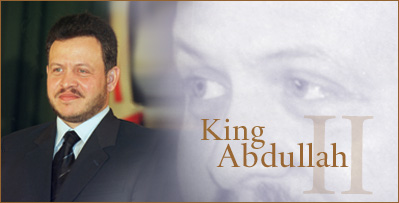
The Jordanian monarch is chief executive and head of state and shares executive power with a premier and other cabinet members who are responsible to the parliament. The monarch may declare war, conclude peace, and convene, adjourn, and suspend the lower house of the legislature.
A measure passed in 1986 called for enlargement of the House of Representatives to 142 members, with 71 representing East Bank constituencies, 60 representing West Bank districts, and 11 elected by West Bank Palestinians living in East Bank refugee camps. After Jordan abandoned its claim to represent the Palestinians, the electoral laws were again revised, and 80 legislative seats were contested in the 1989 election. A Senate of 30 members is appointed by the monarch subject to House approval.
Jordan, like many Arab countries, has a civil and a religious court system. Magistrate courts, the lowest in the civil system, hear minor criminal and civil cases; the more important go to courts of first instance. Decisions of these courts are subject to review by courts of appeal. The supreme court, the Court of Cassation, presides over cases against the state, hears appeals, and interprets the law. Sharia (Muslim religious) courts rule on marriage, divorce, interdiction, wills, and guardianship cases for citizens desiring Muslim interpretation rather than civil decisions. Non-Muslim minorities may resort to religious courts of their own traditions in personal status cases. The nomadic tribes may bring cases to tribal courts.
Jordan is divided into eight administrative districts, or governorates. Three former governorates, comprising the West Bank, have been occupied by Israel since 1967; their administrative links with Jordan were severed by King Hussein in 1988. Each of the other five districts is headed by a governor appointed by the monarch. The nomadic population is administered separately.
Although a ban on political parties imposed before the elections held in July 1963 was not lifted until 1991, the Communists, the Muslim Brotherhood, and other political groups played an influential role in the 1989 parliamentary elections.
The monarch is commander in chief of the armed forces. In the late 1980s the army had a total force of 74,000; the air force, 11,000; and the navy, 250.
The territory constituting modern Jordan was the site of some of the earliest settlements and political entities known to historians. The Ammonites and the kingdoms of Edom, Gilead, and Moab, situated east of the Jordan River, are referred to repeatedly in the Bible. These kingdoms were successively conquered by, or made tributary to, the Egyptians, Assyrians, Babylonians, Persians, and Romans. Jordan was wrested from the Byzantine Empire by the Arabs between 633 and 636 and has since remained an Arab-Islamic country. During the Crusades parts of Jordan were governed by Christians. From 1517 until 1918 Jordan was ruled by the Ottoman Turks.
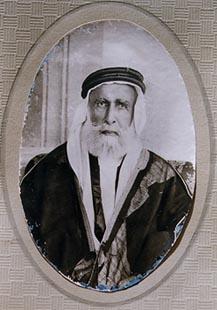
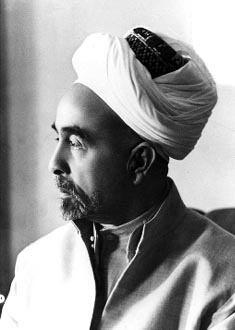
The liberation of Jordan from Turkish sovereignty was achieved in September 1918, during World War I, by joint action of British and Arab troops. After the war Jordan, along with the territory constituting present-day Israel, was awarded to Great Britain as a mandate by the League of Nations. The British in 1922 divided the mandate into two parts, designating all lands west of the Jordan River as Palestine and those east of the river as Transjordan. Transjordan was placed under the nominal rule of Abdullah ibn Husein in 1921. In February 1928 Transjordan obtained qualified independence in a treaty with Great Britain.
The government of Transjordan cooperated with Great Britain during World War II, making its territory available as a base of British operations against pro-Axis forces, which had gained control of the government of Iraq. In 1945 Transjordan became a member of the Arab League, an organization created for the purpose of coordinating Arab policy in international affairs and of curbing Jewish national aspirations in Palestine. The British government relinquished its mandate over Transjordan on March 22, 1946. By the terms of a treaty concluded by the two nations on that date, Transjordan received recognition as a sovereign independent state. The treaty also established an Anglo-Transjordanian military and mutual-assistance alliance, with the British securing military bases and other installations in the country in exchange for an agreement to train and equip the Transjordanian army. Abdullah ibn Husein was proclaimed king the following May.
The Jordanian army, known at that time as the Arab Legion, joined, with the armed forces of the other nations of the Arab League, in a concerted attack in May 1948 on the newly formed state of Israel. During the war the Arab Legion occupied sections of central Palestine, including the Old City of Jerusalem. Transjordan signed an armistice with Israel on April 3, 1949. On April 24, 1950, despite strong opposition from other Arab League members, King Abdullah formally merged all of Arab-held Palestine with Transjordan. From that point on, the prefix trans (across) became inaccurate, and the kingdom has since been called Jordan. The word Hashemite refers to Hashim, the grandfather of Muhammad, from whom the Jordanian royal house claims direct decent.
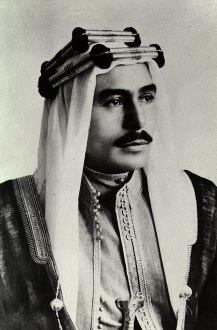
King Abdullah was assassinated by a supporter of a rival Arab claimant to the West Bank on July 20, 1951, and was succeeded by his son Talal I (1911?-72) the following September. On August 11, 1952, the Jordanian parliament deposed Talal, who suffered from a mental disorder, and elevated his son, as Hussein I, the same day. A regency council acted for the new king until he reached the age of 18 on May 2, 1953. Armed Jordanian and Israeli detachments were involved in frequent frontier clashes during the early 1950s. Major sources of friction were Israeli irrigation and hydroelectric schemes that would have reduced the volume of the Jordan waters, considered vital to Jordanian development.
Jordan became a member of the United Nations on December 14, 1955, and during the latter half of the following year Jordanian and Israeli UN delegates registered bitter and increasingly frequent charges of border violations and armed raids. By the provisions of a ten-year pact signed on January 19, 1957, Egypt, Syria and Saudi Arabia agreed to furnish Jordan with an annual subsidy of $36 million. The pact was designed to free Jordan from dependence on Western nations, especially Great Britain, the policies of which were considered anti-Arab and pro-Israel. The Jordanian premier and other leftists in the government were dismissed by the king in April, however, and the following June, Syria and Egypt revoked the aid pact.
On February 14, 1958, two weeks after Egypt and Syria merged to form the United Arab Republic (UAR), the more conservative governments of Jordan and Iraq announced the formation of the Arab Federation. When the Iraqi government was overthrown in July, however, largely as a result of UAR propaganda and intrigue, the federation was dissolved and Jordan severed diplomatic relations with the UAR. Although ties were restored in August 1959, relations between Hussein and President Gamal Abdel Nasser of the UAR remained strained. When the Jordanian premier, Hazza Majuli (born 1917), was assassinated in August 1960, the king charged Nasser with responsibility.
Tranquillity in the Early 1960s During 1961 and 1962 Jordan was relatively free of domestic political strife and of antigovernment agitation by the volatile refugee population. One sign of growing strength on the part of the throne was the general acceptance, and even popularity, of the king's marriage, in May 1961, to Antoinette Avril Gardiner (1941- ) of Great Britain, who was granted the title Princess Muna. (They were divorced in 1972.) After the elections of December 1962, political parties, which had been banned during the height of Jordanian-UAR tensions, were reactivated. Foreign relations were less relaxed, however. In September 1961 Jordan recognized the new regime in Syria, which had just seceded from the UAR, and Nasser retaliated by breaking diplomatic relations with Jordan.
After the fall of one premier and the resignation of another in the spring of 1963, political parties were again banned. Elections in July installed a new cabinet and inaugurated another 2-year period of relative domestic tranquillity. Diplomatic relations with the UAR (Egypt) were restored in 1964 as a result of mounting pressure for Arab League unity against Israel. Renewed clashes with Israel over Jordan water rights led to an Arab summit conference in Cairo in September 1964, which Hussein attended.
Growing Tensions and War with Israel Relations with the leftist Baathist regime in Dimashq deteriorated in the mid-1960s. Despite calls for unity, Arab nations tended to polarize into an extremist camp including Syria, Egypt, and Iraq, and a moderate group including Jordan, Saudi Arabia, and Tunisia. For a time the Jordanian frontier with Syria was as troubled as that with Israel. Arab guerrilla fighters of the Palestine Liberation Organization (PLO), infiltrating Jordan from Syria, launched terrorist attacks against Israel for which Jordan suffered Israeli reprisals. In July 1966 Jordan withdrew support from the PLO, but a massive Israeli raid in November created intense pressure on Hussein to back the terrorists. When he refused, the PLO called for his overthrow, and clashes on the Syrian border increased.
Arab-Israeli tensions were meanwhile mounting steadily. When war seemed imminent, Hussein, in an unprecedented gesture of Arab solidarity, flew to Cairo and signed a defense treaty with Nasser on May 30, 1967. This action greatly enhanced his position with the refugees, but it also committed Jordan to active involvement when the Six-Day War broke out on June 5. On June 7, its air force destroyed and the West Bank occupied, Jordan accepted a UN cease-fire. Jordanian postwar diplomacy aimed at reinforcing ties with the West and achieving an Israeli withdrawal from the occupied area. Hussein took no unilateral initiatives toward a peace settlement, however, and Egypt, Algeria, and Syria meanwhile hardened their anti-Israel position with calls for a sustained guerrilla offensive against Israel, which was staged from bases in Jordan.
The situation in Jordan reached the point of civil war in September 1970, when Palestinian guerrillas supported by Syria fought Jordanian troops in Amman and other areas of northern Jordan. After heavy casualties, a cease-fire agreement was reached requiring a number of concessions from Hussein. In 1971, however, Hussein ordered Premier Wasfi Tal (1920-71) to take military action against the guerrillas, and the movement was completely crushed. Arab reaction against Jordan was strongly hostile. On November 28, while attending a meeting of the Arab League in Cairo, Premier Tal was assassinated by guerrilla members of the Black September organization.
In 1972 Hussein proposed creation of a federated Arab state comprising Jordan and the Israeli-occupied West Bank. Most Arab governments and the Palestinian organizations were unanimously opposed to such a state, however. In February 1973 King Hussein visited the U.S. and received promises of continued U.S. economic and military aid. On September 18 Hussein granted amnesty to 1500 political prisoners, including some 750 Palestinian commandos; the move was viewed as a peace gesture following meetings with leaders of Egypt and Syria that had brought about reconciliation among the three countries.
In the short, indecisive Arab-Israeli war that began on October 6, 1973, Jordan contributed some token forces to assist Syrian troops fighting against Israel in the Golan Heights region. After the war the PLO gained standing in the Middle East, and in 1974 Jordan reluctantly recognized it as the sole representative of the Palestinian people, thus relinquishing any claim to the Israeli-occupied West Bank. In return, Jordan was promised economic and military aid from other Arab nations. In November King Hussein dissolved parliament so it could be reconstituted without representatives of the West Bank. Elections to elect members for the new House of Representatives were postponed indefinitely in early 1976.
In 1975 Jordan established closer ties with Syria, mainly in order to guard against a possible attack by Israel. King Hussein refused to accept the U.S.-sponsored Camp David agreements on the Middle East (1978), because they failed to provide for Israeli withdrawal from all occupied Arab territories; in 1979 he denounced Egypt's separate peace with Israel. Jordan supported Iraq in its war with Iran beginning in 1980, a policy that strained relations with the pro-Iranian government of Syria. In January 1984 parliament held its first regular session in 10 years, and limited parliamentary elections were held that March.
In July 1988, in response to months of demonstrations by Palestinians in the Israeli-held West Bank, Hussein ceded to the Palestinian Liberation Organization all Jordanian claims to the territory. Islamic fundamentalists showed significant strength in Jordan's first general election in 22 years, held in November 1989. After Iraq invaded Kuwait in August 1990, King Hussein unsuccessfully sought to play a mediating role. Meanwhile, a flood of refugees from the Persian Gulf region, combined with the worldwide embargo on trade with Iraq, severely damaged the Jordanian economy. Jordan's apparent tilt toward Iraq during the Persian Gulf War strained relations with the United States, Saudi Arabia, and other Arab states. A joint Jordanian-Palestinian delegation took part in the comprehensive Middle East peace talks that began in October 1991. HOME
|
|||||||||||
|
|