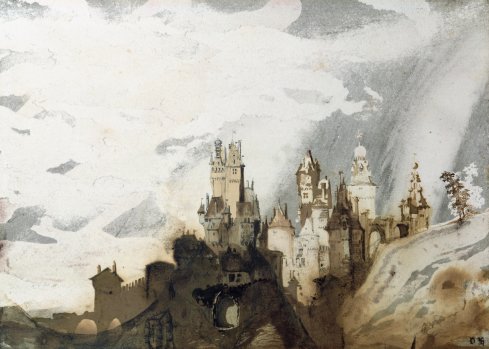
These are truly one of my true loves, and I have found many rather unsettling accounts of what this tells the world (or rather the psychologists and whatnot who actually analyse such things) about my inner psyche. Something about requiring predictability, since fairy tales always have a definite purpose that doesn't change in any way. The story progresses, and there are no surprises. The wicked mother figure puts the princess into a trance, the prince awakens her with a kiss, and they live happily ever after.
Is that such a bad thing really? Fairy tales are also accused of not having any real character development, and the princess never steps outside the confines of her role as the victim, and the prince never stops to analyse his motives. I thought straight-forwardness would be an asset? Although the prince can be seen as being a little wooden, and the princess as a bit insipid, but maybe that's just the modern era.
I would put some fairy tales up on this site, but there are already far too many sites that document these things far better than I could. I'm already notorious for my summaries of films, so butchering delicate, centuries old tales would really not do. Instead, I will show you the magical world of fairy tales in the early twentieth century, in a time of innocence ending with the start of the First World War, through the illustrations of such artists as Arthur Rackham, Kay Nielsen and Walter Crane. |