| The Preceding Elements |
| Characteristics of stereotypical witches ~Freckles or a birthmark ~Uppity women or women with property ~Women that were healers and payed tributes to Mother Earth ~Women who were "in league with the devil" ~Women who were labeled "mentally ill" ~Women who enjoyed having sex ~A woman that resisted a man's sexual advances |
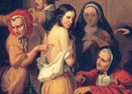
| During the time span of 1620 through 1725, over 344 people were convicted of being witches. 80% of those people were women. Over half of the men accused were "suspect by association." In the time of the witch trials, women did not have any political power. All of the judges were men. If a woman was suspected of witchery, she was much more likely to be put on trial than a man. The treatment of the women accused was different than for the men accused. Women were handled more harshly than men. There was also more pressure placed on the women to confess that they were dealing with the devil. Men who confessed were often called liars and were dismissed. |
| The Puritan women were targeted because their religion was so demanding that it was sometimes hard to obey all of the rules. Puritan leaders did not allow any dancing, singing, or any other "fun" activities to go on. The people caught dancing or singing were accussed of giving their soul to the devil. |
| Reasons people were convicted ~Personal Feuds ~Did not show the typical norms of the society: were outspoken, misbehaved, did not always attend church, etc. ~Against Minister Samuel Parris |
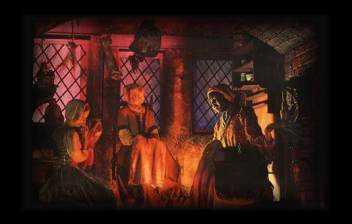 |
| Tituba told the girls stories of magic and superstition that she had known in her youth. |
 |
 |