CONNECTION BETWEEN EARTH QUAKES & FAULTS
Earthquakes are caused by faults or plates in the earth moving. Each different type of plate boundary is characterized by one of the three main types of faulting. Normal faulting is associated with crustal extension, and so can be found at divergent boundaries. Reverse faulting is associated with crustal shortening, and so can be found at convergent boundaries. Strike-slip faulting is associated with lateral motion of the crust, and so can be found at transform boundaries.
|
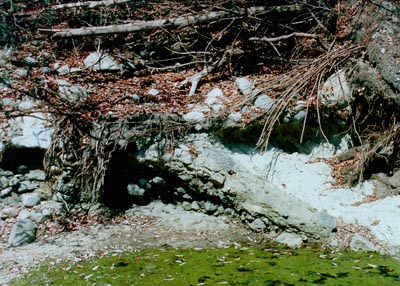
Notice that the two layers are separated by a gray layer that looks very ground up. This layer separating the two blocks of the fault is known as fault gouge, and consists of broken up and smashed pieces of rock (some pieces are so small that they form clay) which forms as the result of the two sides of the fault moving against one another.
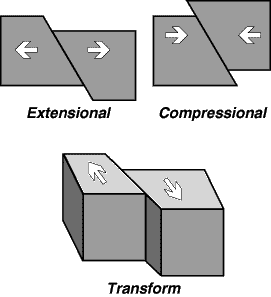 There are three main plate tectonic environments: extensional, transform, and
compressional. Plate boundaries in different localities are subject to
different inter-plate stresses, producing these three types of earthquakes. Each
type has its own special hazards.
There are three main plate tectonic environments: extensional, transform, and
compressional. Plate boundaries in different localities are subject to
different inter-plate stresses, producing these three types of earthquakes. Each
type has its own special hazards.
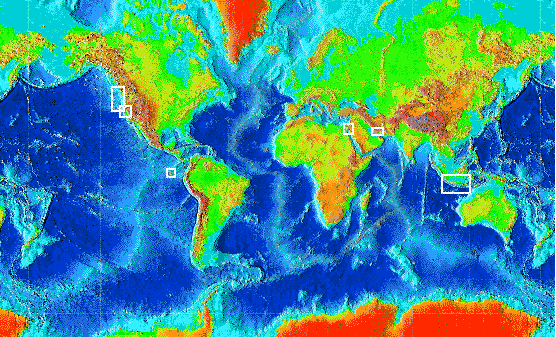
The map below of Earth's solid surface shows many of the features caused by plate tectonics. The oceanic ridges are the asthenospheric spreading centers, creating new oceanic crust. Subduction zones appear as deep oceanic trenches. Most of the continental mountain belts occur where plates are pressing against one another. The white squares locate examples given here of the different tectonic and earthquake environments.