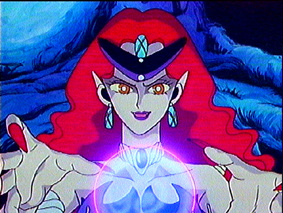
 Queen Beryl
Queen Beryl
 NAME ORIGIN
Beryl is beryllium aluminum silicate. In its rare, pure form, it is a colorless crystal. But impurity atoms transform beryl into its prized color varities: emerald, aquamarine, heliodore, and morganite. Emerald's green color is caused by traces of chromium and sometimes vanadium. Aquamarine and heliodore are both tinted by light interacting with traces of iron. And morganite and red beryl get their hues from manganese. Emerald, the green variety, is the most popular green gemstone and is one of the most valuable of gems. A separate page is devoted to this variety. (emerald)
Aquamarine, a light blue to blue-green variety, also has its own page. (aquamarine)
Morganite, the pink to purple variety, is usually only lightly tinted. The color of pale stones can be intensified by heat-treatment. Morganite is sometimes also called "pink beryl".
Heliodor is the variety including all yellow, yellow-green, orange, and brown beryls.
Golden beryl, sometimes also called "heliodorite", is a variety of heliodor with a golden yellow color. The terms heliodor and golden beryl are often confused with each other, and some dealers and references incorrectly mix up heliodor and golden beryl.
Goshenite, the colorless variety of beryl, is often used as a replacement for more valuable colorless gems. Goshenite may also be coated with a green foil to resemble emerald, as its physical properties are identical to emerald.
Peach beryl, also known as "champagne beryl", is a variety of morganite with an orange-pink color.
Green beryl, the light green variety of beryl, should not be mistaken for emerald, which occurs in a much darker green. Green beryl is usually heat-treated to form deeply colored aquamarines.
Bixbite is a strawberry-red variety of morganite, with a brownish hue.
Red beryl is a rare, deep red variety found in only one place in the world.
Blue beryl is a dark blue variety, synthetically colored by irradiating light blue aquamarine.