|
Sailing Kayaks & Canoes by Graham Russell Building a Sea Kayak to Sail |
|
Building |
|
|
Once the drawings were completed, it was a matter of marking out the sheets of ply, I chose 4mm marine grade.
The hull was stiched together was copper wire and then the internal joints sealed with glass tape and epoxy resin.
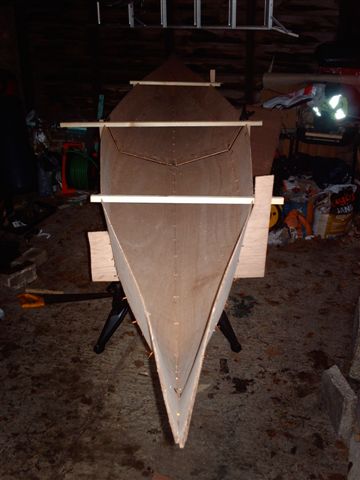
The hull was then ready for bulkheads and inwhales.
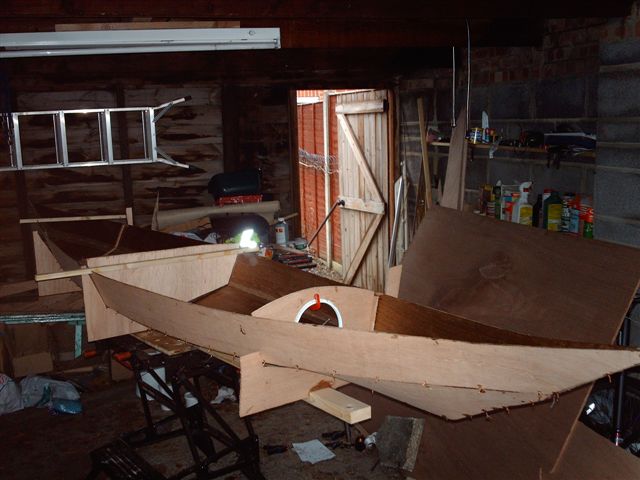
The inside sealed with epoxy resin.
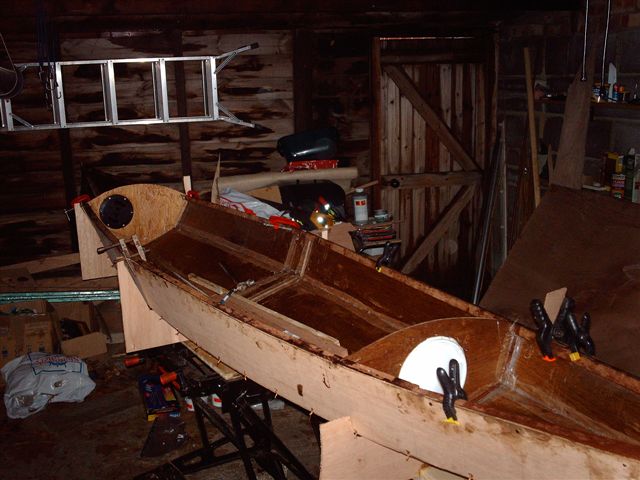
The next process was fitting the hatches, rudder gear, mast step, dagger board box and pump.
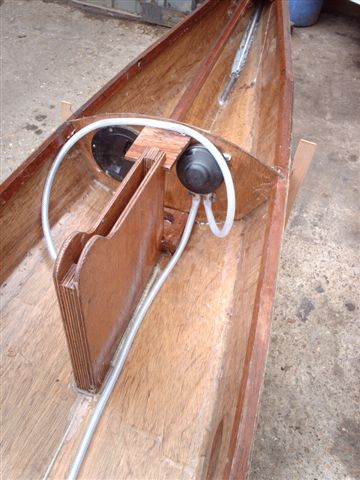
The bow was reinforced by casting a length of stainless steel tube in using epoxy resin.
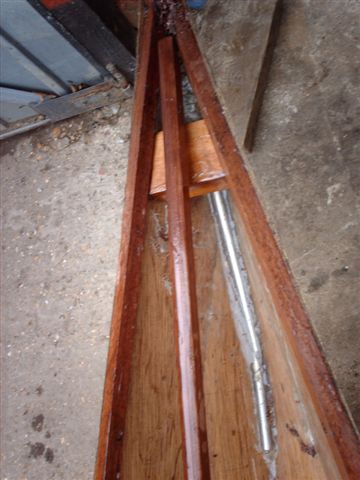
After trimming the copper wire, the hull was covered in glass fabric.
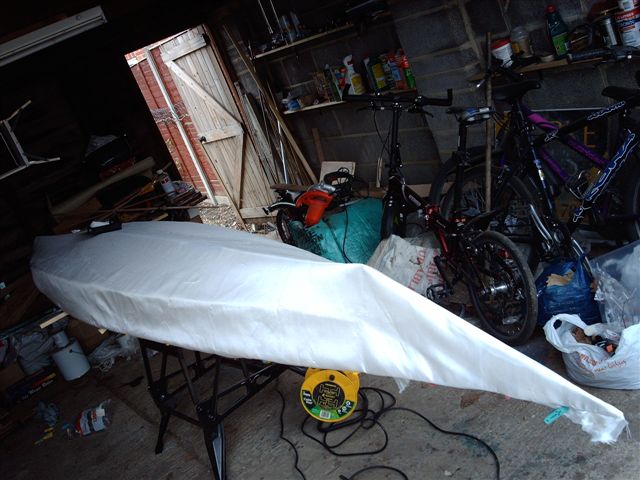
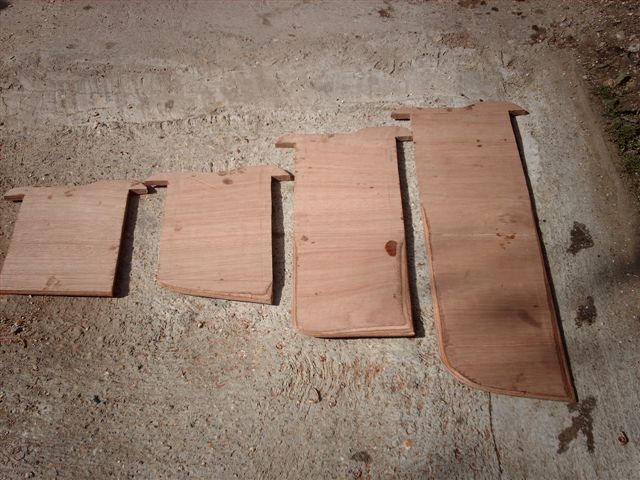
I opted for a fixed daggerboard rather than a lee board as this simplified sailing, though leading to a heavier paddling kayak. Previoulsy I had emplyed a leeboard which was clumsy to change over, which was an added task when tacking or gybing.
The bow and stern were filled with hard foam to protect against holes and provide bouyancy.
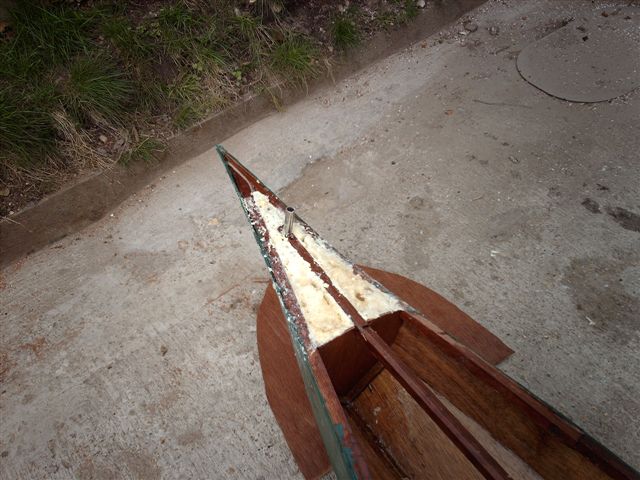
She was decked with 4mm ply.
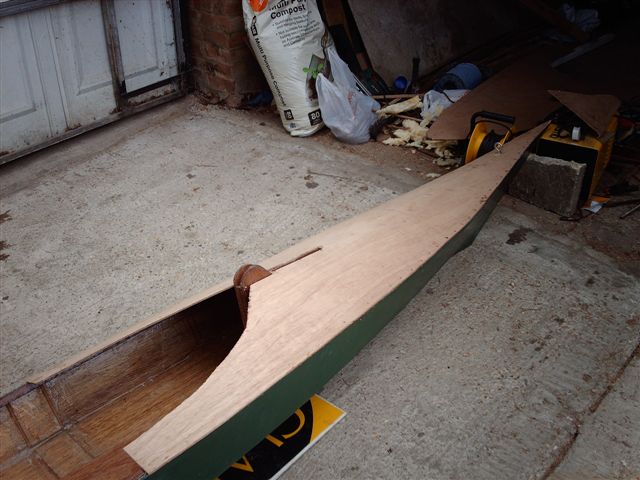
Combing was added to reduce the risk of swamping.
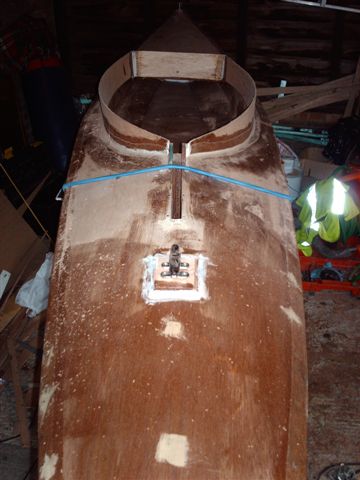
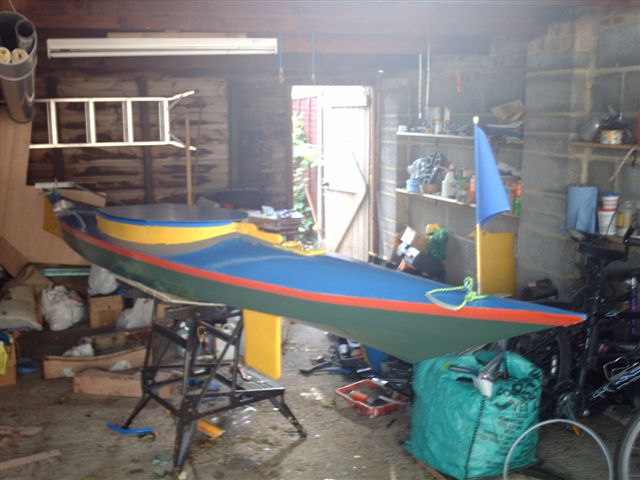
Eventually the whole hull was coated in coloured epoxy.
|
Building |
|
|