
STARRY'S ASTRONOMY PICTURE OF THE DAY
The pictures posted are taken by myself from my Observatory in Coonabarabran using a digital SLR camera. I am happy to post astro pictures from others if they wish. Leave your email address at [email protected].
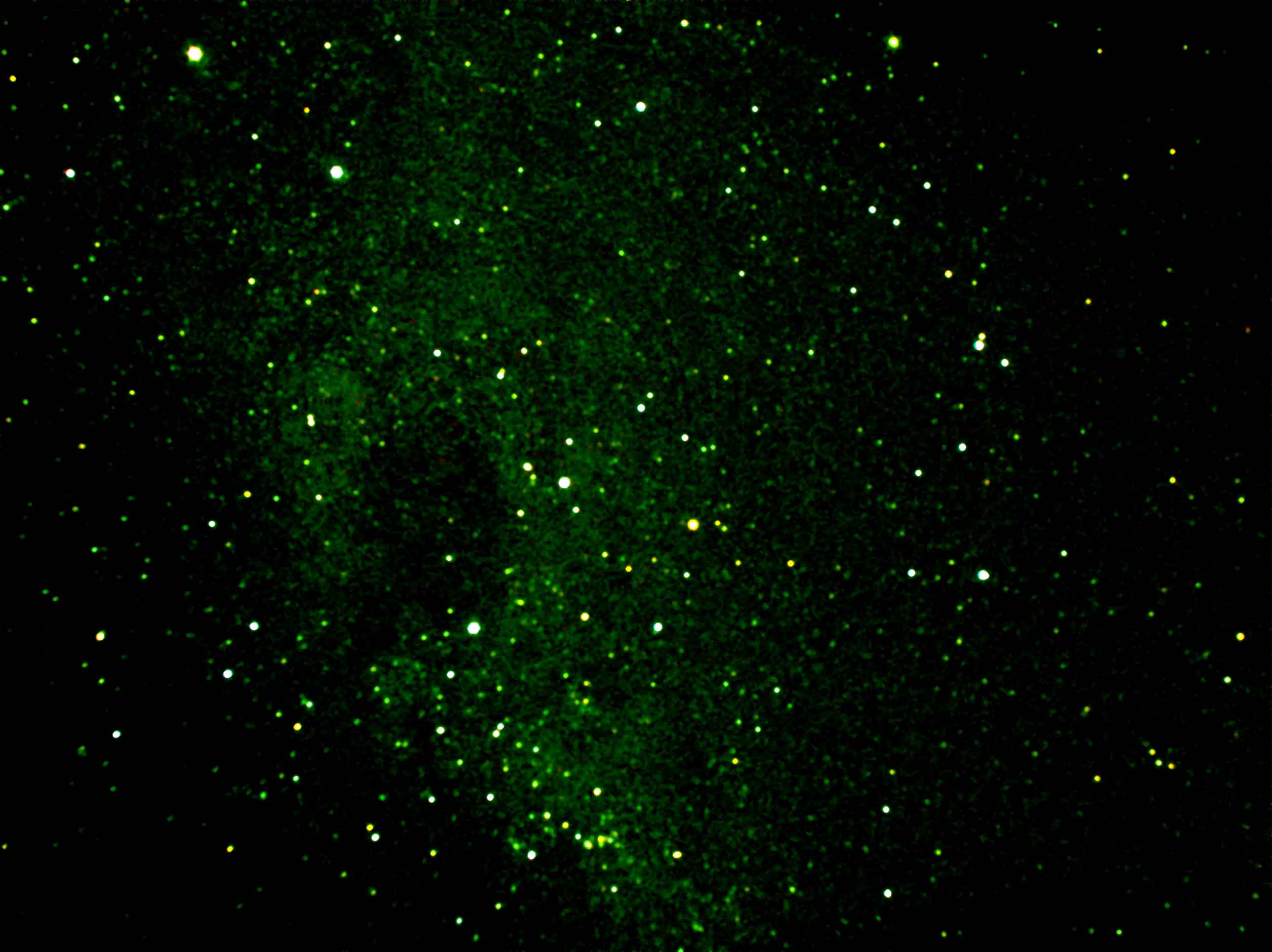
Crux, also known as the southern cross is the smallest constellation of stars in the night sky. It is situated against the backdrop of the Milky Way in the southern skies.
Although small it is probably the best known constellation to southern observers. It is represented on the flags of many countries including Australia, New Zealand, and Samoa.
A dark patch is esily noticeable from dark skies between the 2 brightest stars acrux and becrux.. This is called the Coal Sack and is a dark nebula. The nebula consists of gas and dust which is obscuring more distant stars. It lies 2000 light years away
Acrux is a double star lying 321 lightyears away. It has the luminosity of 30 000 suns and has a surface temperature 3.5 times that of the sun.
Becrux is a single star lying 350 light years distant and has a similar luminosity and temperature to acrux.
Delta crux is also a single star and lies 364 light years away and is 21 000 times more luminous than the sun and 2.5 times hotter.
Gacrux is an optical double star that has a redcolour. The temperature is lower than that of the sun at 3300 K. It is 1300 times more luminous than the sun and has a diameter 113 times greater than the sun. The star may have a white dwarf companion.
Crux also contains the Jewel Box Cluster which can be seen through a small telescope. The constellation also houses 2 planetary nebula..
Also shown in the photo are the pointers of the southern cross. These are known as alpha and beta centauri. Alpha is the 4th brightest star in the sky and the second closest star to our sun, proxima centauri being the closest). The cross and the pointers were used by sailors to navigate.
This picture was taken using a canon 300D digital camera which was mounted on top of a 14" Meade LX200GPS Telescope at Tenby Observatory, Coonabarabran, NSW Australia. It consists of 60 30 exposures which are aligned and stacked using Maxim DL.