
(Courtesy of: Alvarado Center for Surgical Weight Control)
Open Roux en Y (RNY) (Restrictive)
Roux-en-y Gastric Bypass Surgery offers a successful combination of weight control with minimal nutritional or other risk, when follow up and nutritional guidelines are followed. Many obesity experts consider the surgery to be the "Gold Standard" of modern obesity surgery the benchmark to which other bariatric operations are compared. The operation achieves its effects by creating a very small stomach, from which the rest of the stomach is divided and separated. The small intestine is "attached" to the new stomach, allowing the lower pan of the stomach to be bypassed. A thorough description, including diagrams, of the operation will be provided to you during your consultation or as part of the free seminar we encourage potential patients to attend. Suffice to say, that no bodily functions are altered as a result of the operation, and it is completely reversible if it ever needed to be. Complete descriptions with illustrations of the surgery are presented by your surgeon at time of consultation. Following surgery, there is little interference with normal absorption of food. The operation restricts food intake and reduces the feeling of hunger. The result is an early sense of "fullness" followed by a sense of satisfaction. Even though the portion size is small (2 to 6 ounces per serving), there is no hunger and no sense of being deprived. Patients continue to enjoy eating all types of food after surgery. They just eat a much smaller portion than they used to. The Roux-en-y Gastric Bypass is an excellent tool for achieving longterm control of morbid obesity (the state of being 100 or more pounds over ideal body weight). Weight loss of 80-100% is achievable by most patients, as internal and external outcome studies demonstrate. And maintenance of that weight loss is likely with adherence to a straight forward behavior regimen.
The Stomach is separated into two parts. The small Stomach pouch(A)receives food. The lower part of the stomach(B) received most of the gastric juices coming from the liver and other organs. The small intestine is carefully measured and cut.One end(C) is connected to the small stomach pouch. The other end(D) is reconnected to the small intestine, forming a "Y".
The Roux-en-Y Gastric Bypass Surgery helps you lose weight in three ways...
1. You eat less (Volume restriction) With a separate small stomach pouch, you feel full after eating a small amount of food. This approach is much more effective in restricting food volume than other surgical techniques, such as stomach stapling.
2. Your appetite changes (Behavior modification) The procedure reinforces a change in your eating habits. After the procedure, most patients find that their body will not easily tolerate foods that are high in refined sugars and fats. With this built-in control, called "the dumping syndrome," which produces short-term discomfort and flu-like symptoms, you naturally learn to avoid these foods. (Our Bariatric Treatment Centers nutritionists help you avoid the foods that may cause discomfort and help you choose from a wide variety of foods you can enjoy.) Other surgical procedures don't provide this important benefit of behavior modification.
3. You absorb fewer calories (Malabsorption) Food bypasses part of the small intestine and digestion occurs in the lower part of the small intestine. These two factors reduce the amount of calories your body absorbs from the food you eat.
The reduced stomach pouch size, change in eating habits and absorption of fewer calories allow patients to be successful at long-term weight loss, as opposed to short-term weight loss programs or diets that rely on willpower, costly meal replacements, or dietary supplements.

The RNY Surgical Procedure
(Borrowed from http://www.geocities.com/Christine_n_Fl/procedure.html)
Before I go into the explanation of how and why this surgical procedure is performed, I want to make an editorial comment about misconceptions. Some may think that this is an "easy" way out. By no means is this an easy thing to do. This is a tool which can help so many of us who struggle with a large amount of weight. Not everyone can get it. You must qualify to even be considered and then go through a lengthy process. Believe me insurance companies would not even consider approving this if it didn't work in the long run. (God knows they are cheaper than I am.) This IS NOT the same as stomach stapling done years ago. This procedure is well recognized with tremendous results. Why do insurance companies pay for this procedure - simple, it is cheaper to treat the disease (yes, obesity is a medical disease) than to treat the life long, debilitating symptoms of it.
The Key Elements of the Open Roux-en-Y Gastric Bypass
Step 1
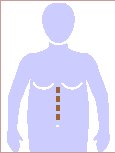
The incision.
The procedure involves an incision, typically running between the tip of the breast bone and the navel. This procedure can now be done laparoscopically.
Step 2
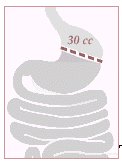
The stomach is divided into two parts.
The stomach is completely separated (transected) into two parts using a cutting surgical stapler and oversewing. The upper part forms a small pouch, holding approximately 30 cc or 1 fluid ounce, which will receive food. A Silastic ring is then placed around the mid portion of the new small stomach to create a value-like opening which will delay the flow of solid food in the new stomach before emptying into the intestine and give the sensation of a "full stomach."
Step 3
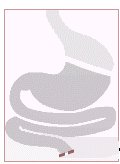
The small intestine is carefully measured and cut.
The lower (distal) part of the stomach is bypassed, as is the first portion of the small intestine (duodenum and jejunum). The small intestine is cut at this point. Although food does not go through this bypassed segment, it is still functioning. The bypassed stomach secretes its usual gastric juices, and digestive juices from the liver and pancreas still empty into this area as before.
Step 4
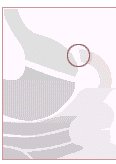
The small intestine is connected to the small pouch.
The lower part of the small intestine is brought up and is connected to the small stomach pouch. Food will pass through a small (12 mm, about the size of an M&M) opening (stoma) from the small pouch into the small intestine.
Step 5
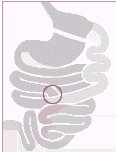
The bypassed part of the small intestine is reconnected, forming a "Y".
The end of the bypassed section of small intestine coming from the bypassed stomach is reconnected to the lower (distal) small intestine, forming a "Y". This allows digestive juices to empty into the portion of small intestine where food is present. Care is taken to ensure that sufficient small intestine is available between this junction and the large intestine to insure good absorption of essential nutrients.
What are the risks?
Bariatric surgery is performed to enable patients to lose excess weight for those who are morbidly obese and reduce the serious weight-related health conditions they experience. Every surgery involves risk and bariatric surgery is considered a major abdominal surgery. Patients need to understand these risks and weigh them against the significant risks related to being seriously overweight. Each surgeon reviews these risks in detail in their consultations with each patient.