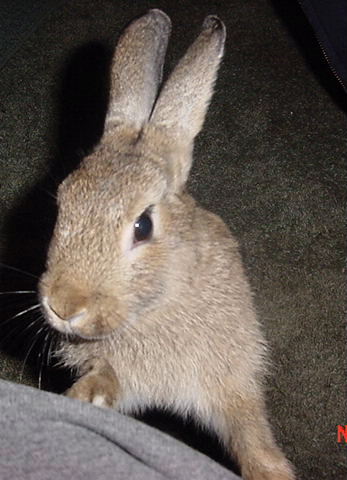
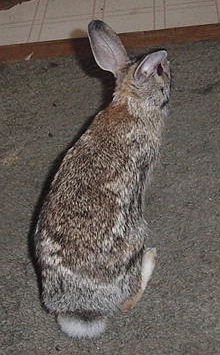
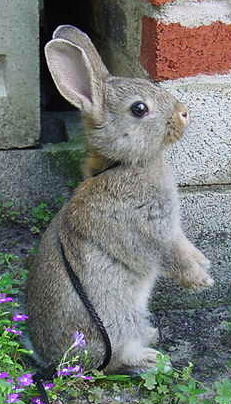
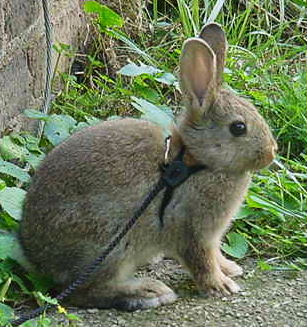
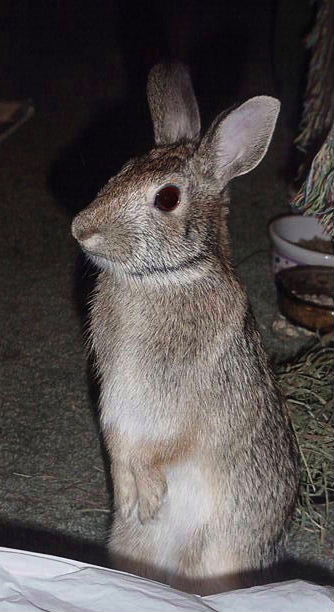
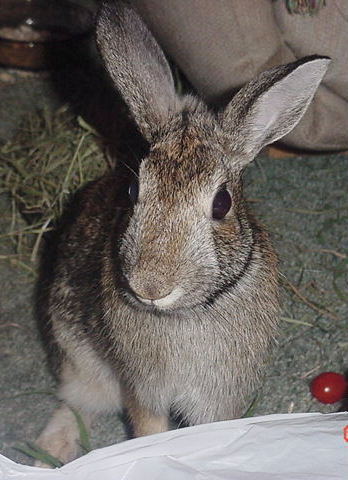
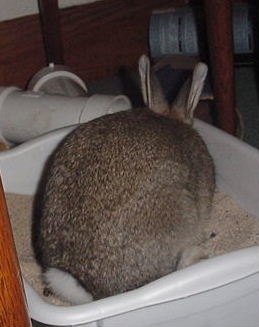
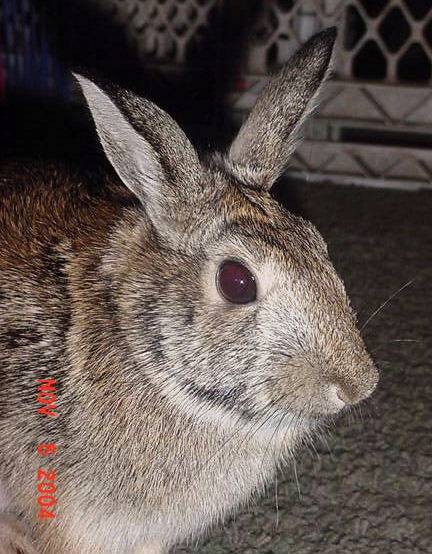
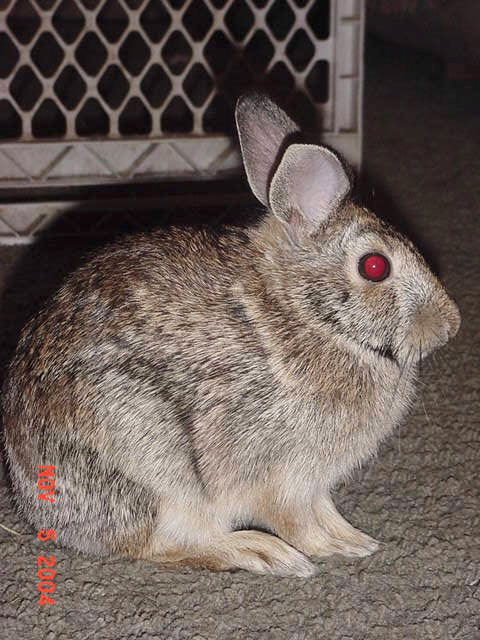
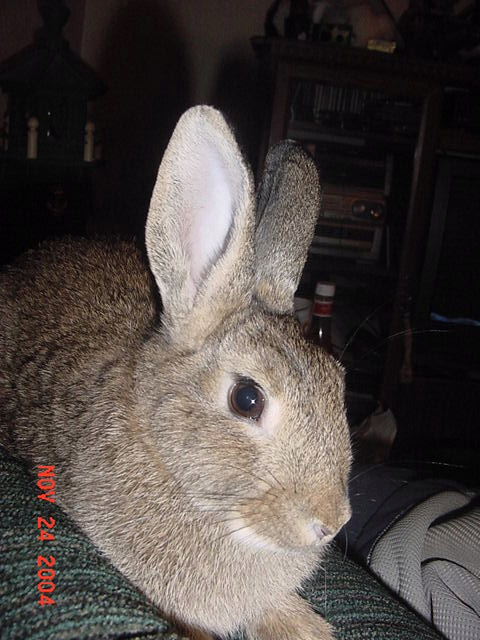
As I discussed earlier, if you find a cottontail appearing to be the size of a small orange or so, and it is not injured or in need of help, please leave it be, or relocate it to a safer place.
I am not fully aware of how to take care of an older cottontail, but there are a few things I do know from a short expierience. My girlfriend once brought me 4 babies, her boyfriend mowing over the nests and the babies scattering about their huge yard where cottontails were abundant. Two of them appeared to be approx 2 weeks old or so, the other two looked to be 3 weeks old. So I dont even know if they were from the same litter or exactly how old they were. Some babies may be small or extra large for their age from the same litter. The two smaller ones would eat formula, the older ones would have nothing to do with it or me. Because they were older and not brought up on pellets, they also didnt want anything to do with those, and only occasionally nibbling on the oats. They were extremely frightened and would struggle terribly if they were held, often managing to slip out of your grasp. After a few days they still were not any easier to handle, so I assumed they were probably already on their own and I let them go.
One thing that is rather important if you have come across older babies, its difficult to see parasites in their fur, unlike the new babies who are not furred yet and easier to find anything on them. After having these older babies for a few days, on one I noticed what I could only describe as looking like its insides were coming out of its neck. I paniced and rushed it to the vet where they informed me it was a engorged tick. They were kind enough to remove it while the poor little thing screamed. Besides the fact that I felt they were already on their own, I could not take a chance on my house becoming infested with ticks with all my babies here and the pet rabbits, and Buddy roaming the house, so I let them go later that day. As I set them free, I noticed an engorged tick on another that I pulled off before he hopped away. It broke my heart to think of these poor animals having to live with those rotten things on them!! I read once online about a jackrabbit I believe it was, that was reported to have an amazingly number of ticks covering its body, the number was outrageous. So I can only suggest to beware of this problem in older ones( I did do a thorough search but must have missed the pre-engorged ticks).
If they do not take formula then weeds will have to be what you supply them with, like they would eat outside.
I have heard countless stories of people thinking that because a baby approaches them, that something must be wrong and they should take it in. I dont know for sure, but I believe this is just a case of the baby, or adult maybe, just not having that extreme fear of you, not neccesarily that its maybe handicapped or something. It doesnt mean it would be that way with everyone, and that doesnt mean you should take it. It could just be very use to humans for a food source, and theres nothing wrong with feeding our little cottontail friends!!
As a close guess, 2 week old babies are a little bigger then the size of golfball, 3 weeks old approx the size of a small orange. That is considering if they are not runts or very large for their age. I know it is said that the white blaze on their forehead indicates not being weaned, but from all my babies, the ones that had the streak still had it at 7-8 weeks old and I've seen adults with it also. I've also had some babies that had no white streaks at all. Cottontails just start out very little, are on their own at a little size, but grow quite rapidly, I'd say being 10 times bigger by the age of 2 months then they are at 10 days old. |