 |
|
|
|
|
|
|
|
|
|
|
|
|
|
|
|
|
|
|
|
|
|
|
|
|
|
|
|
|
 |
|
|
|
|
The State of Vatican City |
|
|
|
|
|
|
 |
|
|
|
|
The State of Vatican City is one of my favorite countries in the world. I like nations that are small, traditional, religious and historical and the Holy See tops the list in every category. It is the world's smallest state, home of the world's smallest army and is ruled by the last absolute Christian monarch in the world. However, despite being only 109 acres in area, the Holy See may be the most influential country in the world with a billion people across the globe subject to it's leader, the Supreme Pontiff of the Roman Catholic Church.
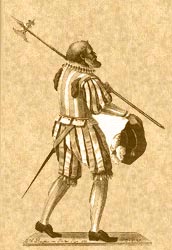
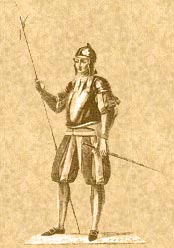
Because Vatican City is The Holy See, it is easy for people to forget that it is also an independent country the same as Austria, Spain or the United States. Their army, the Papal Swiss Guard, is the oldest military unit still in service in the world. The Vatican diplomatic corps is also the oldest in the world still in service; and, of course, the sovereign of the Vatican City State also represents the longest unbroken dynastic succession in world history as well. The Vatican has its own television |
|
 |
|
|
|
|
|
station (CTV), its own radio station (Vatican Radio [go 1-0-5!]) and its own postal service. Like |
|
|
their fellow micronation of Liechtenstein, Vatican City postage stamps are prized by collectors. L'Osservatore Romano, the Vatican newspaper, rounds out the list of media used by the Holy See.
The history of the State of Vatican City can be traced back quite a long way. If the "Donation of Constantine" has been disproven, we know at least than an independent Papal territory has existed around Rome since the time of Emperor Charlemagne. The name "Vatican" comes from an ancient Roman circus where St Peter was martyred during the reign of Emperor Nero. This site became the center of Christianity. |
|
 |
|
 |
|
|
|
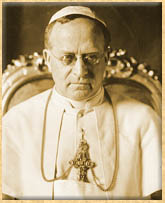
However, the modern State of Vatican City, as we know it today, did not come into being until February 11, 1929 when Pope Pius XI signed the Lateran Treaty with the Kingdom of Italy recognizing the Vatican as a neutral independent state within the city of Rome. Pope |
|
|
|
|
|
|
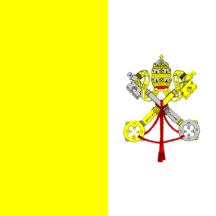
Pius XI thus ended the status of the papacy as a prisoner of Italy since the forced annexation of the Papal States in 1870. Soon afterwards a flag was adopted along with a national anthem and all of the other symbols required of a free nation. The Holy See could also send ambassadors to other nations and recieve ambassadors in turn. For Catholic countries, the Vatican ambassador always has the place of honor before all others. |
|
|
|
|
|
Today, the Vatican has a mission to the United Nations so that her voice can at least be heard in the international community. In fact, the Vatican has worked hard at the United Nations in defense of Church doctrine, gaining some unlikely allies among the Muslim nations who are also strongly opposed to such things as abortion and homosexual marriage. The success in some of these campaigns has caused many annoyed liberals at the UN to refer to the Vatican mission and the cooperative Muslim nations as the "unholy alliance". |
|
|
|
Although the Vatican State must remain completely neutral, the status of the Holy See as an independent country has allowed the Holy Father to be involved, to a very limited extent, in the formation of the European Union. Recently, when the EU constitution was adopted, the Vatican fought hard to have the document include some mention of God and the role of Christianity in the cultural fabric of Europe. Ultimately, the effort was unsuccessful, but it could be easily seen that, because of the status of the Vatican, the Catholic Church certainly had a better chance of being heard and felt than any other of the Protestant churches, which have no seperate country to call their own (in a religious sense of course). |
|
 |
|
|
|
|
|
Over the centuries, the Vatican has played a key role in international affairs. It is also an unfortunate fact that the Papal States have been invaded more than once in the history of the Church. The three most significant cases involve the infamous 'Sack of Rome' by Lutheran troops of the Imperial Army, the occupation following the French Revolution including the arrest of popes Pius VI and Pius VII and lastly the invasion of the Papal States and their destruction by the liberal Italian armies during the Risorgimento. The Pope was defended by Catholic volunteers from countries as distant as Ireland and Canada. Ultimately, the Vatican itself came under fire.
For many non-Christians, and even some of our seperated brethren, the Vatican is the symbol of "theocracy" or the dangers of organized religion. However, the State of Vatican City, home to the Holy See and the Roman Curia, is vital to the life of the Church. Its status as an independent country is essential as the place where the Pope may perform his duties in total independence and freedom from any interference by secular powers. It also represents a unique aspect of Catholicism which many "Christians" have lost, which is that we are called to be a seperate people, the Church of Christ is to be a nation unto itself, coming before and above all national borders, local divisions, political differences, princes and presidents. As the state of the Pope, Vatican City is, in a way, the country of all Catholics all around the world, it is the country of the Church, the capital of our religion and the hub of Christianity.
Vive il Papa! |
|
|
|
 |
|
 |
|
|
|
|
 |
|