

This, however, brings up the question: what did Vatican II hope to solve? That, my friends could be called the 'million dollar question' surrounding the council. To most people, the 40's & 50's era before the council seemed to be a time when the Catholic Church was going strong. So, why was such a council of all the bishops necessary? Opinions on this issue vary greatly, even to the point of some who insist it was a conspiracy carried out by Jews & Masons who had infiltrated the Holy See, or other such related nonsense. What seems to be one of the more reasonable and widely accepted reasons is that Bl. Pope John XXIII called it in order to foster ecumenism in preparation for the eventual reunion of the Church with all schismatics and 'seperated brethren'. Given Pope John's genuine desire for reconciliation in the Christian world and heartfelt sorrow at our many divisions, this seems to me to be at least a likely answer.
However, if this was the goal of the Second Vatican Council it certainly did more harm than good, since attitudes and misrepresentations of its documents drove away many of those who had previously been the strongest supporters of the Church and, as far as I can tell, did not lead to any mass conversions in the Protestant community. The Church gave up some of its most time-honored traditions and alienated many of the older generations. Likewise, many on the liberal end of the spectrum were driven away when they discovered that Vatican II had not (and indeed could not) change core issues such as priestly celibacy. The change from Latin to the vernacular disappointed many, and caused the Church to lose some of the unity and uniformity which went with having a distinct common language. In an entirely admirable desire to return to the roots of Christianity and assume a more pastoral role the Church also gave up a great deal which added to
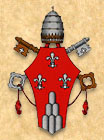
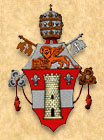
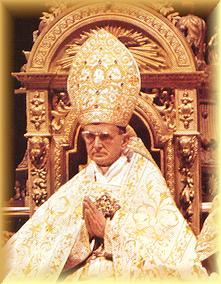
However, it must also not be forgotten that the Second Vatican Council and His Holiness Pope Paul VI called for a new emphasis on many of the most sacred and vital teachings of the Church. The Real Presence and the value of Eucharistic adoration were two things which Pope Paul VI called for a renewed devotion to. The Council's call for a more involved laity was also certainly a good thing, as can be seen by the laity-dominated pro-life campaign. It is only the lack of support for the authority of the heirarchy which caused some lay groups to go astray and become a genuine danger to the Church, such as those who call for the ordination of women and even the election of bishops. As can be seen, there were good and bad points to the Council and the documents it produced.
One of the major problems with the documents produced by the Council was their great length, number and vague style of them. Because of this, many never tried to read them all and relied on others to give them the abridged version. Not all of those who did so were entirely on the level however. They could twist the words to mean practically anything and finally came up with that most dangerous phrase "the spirit of Vatican II". This motto was used to justify some of the most damaging attacks on the Church and the spreading of a lack of reverence and respect for the Church. Anything which the liberal crowd wanted to get rid of was described as being, "not in keeping with the spirit of Vatican II".
This caused the effects of Vatican II to go far beyond what I believe Bl. John XXIII or even Pope Paul VI ever intended. The incorrect use of the "spirit of Vatican II" is one reason I think so many were outraged by Pope Paul's wonderful encyclical Humanae Vitae which clearly and strongly condemned contraception. People had started thinking that, after Vatican II they could do whatever they liked and were quite unhappy when Pope Paul showed them this was not the case. Fortunately, the Church was blessed with the long reign of Pope John Paul II who, despite doing some things I cannot agree with, has taught the Church what is, in my opinion, the true meaning of the Second Vatican Council and put some of its changes into perspective. Some have since accused John Paul II of being too 'pre-Vatican II' while others wail that he is far too progressive, probably a good sign that he is mostly on the right track.
In all, I think Vatican II was probably called for very good reasons, got a little bit out of control and ended up being used as the defense for many of the things it should have corrected, which is probably why Pope John wanted to call the whole thing off. However, the basic goals of a return to the basics, the roots of Christianity and a pastoral spirit are all excellent things I fully support. I only disagree with what was needlessly sacrificed to accomplish this.